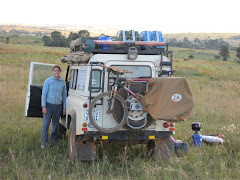
As I leave the park boundary I pass an English couple who have been traveling with their two small kids all the way from the UK! We exchange info and I give them my Ruaha NP map as well as the phone number for the Rovuma ferry crossing which they might make use of. Their website is www.dieselanddust.co.uk I decide to spend a few days at the neat Chogela camp site to chill out a bit, gather new focus for the next step of my journey and, most importantly, catch up with my much neglected diary!
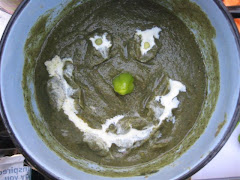
That afternoon, when I looked into my food drawer and saw a majority of my veggies not looking too happy, I decided to cook up a storm. Not only do I make a delicious spinach and broccoli soup (mixed with my magic electric blender) but also fire up a huge veggie stir-fry with all the colorful goodies I had bought at the Mbeya local market: sweet potatoes, beans, carrots, broccoli, chili, green pepper, egg plant, peas, garlic and onion.
· Wednesday, 11th of June, Tungamalenga
I spend pretty much the whole day writing my diary and finish reading my book ‘Diary of a Magus’ (great read!).
· Thursday, 12th of June, Tungamalenga
Chogela the camp site’s owner is also an avid cyclist and we ride to some nearby Masai villages bordering onto the Ruaha NP. It’s amazing what simple lives people live here, just living off what Mother Nature provides! Tonight, Chogela cooks a massive dinner for me which would have been enough for three people!
· Friday, 13th of June, Tungamalenga
Chogela takes me on another cycle excursion to the Tungamalenga waterfalls. The path takes us through the communal rice plantations, where I can watch an old couple harvesting it. On return from the waterfall we find both my tires flat! After patching the puncture we make our way through the rice fields and the village back to camp.
While I write my diary sitting next to my car, I hear rustling going on around me in the grass. At a closer look it seems to be bug-humping-day! Numerous black male bugs race after and mount any female bugs that cross their way which in turn sometimes respond with quite some fighting! Just like in real life J !
· Saturday, 14th of June, Tungamalenga
Chogela’s wife makes excellent pancakes with cardamom seeds and I can’t resist having five of them for breakfast! Yummy!
While I am writing, I again notice some strange things going on around me: There is this moving stream of black ants moving through the grass towards me! After having a closer look they are all heading for a new home, carrying their larvae to a small hole in the ground.
· Sunday, 15th of June, Tungamalenga to Iringa
I pack up and clean Anse for my departure, only to reverse her blindly into a tree when leaving! The damage is more severe than it initially seems and I am really upset about it! The front wheel of my bicycle is a write off, Anse’s door frame is bent so that the rear door doesn’t shut properly anymore and the water tank’s tap is broken.
I give Chogela a lift to Iringa and he helps me find a bicycle workshop where I can have my front wheel fixed. We stay the night at the long established Riverside Camp Site whose owner supports Chogela, establishing collaboration between them by offering guided tours in Ruaha NP to Riverside’s guests.
For a few days already, I have seen a lot of smoke coming out of Anse’s exhaust and the camp’s mechanic bleeds some oil out of the engine. Even though it’s been changed only 2000 km ago it seems very black and he recommends an oil change.
Chogela and I fill our tummies at the camp’s amazing dinner buffet. There is a Swahili language school adjoined to the camp, providing full time basic language courses to mainly foreign missionaries but also professionals who plan to spend a few years in Tanzania.
· Monday, 16th of June, Iringa
Chogela and I drive into Iringa and after going past the cycle store to fetch my new rim we park in front of the Iringa Info Office, which was established by the Riverside Camp’s owner. Chogela heads off to organize building materials for his camp while I take care of my errands: I buy engine oil, visit the local office of the Tanzanian Revenue Services to renew my monthly foreign vehicle tax (only to find out that I have to pay directly into their account at a specific bank where I end up queuing forever!) and gather all the needed spare parts to repair my water tank’s tap. At the same hardware store I get asked secretively by the owner if I’d like to change Dollars into Shillings and we do some wheeling and dealing (at a good rate!) in the back next to his store in an enclosed alleyway. Hardware stores seem to be lucrative businesses here!
I also need a new battery for my watch and after finally finding the right ‘Fundi’ he unscrews and opens the back plate of my watch. Wanting to have a closer look at the rubber seal, I lean over the flimsy glass counter which unexpectedly shatters into a million pieces under the weight of my elbows! The shop owner is not too impressed and I hand him 5000 Shillings to repair the damage. He also doesn’t stock my watch’s battery. (‘Wann’s laaft dann laafts!’) Another customer who witnessed the accident insists to take me to the clinic across the road to have a sister take car of my two tiny cuts.
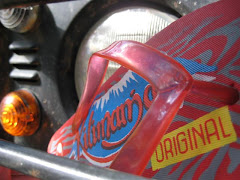
After Kirsty’s endless preaching about hygiene in Africa (I think I mentioned that she has stakes in Dettol which soared to an all time high during the past three months J) I finally buy some flip flops to use in the shower. I beg your pardon, not SOME flip flops! The ultimate red ‘KILIMANJARO ORIGINAL’ for $1,50!!! Here’s to many hygienic showers in Africa! Cheers Kirsty!
After spending too much time waiting for the revenue official to sign off and stamp my deposit slip for the foreign vehicle tax, I pick up Chogela again and we head back to camp.
The camp’s mechanic takes care of the oil change and with combined effort (by using retched straps hooked to Anse’s door frame and tied to a tree) we manage to straighten it to such an extend that the door hooks again well into its latch!
· Tuesday, 17th of June, Iringa
After having to change to a different size hose, I finally fix the water tank’s tap and meet Henry, a Dutch mechanic who lives, works and drives around in his mobile workshop, a converted truck.
Chogela leaves with another lift back to his camp in Tungamalenga.
· Wednesday, 18th of June, Iringa
I go for a run in the morning to some impressive rapids on the Ruaha River and spend a big part of the day going through my trip’s photos (with Kirsty’s and mine they have accumulated to over 3000 already!) in order to convert a selection for my blog.
In the afternoon, an elderly German couple arrives with their car’s number plate from Esslingen (near Stuttgart)! They’ve traveled around Africa for 3 years now and have just come from Selous NP which they really rave about, not so much about the abundance of wildlife but more about the amazing scenery.
· Thursday, 19th of June, Iringa
I leave the Riverside Campsite and head to an Iringa internet café to finally post my latest 28 pages of diary on my blog! It turns out to be a long session (uploading these photos is a nerve-draining process with the slow connections here!), so I decide to camp next to a guest house just outside the town center.
· Friday, 20th of June, Iringa to Mikumi
The narrow tar road to Mikumi sown with deep potholes is rather tiring especially with trucks and buses trying to outdo each other! On this about 300 km long stretch I have seen no less than 4 overturned trucks and plenty others broken down in the most awkward places.
I drive 10km off the main road to the western gate of the Udzungwa Mountains NP to get a feel for the area and to get an idea if hiking here would be worth the expensive entry fee. I learn from the not very helpful park ranger that permits are only issued at the main gate, and that’s about all the info I could get out of him! After having a look at the nice Baobab Valley Camp and buying a handful of freshly fried chapatti breads from the Ruaha village market, I carry on to Mikumi where I pitch my tent next to a Swiss run Hotel and Restaurant for a reasonable Tsh 3000. At night I meet three backpackers from the UK and watch with them the Europe Soccer Cup at another hotel down the road. Turkey vs. Croatia, boring at first and then 1:1 in the last minute of overtime! Sadly Turkey beats Croatia in the shootout. Should make for an exciting game against Germany though!
· Saturday, 21st of June, Mikumi to Jukumu Campsite near Mvuha
Driving through Mikumi NP on a tarred highway feels weird! While busses and trucks race past me, undeterred by the vicious speed bumps I can spot some wildlife from the road, mainly zebra, impala and giraffe. In Morogoro I fill up diesel, buy some supplies at a well stocked (Meaning they had Nutella J !) Indian supermarket and even get mandarins and strawberries from street vendors!
After asking lots of locals about the road from here via Kisaki to Selous Game Reserve, I finally find the right turn off marked ‘Old Morogoro Road’. The following stretch of road is absolutely spectacular! I am driving through a jungle like area which reminds me of the Ngozi Crater area! Village after village (Misongeni, Pangawe, Kiloka, Madam, Mkuyuni, Matombo, Mvuha to name a few) the in patches muddy road winds its way along the eastern flank of the Ulugurus through dense vegetation consisting of mainly banana trees, coconut palms and other tree giants, sometimes revealing jaw dropping views of impressive overgrown mountain ranges in the backdrop. Past Mkuyuni there is a sign for a community run campsite, but for Tsh 10000 with no facilities I decide to push on to the Jukumu Scout Campsite at Mambarawe Ridge mentioned in my Rough Guide (Tsh 5000).
· Sunday, 22nd of June, Jukumu Campsite near Mvuha
Since according to my Rough Guide the next 45 km of road supposed to be one of the worst stretches in Tanzania, I decide to put in a rest day to be prepared for the challenge! It also rained last night and I hope that one day of sun will hopefully make some of the water disappear and dry out the track again…let’s see tomorrow!
· Monday, 23rd of June, Jukumu Campsite to bush camp near Stiegler’s Gorge, Selous Game Reserve
The road to Kisaki and on to the Matambwe Gate of Selous Game Reserve turns out to be quite a drag but is in good condition (not wet as I feared). I get there around lunch time but by the time they have signed me in and organized the compulsory armed game ranger for me it’s more than an hour later. The young game ranger Francis, who will be glued to my hip for the next 48 hours, is dressed in green, wearing his burgundy barrette and armed with a rifle which is rather intimidating!
We throw Francis’ few belongings and his tent into the car and head off towards Stiegler’s Gorge. Even though Francis has been working in the reserve for over two years, he has never been to Stiegler’s Gorge and to my annoyance we drive around in circles for a while trying to find the correct turn-off. We eventually get to the long closed and now dilapidated Tambo Safari Lodge which I thought should have stunning views into the gorge, but it wasn’t at all what I expected. The view is obstructed by the dense bush and even after picking up the left-to-his-own-devices security guard there who guides us on a rough track to the old cable way (Which during its time of operation used to haul game viewing vehicles and their passengers to the other side of the gorge!) we can only catch a glimpse of the Rufiji River by standing right on the edge of the sheer drop. The security guard helps us find a nice bush camping spot a few km away from the lodge and is more than happy to join us at the campfire.
· Tuesday, 24th of June, bush camp in Selous Game Reserve
Back north again past the beautifully situated Beho Beho Lodge and the Selous Grave we visit Lake Tagalala and the ‘Maji Moto’ hot spring which cascades out of a rocky outcrop into a natural pool amid a patch of palm trees. I refrain from jumping into the water as we rather want to carry on to Sand Rivers Lodge where I am hoping to get onto a boat trip on the Rufiji River.
After a lengthy drive on a shocking road we arrive at the posh lodge, only to learn from the Aussie manager couple that the boat rides are exclusively reserved for paying guests and that they shouldn’t have told me otherwise at the Matambwe Gate. I must have looked quite disappointed because after reflecting for a few seconds the manager Steve says: ‘I think I can make a plan!’ He sends my guide Francis (still walking around with his rifle!) into the kitchen to be fed and says that he could put me onto a boat which had a new engine that needed a two hour run-in at half throttle. He shows me around the amazingly located lodge and after the guests finished with their lunch, sits me down next to their office (behind the ‘scene’) and puts a plate of delicious leftovers from the lunch buffet in front of me.
Not to make my illegitimate presence too obvious, he introduces me to his river guide as being a ‘researcher’ who wants to see this part of the Rufiji River! So the guide takes me onto the small aluminum boat (so ‘ne ‘Zwiebackfräse’ for those who knowJ) and upstream we go at leisurely speed. We get to see giraffes, elephant, crocs and especially heaps of hippos. It’s amazing to see these huge creatures up so close! Since Steve had introduced me as such, the conversation shifts inevitably towards my ‘research’ and I make up that I do my private research in amphibians. Ooops! Bad choice I realize quickly, since the river guide proved to be pretty knowledgeable! He wanted to know what my findings were and what the outcome of my research has been so far, so I had to wiggle a bit to get away from that topic and prevent my nose from getting even longer…! After a free two-hour boat ride I thank the manager couple for their generosity, collect a filled up Francis from the kitchen and head north again, away from the Great Rufiji River.
It’s late in the afternoon and the vast barren area between Lake Tagalala and Lake Manze is just awesome to see in the twilight! In the setting sun the short, golden glowing grass stands in contrast to the low hanging, almost imposing blue grayish clouds and is only interspersed by long, scurrile shadows of the many dead trees standing guard resisting the elements. We try to cross one of the tributaries to Lake Manze on a badly hippo-trampled dirt track to get to a designated ‘public’ campsite, only to end up at a marshy area with too much water to cross. We turn around, drive a few hundred meters back and decide to bush camp at a beautiful spot encircled by fan palm trees in the shade of a big acacia tree. Not far away we find numerous scattered bones from a buffalo kill… like I imagined it was a night full of noises from the bush! Elephants trumpeting, lions roaring, hyenas howling!
· Wednesday, 25th of June, Selous Game Reserve to Selous River Camp
We go on a 3 hour walking Safari which is a great experience! Feels quite vulnerable being so exposed and trying to walk silently, alert about any beast that could possibly be lurking in the bush, waiting for the right opportunity to chase us down! Treading through the denser vegetation, Francis is especially cautious about buffalos which are known to be very aggressive and not as easy to spot as elephant. We get a close look at impala, waterbuck, wildebeest as well as elephants (from the distance!).
We take a detour which we found during our walk, avoiding the marshy section that stopped us yesterday and cross over towards Lake Manze, another one of the lakes that get fed by the Rufiji River. We disturb two buffalos which gallop across our track. Before reaching the sheltering bushes the second one stops abruptly, turns around (a handbrake u-turn couldn’t have been quicker!) stands there in all is might about 50 meters away, just staring at us with disapproval for what seemed an eternity and eventually, after a loud condemning blow disappears into the bush. Thank god we didn’t have this encounter on our walk this morning!
After passing Lake Nzerakera where we wake up what we thought to be a dead hippo (must have fallen fast asleep half-way out of the water!) we make our way to Mtemere Gate. A few kilometers short of the gate I spot some lionesses with cubs in a shady spot of a dry river bed, apparently their all time favorite location as I found out later (not from my ‘ranger’ though!).
I drop off Francis at Mtemere Gate, leave the reserve around 2pm and pitch my rooftop tent at the nearby Selous River Camp where I meet Alan and Andrea, a friendly New Zealand couple who rave about the Usambara mountains.
· Thursday, 26th of June, Selous River Camp to Kipepeo Beach, Dar Es Salaam
I still chat a while with the Kiwi couple and drive north east on the sandy track which finally meets the tar road in Kibiti.
With the help of Priscilla’s (almost) never fading voice I find my way safely to Kipepeo Beach, about 10 km south of Dar Es Salaam. It’s quite amazing experiencing the sandy palm tree lined beaches and the turquoise waters of the Indian Ocean after a lengthy time in the bush! I join a crowd from an overland truck for drinks.
· Friday, 27th of June, Kipepeo Beach
After taking the crowded ferry from the Kigamboni Peninsular in the south, I hit the center of Dar Es Salaam to get some spare parts and a new battery for Anse. For a new battery I supposed to go to a place specialized in dry batteries in the outskirts of the city so I first run around doing my other errands in town: Getting gas bottle refilled, trying to find replacement for depleted watch battery, buy extension cable, new gas cooker top… It’s exhausting asking hundreds of people to find out where to get stuff but also fun to run around and explore the hidden corners of the city.
This city is buzzing with people and its Arabic influence apparent everywhere. I can’t resist eating in tiny Moslem lunch joints where I stick out like sore thump amongst the locals. The food here is superb! I’ve never ever eaten tastier samoosas before (no offence Jasmine!) served with a fresh coconut coriander dip and washed down with the strongest masala chai my already burning throat can take!
At the place recommended by Land Rover I get a new battery but my battery charge indicator shows that the new battery doesn’t get charged properly. Back to Land Rover but it’s already 5 pm, they are about to close, it’s better if you came back on Monday!
Thinking I could get some free wireless, I park off at the Mövenpick Hotel for a cup of coffee, unfortunately without the free connection I’d hoped for. At least the parking is secure and free so I head off a few blocks up the road to attend the weekly performance of traditional songs and dances at the Nyerere Cultural Center. I meet some German volunteers there who offer me joining them to go to this Casino in town where one gets free food as long as one spends some money gambling. So off we go stuffing our faces on a very delicious hot buffet only to loose more than the meal’s worth in roulette!
I have to wait a dreadful 1 ½ hours at the Kigamboni ferry before I get back to the camp that night.
· Saturday, 28th of June, Kipepeo Beach
Pretty much a laundry and cleaning day!
· Sunday, 29th of June, Kipepeo Beach to Kendwa Beach, Zanzibar
Hoping that Anse will be safe at the campsite, I strap my backpack stuffed with some basics to the carrier rack of my mountain bike and pedal the 10 km to the ferry then on to the meeting point of the guided Dar Es Salaam cycling tour I have booked. Quite a nice informative tour exploring some of the poorer areas of the city and combining it with having local chow in different places! The lunch after the 4 hour tour takes longer than planned and I speedily pedal to the other side of the city again in time to get the 4 o’clock ferry to Zanzibar.
Reaching Stone Town at 6 and leaving immigration about half hour later, it makes it a bit of a late start for my mission: Cycling to Kendwa Beach 60 km further north where I promised to meet Nacho, a Spanish guy I got to know among the overlanders in Kipepeo, in time to watch the European Soccer Cup final Germany vs. Spain!
The ride is surely a bit of a crazy idea in genuine Koch (Kirsty would’ve said ‘Volkernator’) style, but turns out to be truly amazing! I leave the hustle and bustle of Stone Town on the one major main road leading north, racing with daladalas (local taxis which on Zanzibar are trucks with benches) and competing for road space in between cars, motor bikes, Vespas, hand pulled carts, pedestrians and cyclists. No map, but I knew it was north and just short of Nungwi.
Even way outside Stone Town the road is still busy. Not so much with cars anymore but with lots of locals on their bikes or walking. The sun sets quickly and soon I am riding in the pitch dark, no streetlights. Only in the villages I pass the diffuse shine of Kerosene lamps show that there is still activity. I put my dim headlamp on. Seemingly not enough light for an oncoming cyclist without lights who almost crashes into me. To avoid him I pull both brakes as hard as I can and come to a standstill – only to hear the alarming screeching of non-gripping, worn-out brake pads and then the abrasive slithering of flip flops on the rough tarmac from another cyclist behind me! I carry on more cautiously, riding ‘by ear’! Some dry chain squeaking coming towards me, I bear more to the left – oops, there I can make out some people murmuring leisurely in front of me so I better keep to the center of the road again! Every now and then approaching cars’ brights produce long shadows of every road user, giving me a chance to adjust my path for a few hundred meters. To prevent another crash I start whistling a tune because my bike doesn’t squeak. Occasionally somebody shouts out of the darkness ‘Hey Mzungu! Jambo!’. No idea how they figure that out! Maybe it’s my pace or my strange looking headlamp. Or my silent bicycle?
Sometimes between the villages there is nobody. Not a soul on the road. Just me riding along past shadows of palm and banana trees under a beautiful starlit sky. There are some patches where I ride past a multitude of fireflies, flickering joyously on both sides of the road as if to brighten up my way. It’s like they are extending the starlit sky and embracing me in it! I get a sensation like I’m sitting in a roller coaster at lightning speed. And that without even smoking a joint J!
Some ‘squeak clank, squeak clank, squeak clank’ and the purr of a dynamo approaching from behind. Linked to two Zanzibaris pedaling hastily towards me, the one’s erratic front light creating my own shadow on the tarmac. ‘Jambo! Where from? Where to?’ The two set a fast pace and we chase each other for a few kilometers until they have enough of me. A few kilometers further I catch up to another cyclist. ‘Jambo! Kendwa?’ I ask pointing straight ahead. The guy doesn’t understand, but I follow him anyway. Should be on the right track here or maybe not? At one of the villages he suddenly stops and points left towards a turn off, then calls another chap from the street who makes me understand in broken English that this is the turn off I have to take to Kendwa!
3 ½ hours after leaving Stone Town I make it pretty exhausted to the Sunset Bungalows on Kendwa Beach, just in time to meet Nacho and the overlander crowd for the European Soccer Cup final. Too bad but the strong Spanish team wins deservingly!
· Monday, 30th of June, Kendwa Beach, Zanzibar
I do a refresher course in diving at the dive school next door.
· Tuesday, 1st of July (My birthday!), Kendwa Beach, Zanzibar
As a birthday present to myself I go for a dive at the north eastern part of the island. It’s amazing to see the underwater world here and amongst many beautiful fish and anemones we are also privileged to spot a turtle which is more curious than scared and lets us approach her closely.
With the present of my dive also comes what seems to be an infection of my right ear! So I hop onto my MTB and ride to the neighboring village Nungwi 6 km further north. Miraculously there is a tiny pharmacy and the ear drops kill the pain at least for now.
· Wednesday, 2nd of July, Kendwa Beach, Zanzibar
A chill day. I would love to rent one of the Hobie Cats which I spot in the resort next door but at Euro 30 per hour I don’t feel like supporting their business plus my right ear doesn’t need more water right now. Instead my dive master gets me hooked onto a local drink called ‘Dawa’ which literally translated means medicine! With a double shot of local ‘Konyagi’ spirits, lime and honey it definitely makes the pain in my right ear more bearable!
Talking with a few true Zanzibaris I learn how unsatisfied they are with the fact that Zanzibar has formed a union with Tanzania. They are still proud Zanzibaris even if their home country has only a pseudo president but with no real power.
· Thursday, 3rd of July, Kendwa Beach to Stone Town, Zanzibar
I leave around noon and cycle the 60 km back to Stone Town. The air is humid with some showers. After riding for a few kilometers and scrutinizing other local men on bicycles, I decide (despite the heat) to zip my pant’s legs back on again so that I don’t offend the local Moslem community. I somehow feel more comfortable that way and it also seems like the locals are less reserved towards me. It’s great and again different to see in the daytime what I went past in the dark. Now there are crowds and crowds of school kids on their way home in their uniforms, the girls all in long dark dresses and white veils. And I can tell that on Zanzibar every inch of soil gets used for growing something!
I arrive on the outskirts of Stone Town and stop at a street vendor who serves me a delicious drink of sugar cane, ginger and lime freshly squeezed through his hand operated press. It totally reminds me of my favorite juice bar on Union Square in New York, where I had tasted this yummy drink for the first time. Weird to be sipping the taste of Zanzibar combined with memories of New York in one drink!
After looking at the rooms of the very nice but pricy Malindi Guesthouse, I decide to look at the close by Bandari Lodge. As I stand at the reception desk enquiring about the price I bump into Eva who Kirsty and I had met at the Ruaha NP picnic spot!
Together we walk the maze of Stone Town, have a freshly brewed cup of Arabica at Jaws Corner and later meet up with Eva’s travel friend Nick and Lori to have delicious street food at the Forodhani Gardens market. We later on go for drinks at the posh, sea facing Africa House Hotel and hear apart from the solo background musician also all about Lori’s relationship misery. Our attempt to find a cool local joint with a life band later on ends in a dodgy bar where we can bear it only for one Kili.
· Friday, 4th of July, Stone Town, Zanzibar
I have breakfast in the street in true local style: Freshly fried chapattis wrapped in islamic newspaper and a thin, sweetish spicy porridge, I guess made of maize or millet. When paying the old veiled lady it takes her a while to get a plastic bag of change out of the hiding place in her baggy bra...! Then I go onto an organized spice tour which really gives an amazing insight about how spices look in their growing form! By our very knowledgeable guide we get shown ginger and turmeric (curcuma) roots, pepper corns, vanilla pods, clove flowers, cardamom seeds, nutmeg and cinnamon bark. We also get to taste jack fruit, star fruit, Seville and navel oranges, mandarins, flesh of the cocoa fruit, ruby grapefruit and numerous other weird but wonderful tasting fruit.
Back in Stone Town I hit the maze of streets again. This time I am on the hunt for a locally made batik shirt. I find a great one, but it doesn’t fit, so the shop owner drags me to another store where I try another one that fits, but I don’t like it! A local chap, one of the many ‘leeches’ wondering around in Stone Town, had been watching me and latches on to help me find a batik shirt. After visiting numerous clothing stores unsuccessfully he suggests looking for batik fabric and giving it to a tailor to have a shirt made. Having a shirt made for me sounds a bit extravagant but I am curious to see what fabrics are available here and after all a custom made shirt would indeed be a unique souvenir of Zanzibar! Before heading off for the fabric hunt we have another cup of Arabica at Jaws Corner where I can’t resist ordering 30 of those delicious diamond shaped peanut/coconut fudges (sweet and yummy with coffee!) with the lady that makes them, hoping that I’ll find my way back to her door again tomorrow in this labyrinth of alleys!
Once I have visited the slave cells and the slave market on which the Anglican Cathedral was built, I follow my guide to the ‘real’ local market where the Zanzibaris shop for fabrics. Browsing through bundles and bundles of beautiful batik fabrics, I still can’t find the one I was looking for. Instead I find another really interesting one in dark brown with a yellowish glowing tie dye pattern that reminds me of flames in a campfire. After bargaining the price I buy the fabric and before I know it my guide takes me to three of his tailor friends all of whom say that they’d love to make a shirt for me, but because of a planned power outage tomorrow morning they would not finish it in time for me to collect it before my ferry departure back to Dar at noon. I leave it at that, had enough of shopping for the day, remunerate my guide and head for a sundowner up onto the roof top restaurant of the Hurumzi Hotel which boasts the most amazing views over Stone Town. When ordering a dawa I notice that the barman is wearing a nicely cut shirt and ask him if he knows where it was tailored. Two minutes later I put a piece of paper in my wallet with the name of the Hotel’s own tailor scribbled on. ‘Be here tomorrow morning at 8! He’ll sort you out!’ says the barman. Power outage? He grins about my concern and says: ‘This hotel has the biggest generator in Stone Town! You don’t need to worry!’
Two German volunteers Sophie and Jan from Münster who I’ve met at the spice tour join me for a drink up on the rooftop. When the fancy crowds arrive for their pre-booked dinners we leave and walk to Forodhani Gardens devouring one of the delicious ‘Zanzibar Pizzas’, a concoction of chopped onions and tomatoes, spicy ground beef all mixed with an egg, wrapped into a thin, square pizza base and then fried from both sides – delish! The same afterwards with a sweet filling for desert (banana and chocolate), all washed down with fresh sugar cane juice, it’s a feast! With our stomachs lined we head for the Livingstone bar where we can sit right on the beach.
· Saturday, 5th of July, Stone Town to Kipepeo Beach
At 8 ‘o clock I enter the Hurumzi Hotel and ask for the tailor at the reception desk. He’s not there yet so I go find my 30 diamond shaped fudges and after some challenging navigating in the maze collect them successfully from the woman’s house. Back to Hurumzi where I finally meet the tailor. It’s almost 9 ‘o clock, my ferry leaves at 12! No problem, he can make it and confidently takes my measurements in his tiny workshop. Zap! The power goes off as predicted and we walk to the Hotel’s courtyard watching the guys getting the generator going. 15 minutes later diesel fumes fill the court yard and the power is back on. Some final discussions with the tailor on how to place the tie dyed part on the sleeves, back and front and then I leave him to it.
One last time I explore the main local market. Fruit, vegetables, spices neatly presented to the crowds of eventual buyers. Passing through the fish market makes me sad as I see two huge beautiful marlins and a manta ray cut up. The meat market is pretty much like watching a horror movie! Half cows still dripping of blood, a goat’s head just sitting on the counter, a cow’s head with the skull pealed backwards revealing brain and all! By 11:30 I am cured of exploring the markets and after a quick lunch at one of the local joints next to Mercury’s I head back to the Hurumzi Hotel’s tailor who is already ironing and folding my new shirt! Wow, am I impressed! After all things do get done here as promised! I quickly try it on. It fits and looks pretty eclectic but beautiful and definitely not ordinary! Once I also get my torn fleece mended, I pay the tailor for his excellent job and hurry to the ferry on my bike, new shirt, fresh spices, yummy cookies and all!
Zanzibar! I am missing you already!
· Sunday, 6th of July, Kipepeo Beach
One of those cleaning, washing and diary days!
· Monday, 7th of July (Traders Day in Tanzania), Kipepeo Beach
I had planned to go into Dar to have my alternator checked by Land Rover, but it is public holiday, so everything is closed.
· Tuesday, 8th of July, Sunrise Beach
I head to Land Rover where my alternator proves to be okay, but according to their digital battery gadget my new battery seems to be faulty! So back to the battery place, to have battery changed, back to Land Rover to find the same result! We find it odd, change some of the values in their digital gadget and all of a sudden the battery is fine! Must be a typo or wrong sticker on the battery! I am not convinced but leave it at that anyway. I also bump into Andy Weller (www.AnAdventure.info) again who is waiting for his Defender to be finished which gives me some time to hear about his travels through Ethiopia.
That afternoon I change campsite to the Sunrise Beach Camp next to Kipepeo which is quieter, has a friendlier staff and comes at only 4000 Tshillings a night! This place seems to entice everybody longer than planned (including me!) with its beautiful palm lined sandy beach, neat facilities, good Indian food and cheap bar!
I also meet plenty of other overlanders there, amongst them Uwe and Nicole who came down through Tunisia and Libya from Germany in their converted Merc truck (www.karifa.de). Then there are Chris and Leon George from the UK (www.traveleor.com/chrisleongeorge) who are going north on a similar route like me in their Defender as well as two South African girls Stacey and Tina who are backpacking north!
· Wednesday, 9th of July, Sunrise Beach
Back into town to have Priscilla (my GPS) seen to. She keeps on freezing on me and my friend Bessie seems to have a contact in Dar that can sort it out! Unfortunately the GPS doesn’t get fixed, but I get quite a few other things done including getting hold of a new road atlas and a rechargeable spot light. My right ear seems still blocked since my birthday so I drive to the Aga Khan hospital to have it checked. Their ear, nose and throat specialist is gone home so they refer me to another clinic on the outskirts of the city. By that time it’s getting dark and I am lucky to have a helpful driver of a delivery truck lead me the way all there! After a long wait I can see the Masai Dr. Ole who looks at my ears and prescribes me some nose spray and tablets that come in folded recycled paper sachets. At least he says my eardrum is not ruptured, which is good news!
Back to the campsite after another dreadful wait at the Kigamboni ferry. On the way there Kirsty calls from Cape Town and has decided to join me again this time all the way to Europe! She will fly into Dar on July 26.
· Thursday, 10th until 15th of July, Sunrise Beach
The next couple of days I feel pretty exhausted. Not sure if it’s the medication, my ear or just this place that makes me mellow.
Stacey and Tina got a nice fish from the market and invite me for a braai. The girls get the fire going, salad prepared, the fish gutted and stuffed in no time – impressive! Soon the table is laid on the beach and we are munching away on a delicious feast! The super friendly security guard appears out of nowhere with a heap of firewood and we sit around the camp fire playing a couple of rounds of Uno. The pleasant evening gets rounded off with coffee and biscuits. The next day I bid the girls farewell as they leave to catch their train to Mwanza.
Wednesday, 16th of July, Sunrise Beach to Bagamoyo
For the last couple of days I have now rested enough and want to see some new things before I head back to Dar to fetch Kirsty. I say goodbye to Uwe and Nicole (www.karifa.de) who are also packing up to spend a few days on Zanzibar.
After updating my blog at the main post office in the center of Dar, I drive to Bagamoyo where I stay in one of the many beach resorts.
Thursday, 17th of July, Bagamoyo to Amani Nature Reserve, East Usambara Mountains
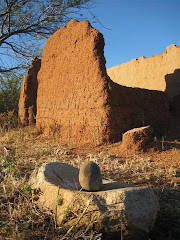
Bagamoyo has a bizarre feel to it. Dilapidated ruins, remains from the German East African era, an arty side by craftsmen showing colorful contemporary paintings and wood carvings in the streets mixed with the tranquil charm and filth of a working fishing town. After paying tribute to eight German soldiers of the colonial ‘Schutztruppe’ who all fell in 1889 during the uprising of the Abushiri rebels and are buried at a neglected cemetery right next to the beach, I get back onto the road, heading north to the Amani Nature Reserve in the East Usambara Mountains where Rene, who I met a few weeks ago as part of the casino crowd in Dar Es Salaam, is doing research for her masters by interviewing villagers. Amani supposed to be one of two diversity hotspots in the world (the other one is somewhere in Uganda), boasting the highest density of endemic plant and animal species per sqkm!
At Muheza I follow a dirt road which takes me up the Usambara Mountains to the Sigi Gate where I pay a once-off $ 30 entry fee. From here the track through the rain forest gets surprisingly muddy with deep ruts and it takes a hair raising low-range maneuver to pass an oncoming sugar cane truck. After Rene introduces me to her house mates I pitch my rooftop tent at the camp site of a nearby guesthouse where we both sit down for dinner.
Friday, 18th of July, Amani Nature Reserve, East Usambara Mountains
In the morning I go for a long guided walk with one of Rene’s friends. Even though the weather is not playing its part with the odd shower pouring down, I enjoy walking through the tranquil village of Amani and the dense rain forests, past many exotic looking trees and waterfalls. Pretty pooped from the walk, I spend the late afternoon reading in my tent. After dinner I go for another guided walk, this time armed with torches on the hunt for tree frogs and chameleons!
It takes some time to spot these buggars though! After an hour of getting to see the odd frog but no chameleons, my guide’s skills finally prevail and within a short time he spots three different species of chameleon in the dim beam of his torch, one of which is a male of the three horned one which is endemic only in this area (it doesn’t even exist in the West Usambaras!). On our way back to Amani village we walk past the research center where I had already seen a bunch of busy researchers in the afternoon. Now it was almost 10 pm and they still seemed intensely busy, hovering around like a bunch of bees! I find out from their coordinator that they are young biologists from all parts of the world, participating in a project organized by some Tropical Botanical Association. They formed nine teams each of which took on a different topic for their short research in Amani NR. Today is their last night before their presentations, I am invited to sit in tomorrow if I am interested says the coordinator!
Saturday, 19th of July, Amani Nature Reserve
I am pretty curious what each team’s 15 minute presentation will be about so I follow the invitation and learn about how light and slope affects the distribution of invasive plant species, how the throat’s brightness of a certain frog species affects their built and strength, how butterflies react to different color flowers of the same plant, how moth’s camouflaging adapts to different environments and about the growth of tree plants on local and invasive trees…only to name a few. Totally fascinating what these guys have come up with in their time-limited research! Some results turned out like predicted while others in turned out quite unexpectedly, triggering topics for possible further research.
It’s nice to hang out with the biologists and they kindly sort of adopt me for the day. After lunch I meet them down at the community soccer field where they play against the local league. The biologists win 4:3!
Rene invites me for supper at her house and I get introduced to her friend Theron, who has done a feasibility study about butterfly farming in Amani NR a few years ago, set up the project and then handed it over to the community. It has now being running profitably for a couple of years and basically involves farming butterfly pupae and exporting them to Zoos and ‘Butterfly Worlds’ in Europe and the US. Theron invites me to come and see the collection and dispatch of pupae from the different farmers tomorrow.
We finish up dinner and after a wild ride on the back of Theron’s motorbike, I get dropped of at the research center where the biologist’s party is already in full swing. Free drinks and good music (after organizing the proper cable for the many students’ ipods) gets everybody dancing and for once awakens this otherwise so sleepy place.
Sunday, 20th of July, Amani NR to Tembo Camp, between Same and Korogwe
I meet Theron at a small village some 5 km drive through the thick forest where they collect and dispatch the butterfly pupae. Two guys arrive on a motorbike, one of them with a cooler bag over his shoulder. The bag gets opened and out come numerous containers with different species of butterfly pupae, embedded in cotton wool. The different shapes and colors of pupae astonish me, they are really one of the most extraordinary natural things I’ve ever seen! Each species has its own weird and wonderful shape. Some have a camouflage look and totally resemble a little twig covered in moss, other pupae of the same species have different colors because they take on the color of different backgrounds which they attach themselves to, and again others have strikingly beautiful gold metallic shells which could well be put into a jeweler’s showcase if they didn’t wiggle every now and then! An assortment of pupae gets put together for each client and neatly packed into DHL boxes with layers of cotton wool in between them. I am glad I witnessed this amazing experience, say goodbye to Theron and Rene, make my way back onto the tar road again and stay at the not very spectacular Tembo Camp between Same and Korogwe.
Monday, 21st of July, Tembo Camp to Arusha
I head to Arusha, where I have my rear springs replaced for heavy duty ones at CMC Landrover. In the evening I meet up for drinks with Wieke and her boyfriend, whose contact I got from the Dutch mobile workshop mechanic Henry I met in Iringa. Wieke started her own business making colorful lamp shades made of wire and parchment goat skin which look really stunning and create a cozy atmosphere (www.kiwieke.com). We have dinner at Masai Camp where I also stay that night.
Tuesday, 22nd of July, Arusha to Alan’s house 25 km outside Arusha
I try to get onto an organized tour into Ngorongoro since self driving is way too expensive for a foreign registered vehicle (a whooping $400 for two people to get down to the Ngorongoro Crater!), but abandon the plan after calling a couple of tour operators. It seems like joining a group that has the same route plan is not that easy while hiring a vehicle just for me is too costly.
Besides that I decide to change my front springs to heavy duty ones as well since Anse looks a little bit like a tuned-up stock racing car with only the rear raised! At both, Land Rover and Bosch I try to sort out my battery discharging problem without much of a result. At least Anse looks and feels more stable now with the new springs fitted and I spend the night at Alan and Andrea’s house (a couple I have met outside Selous) 25 km outside Arusha. We have a fabulous evening and get pretty wasted on the local spirits concoction called ‘Dawa’ (made of sugar cane spirit Konyagi, honey and lime).
Wednesday, 23rd of July, 25 km outside Arusha to Lushoto, West Usambara Mountains
I have breakfast with Alan and Andrea and am on the road just after 7. In Mombo I turn off the highway and take the windy road up into the West Usambara Mountains past Soni to Lushoto, but not before buying some cheese, banana wine and jam at the Montessori Training Center of the Usambara Sister’s Convent. At the Tourist Information I book a guided hike for tomorrow, combining the Irente View Point with a walk to the Magamba Rain Forest. Having quite a few options between guesthouses, I decide to stay at the campsite of the Lawns Hotel and have dinner at the Tomaini Restaurant where I meet Bernd, a German researcher doing his PHD in agrarian change here. His topic is actually related to my in Amani staying friend Rene, so I get the two hooked up.
Thursday, 24th of July, Lushoto, West Usambara Mountains
At 7 am I meet Jonathan, a German fellow, and our guide Kevin at the Tourist Information. The hike takes us into the lush and mountainous surroundings of Lushoto, past some real German looking houses reminding us of colonial history, through vegetable patches into the Magamba Rain Forest. If it wasn’t for the banana trees one could well think to be in the German Alps! A highlight is definitely the lunch at Irente Farm where they serve home made German style rye bread, cheese, ‘Quark’ (cottage cheese) and yummy passion fruit jam. Breathtaking sweeping views from the escarpment at Irente Viewpoint round off the awesome hike.
Friday, 25th of July, Lushoto to Sunrise Beach, Dar Es Salaam
I am on the road by 7 am and give Jonathan a lift to Segera from where he will make his own way to Tanga. Around 2 pm I reach Dar Es Salaam and see the German mechanic Frank who has a look at my battery problem. He doesn’t really find anything but thinks that the old weaker battery sucks the new battery dry overnight.
Back at Sunrise Beach I see Uwe and Nicole’s truck parked under the palm trees again, but they seem to be gone out, so I say hello to another overlander couple (www.onewaysouth.com) who are on their way to their home country South Africa from the UK. I join them for dinner and listen to their epic travel experience in Libya.
Wednesday, July 16, 2008


Thursday, June 19, 2008
'Karibu Sana!' and 'Pole Pole!' in Tanzania
· Thursday, 15th of May, Karonga to Mbeya in Tanzania
Kirsty read about the ‘Malawisaurus’ which has been found near Karonga and is keen to go and check out the dinosaur exhibition at the local museum. A one-eyed guide describes to us how the dinosaurs got extinct and explains the evolution of man. The replica of a ‘Malawisaurus’ skeleton is pretty impressive and so is the original of a huge recently found petrified thigh bone which is just laying there at the foot of the skeleton, exposed and unprotected against visitors touching it! Our guide mentions that it has been found in one piece, but when archeology students were trying to turn it around, it broke. ‘They were trying to glue it together using plaster of Paris, yet with no avail…’ says our guide slowly. Kirsty and I just look at each other, both raising our eyebrows in disbelief!
After exiting the Malawian immigration, we change money with the ‘guys from the street’. After we notice that they initially want to rip us off by giving us all 2000 Tanzanian Shilling notes instead of 20 000 ones (!), Kirsty counts all the notes painstakingly by laying them out on the ground! Entering the Tanzanian side is easy but takes a bit longer since I am purchasing the ‘Comesa’ Third Party Insurance which is valid for quite a few African countries I will still visit.
We make our way to Mbeya following my friends Kevin and Philippa’s recommendation to spend some time at Utengule Coffee Lodge where the manager Francis welcomes us. Francis also knows the Land Rover workshop which Kevin told me about and organizes right away a booking for my Landy tomorrow morning at 8 am sharp (the owner Ariel is Swiss)! Anse badly needed some tlc after the bad roads she’s tackled in Mozambique! We stay in one of Utengule’s nice rooms and treat ourselves with a dinner at their restaurant.
· Friday, 16th of May, Mbeya
I drive to the Mbalizi Land Rover workshop in time to be there at 8 am (I thought!) only to realize that I was an hour late, since Tanzanian time is actually one hour ahead of South African time! Regardless of my delay, the team who’d been assigned to Anse lead by the foreman Emmanuel (Ema) takes care of her immediately.
I get my spare parts out of the bottom of Anse’s ‘bakkie’ for the mechanics to make use of them, only to find out that more than half of them are wet and some of the carton packaging have already disintegrated! I am upset about the damage, but it seems like apart from some corrosion the parts seem still usable. It baffles me though how the water got into the bakkie and where from? I fear that one of my water tanks under the wheel arch might be leaking…
They do a 60 000km service while I watch their every move in order to learn as much as I can. At tea time (10 o’clock) Ema invites me for a cup of hot sweet tea which he scoops out of a huge aluminum can. He also gives me one of his fried buns which remind me of vetkoek in South Africa and we sit down in the courtyard with all the other mechanics.
Ema explains to me that this workshop is actually part of a mission which not only founded this pretty impressive car workshop with technical schooling facilities but also a woodwork training center and a hospital down the road. The manager Ariel, who I meet later, says that the mission gets supported by donations from Switzerland but has been pretty much self sustaining for the past couple of years.
After tea the work on Anse continues. The radius arm bushes in front need to be replaced but getting the nuts loose turns out to be quite a task. Once the radius arm had been taken off, the mechanics tried to push the old bushes out, but they were so tight that they didn’t move! So they set them alight with a torch to burn the rubber out and then hack sawed the bushes to remove them. Quite a technique, but it works! For the service the mechanics used all my own spare parts and filters and replaced also the rear shocks with the spare ones I carried with me.
While they are busy on the car I go check out the local market which is only a few hundred meters away. I manage to buy a new starter pack for my cell phone and two local guys take me around to find a new metal oil lantern (our old plastic one had been leaking). I sit down at a local joint for lunch which consisted of some pretty chewy meat in broth, lots of rice, half an avocado and a banana. It’s a wholesome meal and even though I was skeptical eating local chow, my stomach takes it well.
I get my car back around 6 pm and head back to Utengule where Kirsty had a relaxed day.
Before dinner I still unpack all the damp spare parts from the Landy and Francis allows me to lay them out to dry inside one of the houses which they rent out.
· Saturday, 17th of May, Mbeya
We go ‘shopping’ in Mbeya town, which is about a 30 minute drive from the lodge. As we go up the hill to find the pharmacy, I remember this road from my last trip, when my cylinder gasket was changed at the CMC Land Rover Dealership during a heavy downpour, while Kevin (weakened by Malaria) and Philippa were patiently waiting in their Defender in front of the workshop.
Thanks to the GPS we also find the local supermarket which is hidden behind a fuel station and has a surprisingly good selection despite its limited space.
Around 3 pm Kirsty and I walk from the Lodge to the Utengule Coffee Farm where Francis has organized a tour with Swiss farm manager Thomas. The path to get to the farm winds right through the coffee plantation and we can see that some of the coffee cherries are already red and ready to be harvested. Thomas gives us a very detailed and interesting insight into the coffee business. He talks about farming, auctioning and coffee roasting, with coffee cherries and beans laid out on the table showing them in their different stages (from the freshly harvested cherry to the roasted bean).
And here are only some of the facts I remember: The coffee cherries get harvested using the ‘selective picking’ method, meaning only the ripest (red) cherries get plucked off the bush. Using lots of water, the cherries then get washed into a de-pulping machine (they are still using the same machinery they used some 30 years ago) which uses rough rotating discs to break the outer skin, thereby taking most of the pulp off. The remaining slimy part of the pulp which sticks to the bean gets removed during a
4-day fermentation process in huge basins. Then the beans get dried on trays in the open air where they take on a light beige color. At this stage the coffee is called parchment coffee, named after the translucent husk that still surrounds the precious bean. Once the parchment beans reach the correct dryness they get sent to a contracting mill specializing only in de-husking. The green beans then get sorted into various grades of different sizes and quality and that is the stage at which the coffee gets dispatched from the farm, either on the way to a buyer (a roastery) or to a coffee auction which is monitored by the international coffee board. The coffee gets evaluated by taking samples out of each lot, which then get roasted in a sample roaster and cupped by coffee tasters.
Thomas also answers my question about the rumor that espresso supposed to be healthier than percolated coffee. He said that the caffeine content of espresso is considerably lower than the one in percolated coffee since the percolated water is given more time to absorb the caffeine. The stronger taste of espresso is not caused by caffeine but is mainly due to the fact that extremely hot steam is pushed through the ground coffee quickly at very high pressure, thereby releasing all the oils (which make the brown foam on top of an espresso) and aromas that are not set free by boiling water in a percolator.
For convenience but also because there was an important ‘delegation’ of German coffee roasters arriving at the lodge tomorrow who would occupy our room, we move to the house where I had already laid my car spare parts out to dry.
· Sunday, 18th of May, Mbeya
This being another great tip from Kevin and Philippa, we drive to Ngosi Crater about 60 km south of Mbeya where we negotiate a price with the local guides to take us to the crater rim.
The following hike, winding its way through the lushest jungle I have ever walked truly amazes me! I get totally absorbed by the beauty of this dense piece of rain forest where behind every bend another incredible display unfolds. Walking through this bewildering array of plant life some of which I’ve never seen before overwhelm me! I am so excited and I want to look at everything! I want to look at everything twice because looking at it from a different angle might reveal another surprise! My eyes struggle to take it all in at once because they don’t know what to focus on first! And I can’t stop taking photos, always rushing to catch up to Kirsty and our guide Nathanael like that last baby ant in one of Walt Disney’s cartoons!
- Gigantic wild banana trees with massive leaves towering above us. Almost intimidating, giving us an impression of being insignificant, minute.
- Ferns in all its forms and shapes: From the most fragile and delicate ones (which I’ve only ever seen at the florist before) to the prehistoric looking tree ferns which compel us to review the perspective of time and evolution.
- Moss so thick that a down filled pillow couldn’t be more comfortable to lie on!
- Magnified shadows in motion, created by insects crawling over sun drenched leaves.
- Green! In a million different shades. One more luminous than the other, constantly changing and creating new hues as the foliage moves in the humid air.
- New leaves reaching for light. Each in their own unique way. Some uncurl in a timid struggle, gaining strength as they develop, some unwind steadily from their neatly furled up hibernation while others open up more assertively like two hands finally revealing their long kept treasure to their best friend.
And while the struggle for light goes on up there, relentlessly fuelling the growth, decomposition and decay take over on the dark moist ground with some of the foliage partially disintegrating, leaving merely a fragile network of veins.
A perfectly composed array of natural colors, textures, patterns, shadows, shapes which really blew my mind! (Guess you gathered that by now J!?)
A loud American woman (we hear her before we se her) and her Rasta guide catch up with us and we get talking for a while. She seems like a real globetrotter, been everywhere, done everything but still hasn’t satisfied her travel bug.
By the time we reach the crater rim which offers formidable views over the crater lake, I am on such a high that I have to get rid of some of my adrenaline by running down the steep path to the crater lake, taking a dip and running up again.
We were glad that we came early as on our way back we passed crowds of noisy Iringa students (some of them in high heels!, diminishing our hopes of seeing any of the shy colobus monkeys.
· Monday, 19th of May, Mbeya
On our way to the crater yesterday, a truck driver waved erratically at us, pointing at the back of our Landy. After a quick inspection I saw that, through the constant movement on the bumpy roads, my gas bottle holder had torn the rain gutter which it rests on and was dangerously shaking around.
I want to take advantage of having a good workshop close by and drive to Mbalizi first thing in the morning to have the gas bottle holder bracket reinforced.
This seemingly small repair job turns into an absolute nightmare to such an extend that I don’t even feel like writing an essay about it! In brief: The bracket got shoddily repaired after being sawn off too short, welded back together again and then weakly refitted onto my Landy, thereby drilling a couple of unnecessary holes into the chassis! Ouuuch, that hurts!!! That lengthy procedure took the whole flippin’ day and cost way too much money which I’d much rather have spent on diesel!
But hey Volker, what are you complaining about??? The thing is back on and works again!!! #@!$!...growl, mphhh! I will compile a gas bottle holder bracket strength assessment 20 000 km down the road for youJ !!!
At one stage during the repair, I really lost it! Rather than venting my anger with the mechanics, who were only trying their best, I went for a walk at the nearby market where I had a heaped plate of fries for 400 Tanzanian Shillings (~ 30 US cents). That improved my mood a bit but I needed something more radical to get me back on track. So I thought, if I have already lost my marbles today, I might as well loose my hair! And off I went to one of the market’s barber shops, with music blaring inside. ‘Jambo!’ ‘Karibu sana!’ Pointing to my hair and doing like a scissors with my fingers I ask: ‘Hair cut?’ ‘Karibu, karibu sana!’ I get the response, inviting me to sit down in the hairdresser’s chair. Looking at the owner’s ‘haircut’ (his head is just shaved off) I am a bit suspicious…to have my hair cut is fine but I’d still like some of it left on my head, please! ‘So long!’ I indicate the desired length with my fingers while my eyes scan around, spotting the trimming machine but none of the adapters that adjust the length. ‘No!’ comes the answer from the owner, pointing at his non existent hair while he’s shaking his head. Shaved? No thanks! ‘Asante sana! Bye bye!’ and gone I am and trying my luck at another barber shop down the ‘road’! ‘Jambo! Habari gain?’ ‘Saf! Karibu!’ I get the response. I got cleverer now and do my sign language thing again: ‘Hair cut? Number 4? (rather be safe I thought!)’ I get a nod from the owner and off comes my hair to much amusement of the other waiting customers! A bit of methylated spirits around my ears and neck and off I go neatly trimmed and 700 Shillings (~ 65 US cents) later.
Wish my repair was that sort of value for money! Had a stiff drink on the gas bottle holder repair that night!
· Tuesday, 20th of May, Mbeya
We have another rest day and load the car for tomorrow’s departure, starting with the finally dried out spare parts.
· Wednesday, 21st of May, bush camp outside Sumbawanga
Aiming for Katavi NP, we drive on the beautifully tarred road via Tunduma to Sumbawanga. The chaotic and pretty dirty town Tunduma, congested with trucks waiting to cross the border into Zambia reminds me of my last trip when I parted from Kevin and Philippa to head back to Cape Town while they carried on north to Kipili.
In Sumbawanga (which translates from Kiswahili to ‘Throw your witchcraft away’ which is aimed at the many refugees who settled here, annoying the locals by practicing their native country’s rituals) we stop to replenish our fresh food supplies at the well stocked local market. After unsuccessfully looking around for a suitable camp site, we decide to push on and find an idyllic bush camping spot with views just outside Sumbawanga. Kirsty doesn’t feel well that night and suffers from stomach cramps.
· Thursday, 22nd of May, Katavi NP
In the morning I get ‘trapped’ by bypassing locals… They decide (like so often on this trip) to interrupt their walk right in front of me, just to stare at Kirsty who is packing up the Landy, curiously watching her every move while I am squatting with my pants down, trying desperately to look camouflaged behind some scattered sunflowers right next to their path!
The road to Katavi NP is a tough and long haul but we are lucky that it’s dry all the way! Some sections are even being graded as we drive through and we arrive at the NP headquarters the early afternoon. The campsite is pretty deserted and after a short rest we go for game drive along the Katavi River. While we try to enjoy the views, smells and sounds of the bush, the swarms of tsetse flies make it impossible to keep the side windows open, hitting against them like rain drops! I have experienced these annoying buggars before, but definitely not as extreme and aggressive as these Katavi thoroughbreds! This only left us with driving around with windows and vents closed and the aircon on full blast – definitely a first for me! We spot hippos, zebras, waterbuck, giraffe and warthog and can hear, hyenas at night.
· Friday, 23rd of May, Katavi NP
We drive through Sitalike village and go for another game drive south east of the head quarters towards one of the ranger posts where we park off on the edge of the Katavi flood plain to just watch, listen and take in the bush! Amongst various other game, Kirsty spots a waran lizard and we also see a doglike creature which has the furry appearance and size of a wolf with dark side stripes like a jackal! (I’ve never seen anything like it. We think it might be a cross between jackal and a domestic dog??? Please let us know if you know more! You’ll find a photo on Kirsty’s blog.) On the way back we explore a track past our camp site where we spot elephants.
We cooking up a delicious meal that night: The instantly so-christened ‘Katavi Plains Pie’ made with a crust of puff pastry and a vegetable curry filling inside, baked to perfection in my cast iron pot! Hmmmm, yummy!
At night we hear distressed sounding noises of elephant as well as people’s voices. It makes us wonder if there’s poaching going on…
· Saturday, 24th of May, Katavi NP
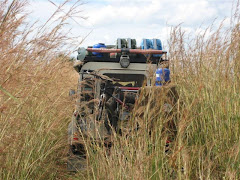
Going for another game drive, we this time drive along the Katavi River all the way to the end of the plain. We try to carry on after crossing a dry river bed from where the vegetation abruptly changes to dense grass that is so tall that it not only surpasses Anse’s roof rack but also completely obstructs the view onto the track. We decide not to venture any further but with deep ditches on either side of the track and virtually no visibility, it makes the u-turn challenging.
On the way back along the river we spot an impressive herd of buffalo (maybe 300-400 of them) which moves out of sight quickly in one collective black mass leaving behind only a dusty cloud above the dry grass while their grunting and stomping sounds of their hooves fade away in the distance. A bit further on we bump into a few more of them, trying to catch up to their herd on our approach, bolting through the dense bush and galloping across the dirt road right in front of us. An awesome scene!
Apart from heaps of hippos, of which most of them have left the water to laze in the hot midday sun, we also observe a spotted hyena of note! Unlike most of his elusive fellows I have experienced so far, this docile character just remains standing on the edge of the river where he was obviously about to drink. But for the next 15 minutes this amusing creature doesn’t move an inch from its position, just standing there, docile, passive, bored rigid as if he’d been sedated! Occasionally giving us a lethargic look, only to remain standing exactly where he was! Kirsty and I come to the conclusion that this hyena is most definitely into drugs! We finally give up on him, loosing our patience and leaving him to recover.
· Sunday, 25th of May bush camp between Mpanda and Rukoma
We are intrigued about Mahale Mountains NP, infamous for being one of the few remaining places where wild chimpanzees can be tracked. It is a very inaccessible park, which can be reached only by plane or by boat from Lake Tanganyika as there are no roads leading to the park. The suggested route described in most guide books is usually via Kigoma in the north, from where one can organize a local boat which takes apparently 12-14 hours or a speedboat which takes around 3 hours at a huge cost! We are struggling to get any information about alternative routes and since Kigoma is out of our way, we opt to tackle the road to Katumbi, a village that on our map seems to be the closest one to the park. Little do we know that this road doesn’t even exist all the way to Katumbi!
From Katavi we head north to Mpanda Ndogo, where we struggle for quite a while to find the turn off west towards Lake Tanganyika since its position is marked wrongly in our map and also doesn’t show on the GPS. We finally reach it and off we go on an initially pretty good dirt road which leads through a few spread-out villages. We find a good place for bush camping, but realize soon that we are on a cattle route when our dinner preparation gets briefly interrupted by an invading herd of cows!
· Monday, 26th of May, Mahale NP
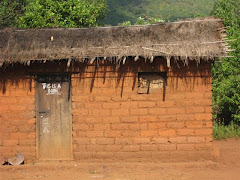
After preparing our backpacks with clothing, tent and some food for the anticipated stay in Mahale, we leave our bush camp a bit later than usual. We carry on westwards passing through tiny villages, where some of the locals give us such bewildered looks making us think that they’ve possibly never seen a white person in their lives! It makes us feel a bit awkward as we drive down this seemingly never ending track but at the same time also excited, being able to explore such a remote area. Kirsty and I have a good refreshing laugh when driving past one of the local mud huts which had in bold white letters written on its wooden door: ‘THIS IS A DOOR!’
After descending a steep pass with jagged gravel and a few muddy sections further on, we see a car coming towards us! Some geologists in a Land Cruiser who are exploring the area for precious metals have set up a camp 20 km further down the road and are helpful in giving us advice. They tell us that at the next fork there is a security guard next to their broken down caterpillar who speaks English and could assist us with further directions from the locals. We take the right fork, following the tracks of the caterpillar and can already see it a few hundred meters further. By the time we reach the security guard, we have already attracted a huge crowd of people following us like a swarm of bees. While we are trying to get directions to Mahale from the security guard standing on my side of the window, the many noisy and curious faces, popping in through Kirsty’s window make talk difficult. As if sent from heaven, one guy who picked up our conversation says enthusiastically in his broken English: ‘Mahale? I know! I guide you!’ Kirsty and I look at each other and it doesn’t take long for us to agree that local guidance would be the best way forward from here.
The friendly man introduces himself as Immanuel and after agreeing to a price, he jumps on Anse’s roof and shouts: ‘Let’s go!’ As we leave the caterpillar, the crowd of people and the ‘good’ road behind, we feel happy with our decision and a bit more confident that we might somehow get there! At this stage, mainly through the language gap, we still haven’t got a clue how far this road takes us and how we will carry on from wherever it will get us, but somehow Immanuel’s enthusiasm combined with our gut feel that he’ll get us there lift our spirit.
The track leads down the side of a valley and soon narrows down to the mere width of our Landy. Staring at Priscilla (our GPS) reminds us vividly that we are now definitely making uncharted tracks as her pointer burns our bumpy new route into the screen! Slowing down whenever we pass overhanging trees to make sure Immanuel doesn’t get wiped off Anse’s roof, we arrive at the top of a steep gully. The progress on the descent is slow. Negotiating the tight and badly eroded track, winding its way down to a river crossing doesn’t leave much room for maneuvers but leaves me sweating, often walking a section and listening to Immanuel’s advice before tackling it.
The river is not even knee deep and easy to cross even though going up the steep bank on the other side needs full throttle in low range first gear to get Anse and me up there (by then Kirsty and Immanuel had preferred to walk). After the river crossing we leave the ravine behind us and the track becomes flatter. It’s narrowing down to a mere path though so that one wheel is always hidden in deep grass and making it also difficult to let locals pass who carry heavy goods on foot and by bicycle. After maybe another 10 km following that path through cultivated maize fields and rice patches we finally reach the village Rukoma on the shores of Lake Tanganyika around 3 pm\!
We are happy that we made it to the lake but also feel a bit like intruders here, disturbing the peace of the local community. Immanuel is known everywhere and assures us that the locals are happy to welcome us. He also makes us understand that we can either hire a local boat here or carry on the track to the next village on the lake further south. Driving further was definitely out of the question for us so we opt for hiring a boat from the locals.
We get introduced to Bahati, the skipper of the boat and his crew. The following negotiations going backwards and forwards between us and them to settle on a price rob us of our last bit of energy that we have left in us after getting all this far! There is a moment when we are wondering what we would do if they don’t come down with the price? Turn around and go back??? Feeling vulnerable and exhausted Kirsty and I sit down inside Anse, closing both doors just to escape the negotiations, mute the noise and retreat from the curious kids for a while. When Immanuel approaches us again, acting in his role of a mediator, we stick firmly to our first offer of $170 and after some discussion amongst the boat people, the skipper agrees! We are relieved! Mahale is getting a little bit closer!
Immanuel agrees to stay with Anse and we park her right next to his friend’s mud hut in a fenced in area with chicken running around. We can be lucky that we packed our backpacks this morning because it’s getting late and we have to hurry up getting on to the boat.
Kirsty and I get onto the big wooden boat with a Yamaha out boarder engine. ‘Looks fairly trustworthy, and with the skipper having 3 crew with him, they can always paddle us to the shore if the engine breaks down!’ goes through my mind. I just get a bit skeptical when I see the guys trying to start the engine… the original rope which usually has a plastic handle to pull on had obviously long gone! It was now replaced with what was left of the remaining strands from a disintegrated cord (which reminds me of my German friend Michael who would call it aptly ‘Kuhband’!), shortened by many mending knots, making starting difficult. Being just a loose piece of well, Kuhband which the skipper had pulled out of his pocket, it had to be wound around the reel after each unsuccessful pull! Like we have experienced so many times in Africa: It might not have been approved by ISO 9000 or the TÜV, the most important thing is: IT WORKS!!! (eventually!)
So after the boys siphon a few times on the fuel pipe, tilt the pretty empty canister to gather the remaining fuel and pull the Kuhband innumerous times, we are finally ‘making trees’ (means moving)! We stop in three villages on our way, where each time the crew disappears with the near empty fuel canister only to bring it back barely filled. My guess is that the crew probably had to bump as much fuel as they could get from whomever they got it from by persuading that person that they would get compensated for it on the crew’s return trip once we’d been paying them. Interesting concept, again: IT WORKS!!! (only in Africa!)
After a 3 hour boat ride with spectacular views of the Mahale Mountains on our left and the coast of the DRC across the lake on the horizon, we finally arrived at the Mahale Head Quarters where we registered and got our permits. Another speedy boat ride into the sunset with the National Park’s own ‘fiber’ gets us 6 km further up the lake shore to the start point of the tracking excursions and the bandas (very basic quarters with bathroom). After the meticulous caretaker Ishmael arrives with the keys, we put down the packs into our banda and cook a simple dinner from our provisions on a kerosene stove in the communal kitchen.
We have to pinch ourselves: We’ve made it to Mahale!!!
· Tuesday, 27th of May, Mahale NP
With our field guide Frederic we go and venture out into the dense, beautiful jungle for our first tracking excursion. After 10 minutes walk from the camp we pass some lemon trees (which usually don’t occur there but were conveniently planted there by some people living in the Mahale Mountains before they were declared a National Park) and by looking at the scattered pieces of lemon peel Frederic can tell that the chimps had just been here yesterday! He leads us on a maze of paths over numerous streams to some of their favorite hiding places, but all we can find is old poos and the occasional nest up in the trees which the chimps build out of twigs for the night. We spot a few groups of red tail monkeys who amaze us with their incredible climbing and jumping abilities and also catch a glimpse of the elusive kolobus monkeys. After more than 4 hours walking through the leafy forest without a chimp in sight we return to the camp and relax on the beach. I manage to do some yoga on the National Park’s boat jetty.
When we were preparing our backpacks we didn’t quite know what to expect at the National Park, so we had packed the tent and mattresses which we actually didn’t need now because we were staying in a banda. When it came to our food provisions, however, we thought that maybe there is a restaurant or a shop available in the park, so we only packed the bare minimum provisions. There are no facilities in the park itself apart from the private lodges so after yesterday’s dinner we are only left with some rice, a can of tuna and some snacks!
During the hike I had told Frederic about our predicament, asking him if he couldn’t organize some fish from the locals for us and he said he would try to make a plan. Just after the ‘fiber’ boat arrives from the head quarters, a local guy who turns out to be the cook for an American research team walks into the communal kitchen holding a 2kg fish in his hand which he swiftly guts, fillets and grills for us over coals! Happy with a few Shillings and the head of the fish he runs off as quickly as he appeared and leaves us with the very welcome addition to our diet that night!
· Wednesday, 28th of May, Mahale NP
At 8 am we meet Frederic again to set out to another excursion. This time we venture a bit higher into the mountains and use different trails. We sit down and listen numerous times but each time we get up again to carry on walking, Frederic sighs and says: ‘Mountains are very quiet today!’
We spot red tail monkeys again and a duiker, but somehow that doesn’t quite do it for us! Getting back to camp after another disappointing 4 ½ hour tracking excursion, Frederic suggests that we meet a bit earlier tomorrow and head up high into the mountains which would require up to 8 hours of hiking!
We relax at the sandy beach, looking over Lake Tanganyika to the DRC where the sun sets behind red glowing mountain ranges.
We are pretty down, not only because of the hiding chimps but also because there’s no fish today (the ‘fiber’ didn’t come) and we are just left with some rice for tonight’s dinner of which we save half to take along for tomorrow’s long hike! At least we have taken our water filter with us which comes in very handy now.
· Thursday, 29th of May, bush camp outside Immanuel’s village
We meet our guide Frederic this time at 7:30 and head up the path that leads up the mountain. The route is steep but we make good progress at a steady pace. After about 2 hours walking our guide distances himself while we remain quietly (well, trying to! [huh huh huh ha ha ha, itch itch] J) at one spot so that he can just concentrate of listening to the sounds of the jungle to figure out where those wanted primates could be hiding – with no avail (Maybe we were just giggling too much when a branch cracked loudly after Kirsty sat down on it).
‘What’s your suggestion?’ I asked Frederic when he returned disappointedly from his listening session. He sighed and simply responded ‘We keep on walking!’ And further up we ascended again on a root streaked path which numerous times had to be cleared by Frederic’s machete strikes.
At one stage we hear a monkey shout close by and Frederic says: ‘It’s them!’ We walk a bit further to where we think the noise came from and then remain still for a few minutes. We can see the trees moving from the jumping action going on up there and Frederic has a closer look. But soon he comes back with a disappointed look on his face: ‘Red Tail!’ So on we go heading further up the mountain and Kirsty and I are starting to wonder what the point is at this stage…
We’d tried to track them now for three days! Frederic mentioned to us at the very beginning of the tracking that the food supplies for the chimps are scarce at the moment and that the huge group of 60 chimps splits up and scatters throughout the forest. So as I am walking, I ask myself, what are the chances really of spotting them in this dense, vast, mountainous and (apart from two paths heading into the higher regions) mostly inaccessible jungle? But then I remembered that our skipper’s name who had been steering us in the local boat from Rukoma to Mahale was ‘Bahati’ which is Swahili for ‘Good Luck’ and I thought that he’d been a good omen for this adventure so far, so surely his good energy would direct us to the chimpanzees!
About 20 minutes later after about 3 ½ hours of walking, we can hear a quite different sound and Fred says with a smile: ‘That’s them!’ We walk on with anticipation but don’t hear anything again for quite a while. Frustration sets in again and I am close to loosing faith in Fred’s tracking abilities, which I must admit is really not a fair thought after the amount of effort he put into finding them for us! He gave his best and had been going out of his way by even setting out again to find them at the end of yesterday’s tracking excursion.
The expectation and anticipation of spotting them has almost faded away and we are almost at the point where we would head down the mountain again, when Frederic unexpectedly walks in on them! The deafening silence that seemed so frustrating a second ago was pierced by the scary but at the same time exciting shrieks and alarming screams by the group of chimpanzees which seemed to have appeared out of nowhere! There wasn’t a chimp in sight, but their screams were so loud that they couldn’t be further than 25 meters away from us hiding in the maze of leaves! It was the weirdest moment! Like eeriness, excitement, fright, primitive rawness, anticipation and relief all together – we had finally found them!!!
As by Fred previously instructed, we put our white mouth masks on which supposed to prevent human viruses to be transmitted to the primates and then move slowly towards them. It’s awesome to see them! They are so similar to us humans in their gestures and motions and in their way they use their hands, but when it comes to their screams (which start quietly with ‘huh huh huh’ but then increase tremendously in volume with every member of the group joining in and ending up with a ferocious ‘ha ha ha’ while beating their hands fiercely on the ground) their animalistic instincts are definitely taking over. We see about 6 of them and watch two of them closely while they are grooming each other meticulously. Our favorite is definitely the little 3 month old baby which plays around in the branches not too far from its mother! It’s a real cutie and funny to watch his clumsy moves, dangling cheerful upside down from a tree or biting mum’s toes with a mischievous look on his light colored face. This experience definitely lets all the efforts that it took us of getting to see them evaporate into thin air! Thanks to Frederic’s patience and perseverance in tracking them!
As if they had known that our official viewing time of one hour came to an end, the chimps move on past us into a real dense and inaccessible ravine. One of them even gave me a look walking by only half a meter away. Satisfied (well sort of, there’s always the urge to see them for a bit longer!) with our unforgettable encounter we start the descent back to camp. On hour way down we bump into the Japanese researcher, a fairly young chap from Hiroshima who is on his way up the mountain with two guides to track the chimps.
A bumpy but speedy boat ride on the National Park owned ‘fiber’ gets us an hour later safely back to the village of Rukoma again, where our smiling, faithful guide and car guard Immanuel welcomes us happily with a warm handshake and a: ‘I love to see you!’ We are relieved that we find Anse as we left her, mainly owed to Immanuel’s devotion, sleeping each night on her roof as we found out later!!!
Shortly after leaving the small village Rukoma we bump into one of the weirdest sight! 4 Americans and their local guide walking towards us on the narrow grass lined path! Perplex, intrigued to how they made it here and at the same time (after what we had gone through) also happy to see this eclectic mix of white, Asian and black faces, we lean out of our windows and shout from the distance like typically the locals notice us: ‘Hey! Mzungu!!!’ We stop and have a quick chat with them. It turns out that they are all students traveling (partly by bicycle) for a month in Africa. Their guide takes them from house to house, giving them the opportunity to chat to some locals! We are utterly impressed with these intrepid fellows!
Sitting on the roof or at times clinging onto my back ladder whenever there are low trees to bypass, giving us route instructions like: ‘Lefty, lefty! Righty, righty! Okay, let’s go!’ Immanuel guides us safely back up the scary road which isn’t even a road. And Anse – even though her bones are sometimes squeaking from the hard work load at the steep gradient – tackles every obstacle with amazing confidence! We drop Immanuel off at ‘his’ village where he gets greeted happily by his family and remunerate him for his services and his honesty partly with cash and also with some of my clothes and shoes which I had decided to give away.
Even though the sun is almost setting, we still drive a few kilometers back towards Mpanda to get away from the populated villages where we find a quiet bush camping spot right next to the road. Two geologists who are busy exploring the area for nickel and platinum drive past in their Toyota Land Cruiser and offer us to stay in their camp 10 kilometers back the road, but as much as we would have loved to have some interesting company, we prefer to have some tracks made towards Mpanda. We cook the most delicious burgers I have eaten in a while (the patties even survived our Mahale stay in the disconnected freezer!) and Mzungu Volker tries very unsuccessfully to light a fire with bamboo stalks which grow at the roadside…
· Friday, 30th of May, bush camp outside Sumbawanga
Today turns out to be one of the longest driving days so far. We leave our roadside camping spot and hit the long road back to Mpanda and then further on to the Katavi NP Head Quarters where we fill up Diesel again. Even though we could stay overnight at the National Park’s campsite we decide to drive on. Maybe some 100 km of the road just outside Katavi is being freshly graded and we make good progress on the smooth surface, pushing on until we reach the same bush camping spot just outside Sumbawanga where we last pitched our rooftop tent 10 days ago. A 12 hour driving day, but at least it saves us one day, which means one more chance of having a delicious cappuccino at Utengule Coffee Lodge J !
· Saturday, 31st of May, outside Sumbawanga to Mbeya
We leave our bush camping spot just after sunrise and browse not much later the market of Sumbawanga for fresh produce. The next 225 km are grueling dirt road and at one stage, just 30 km outside Tunduma I am throwing a tantrum and am swearing at the roads because after all this driving they are now really getting to me!!! I just stop Anse right there and Kirsty gets me out of my frustration by quickly making a bowl of tuna salad and pushing it into my hands. I am glad that she’s figured out by now that feeding me will most definitely get me out of any bad mood J !
All recharged again after the badly needed pit stop we carry on to Tunduma where the much anticipated tar road awaits us! The last 88 km to Mbeya are pure bliss and soon we take residence again in the familiar and comforting surroundings of the Utengule Coffee Lodge. It feels really great coming back to a place where we can feel at ease! After the first hot shower in two weeks and badly needed grooming (that beard hat to come off!) we treat ourselves to a delicious three course dinner next to the cozy fireplace. I can’t resist indulging in a double espresso with Amarula and cream as a nightcap, but not without paying the consequences…The delicious potion turns into a daycap for me! Despite the exhaustion kicking in from the past few days I am wide awake and jumping around like a wind-up Duracell Chimp in the Mahale jungle while Kirsty has already been sent to the land of dreams and Nutella rivers for hours…
· Sunday, 1st of June, Mbeya
We enjoy a day of rest at the Utengule Coffee Lodge. To my annoyance I find dampness again on some of the spare parts which I keep in Anse’s bakkie and try to figure out where the water gets in.
· Monday, 2nd of June, Mbeya
I go for a run in the morning and then drive to the (by now familiar) Land Rover workshop to give Anse the much needed tlc after the bad roads on our way to Mahale. At the workshop things started a bit slower than usual as there is a big meeting involving all the workshop foremen. The Suiss national and missionary Ariel had handed his responsibilities as a General Manager to his dad who will be taking over his position as from June 1st. After 12 years at Mbalizi mission, Ariel and his family will go back to Switzerland so their son can benefit from a better education there.
While the workshop team works on Anse (bushes need replacing) I make use of the time as much as I can by sitting down under a tree close to the missionary’s houses to read my much neglected book and write some of my diary. For lunch I pop in at a chips joint at the local market where I fill my tummy for 400 Tanzanian Shillings (about 30 US cents). As so often, procedures take a lot longer than estimated at the workshop and I only get my car back at 5:30 pm. I still drive to the supermarket in Mbeya to fill up our stocks (especially our Nutella and chocolate supplies) and finally get back to Utengule at sunset where Kirsty whips up a wholesome pasta meal.
· Tuesday, 3rd of June, Mbeya
To our annoyance we are not allowed to wash a load of laundry in the lodge’s washing machine, so we are forced to do the much dreaded chore by hand which takes always too long. According to Kirsty, I spend the rest of the day ‘wippstert-ing’ (=pottering) around. Drying and repacking the spare parts, cleaning and packing the car, replacing some of the silicone in the inside of the fridge and putting the camping stuff (which was still buried in my backpack since Mahale) back to its designated boxes. And trying to figure out from where the water seeps into Anse’s bottom. We have an average dinner at the lodge and I hit the sack pretty early after a busy day.
· Wednesday, 4th of June, Mbeya
When I come back from a great run this morning, I can barely hear the battery alarm beeping from inside Anse, but it triggers loud alarm bells in my head! Even though I had put the switch so that the fridge only draws from the auxiliary battery, both batteries turn out to be completely flat overnight and I didn’t manage to start the car! After charging the batteries for a while with the help of the solar panel I manage to start the engine, but uneasy about that incident, I drive to the Mbalizi workshop to have my batteries checked.
While they charge the main battery, which takes about two hours, I drive into Mbeya town to do some grocery shopping at the local market and to exchange some more Shillings. Back at Mbalizi, I get the battery back fully charged at no charge J.
While Kirsty is at the last stretch reading her massive book ‘Shantaram’ I get on writing my much neglected diary.
· Thursday, 5th of June, Tungamalenga camp site outside Ruaha NP
We leave Utengule at 7:30 and head north east towards Iringa. Passing through the unappealing little town of Makambako reminds me of the trip I did with my friends Kevin and Philippa 3 ½ years ago when we had to stay in the dreadful B&B there with a generator roaring next to our bedrooms the whole night! One of today’s major highlights happened on the road when Kirsty finally finished reading all 932 pages of her book ‘Shantaram’ which we celebrated with a loud honk of Anse’s horn!
The road from Iringa towards Ruaha NP has recently been graded and allows a fairly pleasant drive. Where the road splits, just 60 km outside the NP, we decide to take the left fork which passes numerous villages and pitch 20 km further our rooftop tent at the Tungamalenga camp site (which turns out to be quite a noisy spot in the heart of the village).
· Friday, 6th of June, Ruaha NP
Yesterday we didn’t want to enter the park on purpose in the afternoon so that we can get the most out of the National Park’s expensive permit which is always valid for 24 hours from the time of entry.
Instead we head into the park in the morning which would enable us to leave the park in the morning of our last day again, just in time before the permit’s expiry.
We have not even reached the entry gate of the park yet, as we get welcomed by a delegation of four lionesses walking next to the gravel road! One of them, seemingly the oldest one is truly humongous!
After this impressive welcome we register to get our permits, sit for a while next to the Ruaha River Bridge to watch hippos and some huge crocodiles laze in the sun and then drive to our campsite. I have been here 3 ½ years ago with Kev and Phil and it seems like the camp site is still pretty much the same: Right on the riverside next to a big tree overlooking one of the Great Ruaha River bends, with no facilities except a pitiful long drop which nobody dares to use anyway. Heaps of good firewood has been provided, which is a big bonus (with an abundance of wildlife around especially at night) and new toilets and showers for the camper’s use have just been completed at the nearby bandas.
As we have our tent on the roof, we mark our camping spot with some firewood (it’s weekend) and head out for a game drive. Being just the end of the rainy season, we are lucky to find the long grass dried out and already collapsed, making game viewing a bit easier. We have some close encounters with elephants and spot zebra, giraffe, impala, springbok, buffalo, hippos, crocs.
Some game rangers driving a Chinese couple around give us a hint where we can see some lions parked off under an acacia tree across a dry river bed. If it wasn’t for their tip we would have never noticed them!
During our dinner we get checked out by a curious genet, a small catlike animal and at night we can hear lions far away from the other side of the river.
· Saturday, 7th of June, Ruaha NP
We explore the western side of the park along the Ruaha River and then head north where we climb up the steep ladder to a look-out built into a baobab tree. The bush is very dense here which makes game spotting challenging, so we move on to the north towards a palm tree lined dry river bed where a sole buffalo skull adds to the eeriness.
Kirsty has made up her mind to fly back to Cape Town from the Ruaha NP airstrip rather than from Dar Es Salaam. Having been on board for the past three months now and after finally spotting lions and having close to encounters with elephants she’s got out of this trip what she wanted and is ready to move on to her next adventures in Europe (after spending some time in Cape Town). Leaving from a quiet National Park also seems more appealing than from the hustle and bustle in Dar.
So she enquires for flights at the headquarters and she gets booked on the 11 am flight to Dar on Monday (we think!).
· Sunday, 8th of June, Ruaha NP
As marked on the park’s map, there is a road on the other side of the Ruaha River and as we heard lion at night from that direction, I am keen to go and explore that section. We get up early and drive all the way to the gate to take the indicated turn off, but we can’t find it. At the gate we enquire about this road, but it turns out that the road is a private road and only accessible to park rangers as it lies in the game management area. A bit peeved about having lost precious game viewing time, we turn back and head into other areas close to the river.
Rather than driving around we decide to pick a beautiful spot on the river, park off there for a while, laze in my hammock, cook some lunch and watch what’s going on around us. Somehow game viewing always proves to be more rewarding this way! We feel more in tune with nature and notice all the small things going on around us. The passengers of two game viewing vehicles couldn’t have found this very amusing when they drive past us, intensely looking for game, only to spot some spaghetti eating Wazungus , waving with smirking faces out of their hammock and raising their drinks towards them!
Kirsty prepares her departure and we start packing some of her stuff. The midday sun is intense and soon we are exhausted from moving boxes. Even sitting down on a log in the shade at the confluence picnic site where a dry river joins the Ruaha can’t seem to cool us down.
On the way back to our camp site we still spot an impressive male kudu on the other side of the river and two minute dikdiks.
· Monday, 9th of June, Ruaha NP to Tungamalenga
Kirsty’s flight supposed to be at 11 am and after a short game drive, we arrive at the ‘departure hall’ (hut with a grass roof!) way before the time, only to spend the next two hours waiting for the plane! Eventually two planes land shortly after each other, but it turns out that the one going straight onwards to Dar, steered by a lady pilot, a Wippsterter of note (In comparison to her I’m pretty much a sedated hyena!) turns out to be full! As frustrated as we are (both our park’s permits are about to expire and Kirsty still hadn’t left!), watching this crazy hyperactive woman buzzing around like a firecracker while she’s (take a deep breath!) running to change into another plane, moving baggage by herself, doing paperwork, gathering her next passengers and instructing them where to sit (to even out the weight), checking the plane thereby hitting her head on the wing (ouch!), cursing while trying to start an old battered Jeep which needs to be moved close to the refueling tank since the tank’s electric pump runs off the car’s battery and in between all of this trying to help Kirsty by radioing another pilot, is quite amusing! ‘Top Gun’ is a yawn versus this! After four attempts of starting the engine (thank god Kirsty didn’t sit in that plane!) she eventually takes off again, not without keeping on radioing the other pilot who is leaving for Dar from Dodoma and could re-route to pick up Kirsty on his way. The last message we get from her on the radio is: ‘Wait at the airstrip!’
There’s no plane in sight and Kirsty and I go to the National Park’s Head Quarters to find out what’s going on. We get hold of the Chief Warden John who does his best to help us. We learn that if there are requests for flights by park visitors, the bookings get done out of goodwill by one of the private lodges which in Kirsty’s case had enquired for her flight but had not booked it. John kindly arranges another flight booking for tomorrow by phoning the airline directly from his private mobile phone and contacts the gate to let them know that we can exit the park without buying another permit (by now ours have already expired and we don’t want to stay another day inside the park). He also reduces the permit fee for tomorrow’s entry to a car permit, which is due only for me to drop off Kirsty at the National Park’s airstrip.
So after a pretty wasted day which we could have spent game viewing, we finally exit the park without a problem and stay overnight outside the park in Tungamalanga, this time at the clean Chogela Campsite which is run by the switched-on Rastafarian Chogela himself.
· Tuesday, 10th of June, Tungamalenga
Today marks the end of Kirsty’s overlanding Africa experience and after being glued to each other’s hips for three months, going through highs and lows together it feels quite weird going our separate ways. I can only say that it’s been really great traveling with her and carrying on my trip on my own will be quite an adjustment.
After a quick breakfast we make our way back to the park to the (by now very familiar) ‘airport building’. This time the plane arrives on time and soon, I wave Kirsty good-bye as the plane takes to the air heading for Dar.
I drive off with an empty passenger seat next to me and mixed feelings in my stomach – a new chapter of my trip is about to start!
Subscribe to:
Posts (Atom)
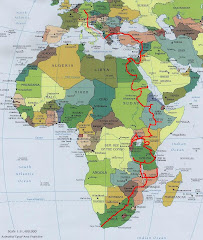










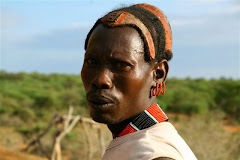

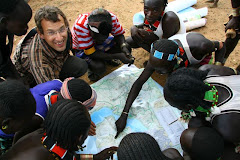
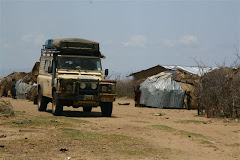
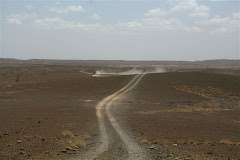


.JPG)


.JPG)