Wednesday, September 3, 2008

Impressive Rwanda

  • Sunday, 24th of August, Lake Bunyonyi in Uganda to Kigali in Rwanda

Kirsty’s laundry is still wet on the line so we have breakfast at the campsite’s restaurant and leave a bit later that morning. In Kabale we hit once more the internet café and then head to the Rwandan border only some 17 km away! The border formalities go very smoothly and I even manage to have me stamped out of Uganda in my second passport to hopefully avoid paying for another visa when entering back into Kenya (one is allowed to enter Uganda and re-enter into Kenya on the same visa, but once one goes outside Uganda, a new visa which means shelling out another $50 would be necessary to enter Kenya). Luckily German citizens don’t need a visa entering Uganda, being Australian Kirsty had to fork out $60 to obtain one!

Just by driving the stretch between the border and the capital Kigali we can feel that Rwanda is different and driving all of a sudden on the right side of the road alone (no warning signs whatsoever!) gives the impression (unlike many other countries we have entered) of being in a completely separate territory. Even our clocks have to be turned back an hour!

Dealing with the Rwandan receptionist Claude at the guesthouse Auberge la Caverne even proves that the locals have adopted not only French names but also their sarcasm and French attitude! We enquire about the breakfast which is included in the price for the room but hear that it consists only of toast and jam with egg in any form attracting additional costs. ‘So how much is a room without breakfast?’ we negotiate. The answer from Claude is: ‘You deserve to have breakfast! And anyway, it will be the same price without it…’ ‘Not even a Spanish omelet included?’ I ask. ‘Well, you can get the Spanish omelet without the egg if you’d like!’ comes the answer!

The only room available is in a different building 100 m up the road and it seems all too much effort for Claude to take us there so we can have a look. (One of my dad’s favorite proverbs towards his kind of attitude would have been: ‘Kunde droht mit Auftrag!’ which roughly translates to: ‘Client is threatening with purchase!) ‘Camping in the courtyard? Only if the last room has been taken by somebody else!’ so we decide to go out and come back to check later.

We have drinks at the posh Hotel des Milles Collines, where it looks like Rwandan well-to-do businessmen hang out with their families around the swimming pool on Sunday afternoons and later (after standing in front of closed gates at the Genocide Memorial which opens 8-4) head out for dinner. In Claude’s defense we must admit that the Indian restaurant he has recommended to us for dinner is really exceptional and we have an amazing meal there under the lofty and cozy tiled roof, open to all four sides and supported by massive wooden columns. Checking in later on at the Auberge we have to take the unappealing room since it’s still available, but nevertheless pitch our tent in the courtyard, overlooking the back hills of Kigali, only using the room’s toilet and shower.

  • Monday, 25th of August, Kigali

After treating ourselves to coffee and croissants at the Milles Collines Hotel top floor breakfast area and visiting the fancy Nakumatt shopping center I feel almost inadequate visiting the Genocide Memorial. It is an intense experience. Not only are the roots of the 1994 Genocide and the sequence of events explained in detail and illustrated by survivors’ testimonies but there is also a heartbreaking display dedicated to thousands of children who lost their lives in the most appalling ways, depicting photos and details about life and death of each of them. For me one of the most disturbing ones has been:

A huge photo of the cutest little girl and underneath a plaque:

Fillette Uwase

Age: 2,

Favorite toy: Doll

Favorite food: Rice and chips

Best friend: Her dad

Behavior: A good girl

Cause of death: Smashed against a wall.

The memorial also houses mass graves and a display of other Genocides that took place in the world, leaving me pondering how humans can be brainwashed to such an extent, developing a kind of hatred towards each other that makes them capable of these brutalities!? Kirsty and I leave the memorial shocked, touched, reflecting.

We spend the night at ‘One Love’, a center to help disabled people that also offers rooms, cottages and soon even camping (the latter being really rare in Rwanda). Again, we prefer sleeping in our rooftop tent on the parking lot and cook up a heap of pasta on the porch outside our room. We meet two German guys residing next door to us, one of whom telling us about his experience trying to adopt a Rwandan child.

  • Tuesday, 26th of August, Kigali to Rubona near Gisenyi on Lake Kivu

As Kirsty intends to fly out of Kigali we head to numerous travel agents at Nakumatt shopping center to find her a ticket to Europe, which proves to be more difficult than we imagined. After numerous unsuccessful tries to fly direct out of Kigali, the helpful travel agent eventually finds her a flight leaving at 13:55 today via Nairobi to London, so we hurry repacking her stuff right there at the Nakumatt parking lot and rush to the airport where I bid her farewell and then make my way on the windy road to Lake Kivu.

The perched away place Paradis Malahide which was recommended to me by my dear Cape Town friends Kevin and Philippa, is not easy to find but is definitely a great find! Despite the real inviting cottages I choose the cheaper camping option and join a bunch of British and American folks for dinner, yummy char grilled Tilapia fish from the lake. It turns out to be quite a funny evening with everybody having way too many locally brewed (the brewery is only 500 m away!) Primus’s and Mützig’s.

  • Wednesday, 27th of August, Rubona on Lake Kivu

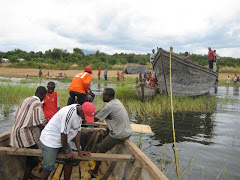
In the morning I take in the tranquil atmosphere of the little fishing village Rubona and listen to the happy chants of the returning fishermen in their distinctive spider-like fishing boats which consist of three big dugout canoes held together by poles. Later I learn from the lodge’s manager Fidel, that each of the three canoes are named according to their duties: ‘Ishaba’ (which means ‘luck’ is the one on the right holding the net and being responsible for the income-creating catch), ‘Itara’ (the one in the middle translating to ‘light’ or ‘lantern’, in charge of attracting the fish with its gas lamps and ‘Igiza’ (the one on the left meaning ‘darkness’).

I go for an exploring run past the Bralirwa Brewery along the shores of Rubona Bay past some steaming hot springs onto a perfectly round shaped hill forming a tiny peninsula where I learn from the locals that the dregs coming from the brewery are not only used for fish bait but also as fodder for the healthy looking cows!

After a swim in Lake Kivu and an awesome breakfast, displaying Paradis Malahide’s unique wooden cutlery and crockery as well as beautifully made clay coffee pots, heavy rain starts setting in and I make use of the airy but roofed sitting area overlooking the lake to write my diary, my feet being warmed by a mini clay oven which is stacked with hot coal by the attentive staff. One of those days where having a beer at 10:30 in the morning is just the most perfect thing to do ;-) !

It clears later on and together with the Anglo-American crowd who turn out to be working for a NGO (Non Governmental Organization) in Kigali, we go to the newly built lodge next door for a sundowner.

  • Thursdy, 28th of August, Rubona on Lake Kivu to Imbabazi Orphanage north of Gisenyi

Intrigued by the returning spider-like fishing boats, I ask one of the fishermen during my morning run if it was possible to join them for a night out fishing. The fishermen are more than willing to let me on board of their boat, but the problem seems to be more the local Navy which patrols the lake and is apparently quite strict with what’s happening on their waters, specifically when it comes to tourists. So after leaving Paradis Malahide and a failed attempt to get a ‘Primus’ T-shirt from the Bralirwa Brewery (would have made the perfect souvenir!), I head to the Gisenyi Navy base in order to get a permission allowing me onto one of the fishing boats. Through the armed guard posts is as far as I get! Then I have to talk on one of the guard’s cell phone to the Colonel in charge who explains to me that permission like that lies outside his responsibilities and that I would have to apply for it at the Minister of Environmental Affairs! I leave it at that and get back on my way again, at least I tried!

After getting onto the Internet in Gisenyi I head north again and pick up a boy in a village who shows me the way to the Imbabazi Orphanage (www.imbabazi.org), which I had read about in my Bradt guide book. Founded after the Genocide by the then 82 year old American lady Rosamond Halsey Carr, it is now still home of 102 children. The director Emmanuel shows me around the orphanage and takes me to Mrs Halsey Carr’s grave which is situated right next to her house with an impeccably kept flower garden from which they still supply flowers to the community for any occasion. He also gives me an insight into Mrs Halsey Carr’s work by showing me a DVD. The orphanage is run purely through donations since the government doesn’t like to support orphanages but rather encourages orphaned children to be adopted and integrated by local families. After having supper with Emmanuel I get into my tent for the night, surrounded by curious kids watching my every move.

Wednesday, August 20, 2008

Awesome Uganda

  • Saturday, 9th of August, Kisumu in Kenya to Jinja in Uganda

Pretty much a driving day with a lengthy Ugandan border crossing in Busia. We have lunch at Ozzie’s in Jinja, stop at an internet café and then head 15 km northwest to so far one of the most (from overlanders) recommended spot: The Haven. It truly is an amazing spot, chalets or camping on manicured lawns overlooking rapids of the Nile River, sparkling clean facilities with flush toilets and hot showers, amazing food and all that run eco friendly by using solar energy and water captured on two of the buildings’ roofs, designed by the (German) owner Rainer himself. Since it is through overlanding Rainer found this place, he is even offering a great overlander special: $25 per person per day, camping, full board (Breakfast, lunch, dinner)!

  • Sunday, 10th until 12th of August, Jinja

The next few days we spend writing diary, relaxing and enjoying the Haven! On Tuesday, Kirsty goes horse riding and I take on the great rapids rafting the Nile River! An amazing and at times scary experience!

  • Wednesday, 13th of August, Jinja to Entebbe

We have breakfast at a coffee shop in Jinja and hop onto the internet for a while before heading to Kampala and further on to Entebbe. Kirsty had read in one of the overlanding couple’s blogs that they had a great time at an animal orphanage there with a real enthusiastic keeper called Jimmy showing them around, so we are keen to go check it out! As it turns out the orphanage is actually a zoo, Jimmy is not around today and instead there are crowds and crowds of school kids around because of school holidays! So we walk around in the zoo watching animals behind bars some of which we have seen a lot closer in the wild a few days ago– a real weird and a bit comical experience….!...which got even more comical when we drove right through the zoo in our Landy to camp next to their bandas on the other side of the park! Kirsty’s tonsils are giving her grief, so we heat up some soup and have an early night.

  • Thursday, 14th of August Entebbe to Queen Elizabeth NP

Somehow we can’t find the turn off to Mpigi so we almost head all the way back to Kampala to then head southwest again. We cross the Equator (second time)! The roads are tiring, strewn with potholes and crazy truck drivers, torrential rain showers. Not sure how the German cyclist we just met survives! It’s a long haul to the Queen Elizabeth NP and Kirsty’s tonsillitis has gotten worse. We finally get there around 17:30 and after paying for our campsite at the visitor’s center close to Mweya Lodge, we pitch our tent at the beautiful ‘Camp Site No. 2’ overlooking the channel between Lake George and Lake Edward.

  • Friday, 15th of August, Queen Elizabeth NP

Apart from some intruding game drive vehicles looking for leopard (our campsite is right on the leopard loop) we have a chilled day which gives me time to catch up with my diary while Kirsty tries to sleep off her tonsillitis.

  • Saturday, 16th of August, Queen Elizabeth NP

Kirsty’s tonsillitis is still giving her a lot of pain, so we stay put at the campsite in the morning which gives me a chance to some car stuff and grease the universal joints. In the afternoon we go for a game drive in the northern section of the park, but aren’t very lucky with sightings there, apart from some kob, warthogs and waterbuck. Going back towards the campsite, we get onto the ‘crater drive’ which turns out to be a real spectacular drive. One huge forested crater follows another, some of them with crater lakes at the bottom some hundred meters below. The rocky track follows the rims of the craters and offers dramatic, forever changing views.

Back at the campsite we meet Karen and Karl, a South African couple who traveled with their two sons from Cape Town to Ethiopia and are now on their way back home.

  • Sunday, 17th of August, Ishasha, Queen Elizabeth NP

After a not so rewarding game drive and a quick internet session at the Equator gate we head down the tar road with the intention of exploring the Kyambura Gorge in the eastern section of the NP, but we get hindered by a bushfire that spread along the road. Kirsty, coming from a bushfire-troubled country has rightfully huge respect of fires and we drive up the escarpment to figure out what to do. We hang around for a while and when we eventually see a couple of cars coming through and even some dudes on a motorbike, we head down the escarpment again, leave the Kyambura Gorge behind and rather turn off to Ishasha, the southwestern part of Queen Elizabeth NP known for its tree climbing lions. We stay next to Karen, Karl and their kids, whose brother’s family joins them later in the evening, on the pretty crowded campsite next to the bandas.

  • Monday, 18th of August, Ishasha, Queen Elizabeth NP

We leave for a game drive in the morning and are lucky to spot three male lions next to the road (though sitting in the grass) just a few kilometers outside the camp on the northern circuit. There are big herds of buffalo in the park and heaps of kob, a very common antelope species here. We do both, northern and southern circuit twice, unfortunately without sighting any lions up on trees.

We ask the park warden if we can’t camp on the beautiful sites next to the Ishasha River, but they won’t allow us because of recent rebel incidents from the DRC just on the opposite river bank. As an alternative we get offered to camp about two kilometers away from the park offices at a picnic site, which has just been cleared for us by a tractor with a big lawn mower. Luckily there is a thatched roof boma, because it starts pouring just after we start preparing our dinner. We meet three young Germans who also seek shelter there and join them at the campfire. They give us some helpful advice about the routes down south and about gorilla tracking. At night we hear noises of an animal in distress but are not sure if it was a hippo or maybe a buffalo.

  • Tuesday, 19th of August, Ishasha to Kabale, Lake Bunyonyi Overland Campsite

As we are about to leave camp, Karen, Karl and their sons drive past to say hello, all keen and ready for the final attempt in finding the tree climbing lions! We head off soon after, driving through the southern circuit for a last time unfortunately without spotting a single lion – not even on the ground! A bit disheartened we head south to fill up diesel in Kihihi where we have planned to meet up with Karen and Karl.

Then we get a phone call from Karen – they have spotted a lion in a tree not far from where the dirt road forks off to Kihihi! Being only 9 km away, Kirsty and I decide to grab the opportunity, turn around and drive back to have a look! Even though we get more detailed ‘spotting instructions’ by Karen and Karl who are on their way to Kihihi, it takes us a while to notice that buggar snoozing up in a fig tree about 100 meters from the road! Well spotted Karl! Tick!

We make our way to Kabale via Rukungiri and Ntungamo, hoping to hit the tar road soon and thereby avoiding a broken bridge detour on the route due south, but we end up driving more than 2 hours until reaching the relieving tarmac. In Kabale we enquire about gorilla tracking at the National Parks Information Office and the pretty efficient clerk sorts us out in no time. As permits seem to be unavailable in the common tracking areas of Bwindi NP Nkuringo and Mgahinga, we make a booking to track the newly habituated Nshongi group on Thursday starting from Rushaga Tracking Camp at the southernmost tip of Bwindi NP, close to Rubuguri. This group has been habituated for one year and has unofficially been accessible to the public for one month now. The group will only be marketed and officially opened to the public in the near future.

We drive up past some quarries where locals chip rocks by hand (!) to make gravel and then down the other side to the shores of Lake Bunyonyi which lies beautifully tucked away between surrounding hills. We check in at the Overland Campsite but first have yummy pizzas right on the lake at the rustic Calabash Campsite next door before we pitch our tent again next to Karen, Karl and Karl’s brother Philip and his wife Judy who are also traveling with their two kids.

  • Wednesday, 20th of August, Lake Bunyonyi to Rubuguri Cultural Center

After receiving very useful waypoints from Karl for my route north into Ethiopia we bid Karl, Karen, Philip, Judy and their kids farewell and stop at the internet café in Kabale before heading to Rubuguri. The rocky road which snakes around endless bends to the north of the lake is breathtaking and pretty epic to drive!

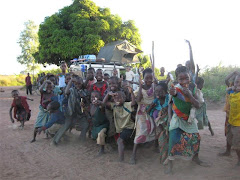
The locals are very friendly here but far too often their waving turns into a begging hand greeting us with ‘Give me money!’ or just ‘Money!’. In contrast to that it’s always refreshing to see some kids jumping, screaming and dancing wildly at the sight of us ‘mzungus’! Some smaller kids are more fearful though, waving from far and then as we approach they get scared running away to hide, two of them disappeared altogether in a concrete drainpipe next to the road!

It takes us about 2 ½ hours from Kabale to Kisoro where we pay for our gorilla tracking receive the permits. From there we drive another 70 km to the small village Rubuguri where one can camp at the ‘Rubuguri Cultural Center’. On our arrival, there are crowds of people gathered everywhere, who had met to vote for a new head of the community as we find out later. We park Anse on a spot just outside the center, a wooden structure on stilts with a porch at treetop height and a makeshift wooden gate gets put up quickly to give us a bit more privacy from the village. We park off at the porch for drinks and wait for the food we ordered while being interrogated by some local teacher. We ordered a whole roasted chicken and chips, but when Kirsty went to the lady’s (a long drop), she still saw the chicken next to the kitchen alive with its feet tied together! So it took maybe 3 hours …but when we finally get the roasted chicken around 9 pm we for sure know - at least it has been freshly prepared!!! By that time and along with still having the picture of the life chicken in her mind, Kirsty doesn’t feel like eating it anymore, so I am left with chomping away the whole chicken all by myself!

  • Thursday, 21st of August, Rubuguri to Muko Campsite on Lake Bunyoni

We leave early to be on time at 8 am at the gorilla tracking site at Rushaga, only to be left waiting another 1 ½ hours for another two visitors who never arrive because they eventually cancel! Anyway, despite the delay we are happy to have the gorillas just for ourselves! By our guide we get kitted with gum boots and walking sticks (both definitely the most useful gear for the terrain as we experienced later!) and get told about the do’s and don’ts when being with the gorillas. One group of trackers has already left before us and until we hear the first sounds of the gorillas it takes us roughly 2 ½ hours walk through the most amazing and impenetrable jungle I have so far experienced, through streams, undergrowth, mud and deep water filled elephant footprints with tadpoles swimming in them! We get rewarded with sighting about 10 gorillas, two of which are impressive and rather intimidating silverbacks. After a few mock attacks the group feels more relaxed, even though the silverbacks make themselves pretty scarce. Instead we get to see a whole acrobatics performance by a cute little baby gorilla, performing for us on a single branch a few meters away and later on two young brothers put up a show in another bush right in front of us. What an awesome experience to see these amazing creatures! After spending the maximum time of an hour with them, it’s unfortunately time again to head back, this time at a faster pace as the heavens open their gates!

We change into dry clothes and head off quickly to get to Lake Bunyonyi before dark. In the first village we pass after the tracking camp, we get waved down by a bunch of local guys selling wooden gorilla statues and since they are really well made we buy a whole lot of them. As we pay the local boy, he says that his community would like to dance for us. We react a bit reluctantly, as we still have to tackle the drive to the lake in this rainy weather and it’s already late. Before we know it, all the kids of the village are on their feet, clapping, stomping in the beat of the drum and making the wet ground tremble, singing welcoming songs and dancing in well rehearsed formations. Kirsty and I get out of the car and just stand there in awe, overwhelmed by the dancers’ compassion, rhythm and joy.

Invigorated by this truly moving experience, we drive on to the northern part of Lake Bunyonyi where we pitch tent and have dinner at Muko Camp.

  • Friday, 22nd of August, Muko Campsite to Lake Bunyonyi Overland Campsite

After some chapattis and a Spanish omelet for breakfast we head back to the Lake Bunyonyi Overland Campsite and spend the rest of the day at the camp with errands and chilling. Strangely enough, being parked at an elephant statue right at the tip of the shoreline, we find our ‘privacy’ constantly invaded by visitors admiring the statue right in front of our car (the elephant’s butt facing us!) and taking photos of it. We figure, the management must insist on people checking out the elephant attraction as part of their marketing!

We finally manage to feed Priscilla (our GPS) with updated software that should stop her from freezing and upload the latest version of t4a maps.

  • Saturday, 23rd of August, Lake Bunyonyi

We hire a local mukoro (dugout canoe) and enjoy the tranquility of Lake Bunyonyi paddling to a nearby island. We got our hands full steering it especially in the oncoming wind, but luckily we get spared from too many so called ‘mzungu corkscrews’ and manage to get there without etching too many loops into the lake. That paddling definitely helped to work up and appetite and we walk to the friendly (definitely friendlier staff than at our camp, but the camp unfortunately doesn’t have car access to the lake shore to pitch our tent) Calabash Camp where we once again have two of their yummy pizzas, though not before enjoying a swim in the lake to pass the long wait.

Wednesday, August 13, 2008

Heading north from Tanzania to Kenya

  • Saturday, 26th of July, Sunrise Beach

I drive to the airport, because today is not only Kirsty’s arrival but also my relative Annegret who will spend a couple of weeks in Tanzania with her church choir from Göttingen. It is great to see her, although her group leaves straight away for Bagamoyo and we unfortunately only get to spend half an hour at the arrivals hall.

After being stuck in Dar traffic jam for a while and doing a major grocery shopping as preparation for our onward travels, I make my way back to the airport to pick up Kirsty. We spend the next 4 nights at my favorite campsite at Sunrise Beach. The first day doesn’t turn out so favorite though with a pretty noisy party being held there for 400 staff of the Aga Khan hospital! We meet a Swiss couple with their neatly kitted out Toyota Land Cruiser and an interesting rooftop tent fitted by www.off-road-boehlen.ch My cell phone disappears somehow L

  • Wednesday, 30th of July, Sunrise Beach to Snake Park past Arusha

We head into Dar, change money and to fill up ever thirsty Anse. The rest of the day we spent driving to the run down Snake Park Camp past Arusha.

  • Thursday, 31st of July, Arusha to Lake Natron

Kirsty and I decide to skip the crazy expensive Ngorongoro/Serengeti Parks and rather do our own ‘Northern Circuit’! From MtoWaMbu we take the gravel road which winds its way north around the Ngorongoro Conservation Area to the Engaruka where we go on a very informative walk around the Engaruka Ruins with a knowledgeable local guide pointing out house foundations, irrigation canals and graves made of piles of rock to us.

Engaruka not only strikes us for the dustiest place we have so far experienced, but also for being as genuinely Masai as it can get! Everybody is dressed in their traditional red, purple or blue drapes, ornately decorated with beaded bracelets, necklaces and earrings and all men carrying the iconic stick and wearing a sheaved machete on their belt.

In the shadow of the impressive (only a few months ago) active volcano Ol Doinyo Lengai we carry on over rocky old lava streams to Lake Natron Camp which is run by Jens and Sandra, a German couple from Bielefeld (30 km from my hometown!)

  • Friday, 1st of August, Lake Natron

We wake up with an annoying surprise – a flat tire! A sharp rock went right through the metal mesh! After changing it, a friendly safari vehicle driver and I manage to mend it with a plug.

Exploring Lake Natron is a fun and pretty surreal experience! Barefoot we walk on the salty crust, often breaking through it and ending up in the blackest, stickiest (and smelly) mud one can imagine! It’s amazing watching the huge flocks of flamingos so closely, sifting the water for algae with their bent beaks.

After hearing that the active volcano Ol Doinyo Lengai is climbable, I am really keen to do it and organize a local guide in the evening. The climb starts at midnight and after collecting our local guide from the village, Jens gives us a lift on the hectic road to as close as one can drive towards the base of the mountain (which is still almost an hours walk away).

  • Saturday, 2nd of August, volcano Ol Doinyo Lengai, Lake Natron

It is pitch dark and in the distance we can see the dim beams of torches from another group. My guide Lemolo initially leads the way with a pleasantly slow pace, resting every half hour or so. With vision only limited to our torch lights, I can hardly grasp what awaits me! Only at times during a rest when we switch both our torches off and as my eyes gradually adapt to the darkness, this black monstrous cone slowly appears, towering right in front of me - rather intimidating! Slowly we climb up a ridge and every now and then when Lemolo’s beam moves around to look for landmarks, shadows of deep crevasses gape to the left and right of us. As we progress, the loose ashes, which feel like coarse grey sand form a rough crust (compacted over time by nature’s elements) which in places is strong enough to carry our body weight, but often enough it crumples underneath our steps exposing the loose ash which makes for strenuous walking.

Further into the walk I get more and more frustrated with my guide as he stops almost every 5 minutes, grasping for air and continuously interrupting my steady pace. He also slips often due to his bad shoes which to my surprise are not even hiking boots! My thoughts about what would happen if he was loosing grip and sliding downhill into me made me decide to overtake him and keep up a constant pace, following the clearly visible footsteps of the group ahead of us. In my mind I hope that we can catch up to them, but at the same time I don’t want to distance myself to far from my guide and stop every half an hour or so to let him catch up to me.

When I was resting at one of those stops, wedging myself into the path not to slide downwards, I could see Lemolo’s beam way below me, sometimes resting, sometimes moving around. I take a few sips to drink and get out some energy bars out of my backpack (thereby opening the waist strap on which my digital camera pouch is attached), and - next minute I don’t see Lemolo’s beam anymore, just darkness below me! ‘He must be resting with his light off’ I am thinking and wait a while. A few minutes pass, I whistle. Darkness. I whistle again. No response. I get worried! I shout his name about five times. Again no response, only the darkness swallowing my sound. I am really worried now and fearing something could have happened! Without being able to move much around in my wedged in position, I quickly shove all my goodies back into my backpack with one hand and quickly close my waist strap agai – FUUUUUCK!!! There goes my camera, slipped off the strap and rolling down the mountain at great speed, disappearing into the darkness out of reach of my headlamp’s beam. Damn it stupid me!!! How could I be that foolish??? Whatever! I can’t care less about the camera right now. I worry a lot more about my guide! What happened to him???

I descend about 100 meters and see Lemolo just sitting there with the back towards me, sleeping! After I call him three times he suddenly wakes up out of his snooze. I ask him if he’s ok, if he needs anything but he says he’s fine and it’s just his shoes that are keeping him back. I think it’s probably the couple of beers he had last night… I offer him my spare head lamp so that he doesn’t need to keep his torch in his hand and can rather use it for getting a better grip, but he doesn’t want it. We rest for a while and then head up again. Lemolo again falls behind and I get really annoyed. I got up at a crazy hour to be on the top of the mountain by sunrise and here I am, having to watch out for my ill-equipped, hung over guide who supposed to lead my way!

I carry on ascending slowly at my own pace, sometimes walking on all fours because of the slope getting gradually steeper, I am guessing about 45 degrees. Thank god this compacted ash is as rough as grid 0 sandpaper. At least it gives good traction! I can feel the altitude and thinner air creeping in, even though the volcano is just less than 3000 m. Every step is an effort and I rest often. Through the gap between two huge rocks which looks like the top…but it’s not! The scariest part is still to come: The last 300 meters up to the crater rim from here, across a steep slope on a hard crystallized white crust and nothing else to grip or hold onto. Weird sulphurous smell, patches of hot air, every now and then rumbling deep down, I am shitting myself!

As I come around the bend, now again on safer ground, I see the other hikers and finally join them on top of the rim after a 6 hour ascent! From the rim one can look into the huge crater which is so deep that one cannot see the bottom of it. The most unreal thing is experiencing the noises that are coming deep down there out of that hole! Rumbling, trembling, exploding, bursting, gases streaming out and this indescribably weird smell! We walk around the rim a bit to get a different perspective and take in the incredible view. It’s cold up there and after I let one of the French hikers take a photo of me, we slowly make our way down again. At the two big rocks we pick up Lemolo who was fine and had just parked off there without joining us at the top. On the 4 ½ hour descent all of us look everywhere for my camera, without avail!

I get a lift back to the campsite with the French group and after negotiating a discount with the villagers for the poor service (turns out that Lemolo wasn’t even an official guide!) Kirsty and I go for a fantastic walk to a waterfall (this time with an awesome official guide!).

  • Sunday, 3rd of August, Lake Natron in Tanzania to Nairobi in Kenya

We leave Lake Natron and drive 124 km eastwards on a track that traverses some of the dustiest terrain I’ve ever experienced (we had been warned!) hitting the tar road just north of Longido, 25 km short of the Kenyan border. The border crossing is fairly straight forward (apart from the customs officer commenting on my dusty shirt and asking me if at least my underwear was clean!) and we push on to the Jungle Junction in Nairobi. A hot shower and a pleasant meal at a good Thai restaurant in the neighborhood compensates for a long day’s drive.

  • Monday, 4th of August, Nairobi to Hells Gate NP

After washing, dusting and cleaning Anse from the powdery dust, we head off, hit a local internet café and then go shopping at Nakumat shopping center which truly amazes us by the huge choice it offers! Get a new camera, a new cell phone (sigh!), do some grocery shopping, and then head to a place Chris from the Jungle Junction was recommending where we can find another gas cooker top. The third one and it will hopefully last!

After our shopping spree we finally make tracks and reach Hells Gate NP situated south of Lake Naivasha just after 6 pm (luckily gates are open until 7 pm). We spend the night at the beautiful Endachata campsite on top of a rocky ridge overlooking the valley.

  • Tuesday, 5th of August, Hells Gate NP to Lake Naivasha

We game drive around the east side of the park which boasts a lot of antelope, gazelle, warthog and Burchell’s zebra and then explore the Lower Gorge with the help of a local guide who leads us over several rocky obstacles through the narrow chasm past some incredibly hot springs (one of them so hot that we saw somebody had boiled an egg in it!)

Apart from the viewpoint overlooking Lake Naivasha, the west side of the park was a bit disappointing for us, mainly because of the presence of two geothermal power stations which were built to exploit the hot steam (304 degrees Cesius) occurring in this area 3km under the surface. As impressive and forward thinking the utilization of alternative energy might be, we just think that these industrial plants and hundreds of kilometers of gas pipelines enmeshing the natural environment and suffocating its simple beauty should not be part of a National Park! After also not spotting any buffalos on the so called buffalo loop, we are good to leave the park and spend the night at the nearby Carnelly camp on the shores of Lake Naivasha after a wholesome meal at the camp’s recommendable restaurant.

  • Wednesday, 6th of August, Lake Naivasha to Masai Mara

We leave early and drive to the Masai Mara NP, entering through the Sekenani Gate via the bad roads of Narok. After getting a map at Keekorok Lodge we head west to the South Bridge of the Mara River. The migration of wildebeest is still happening and there are still big herds of them around but the biggest river crossings are mostly over, as we can see by heaps of dead wildebeest bodies which have been washed down the Mara River and piled up on rocks or floating in eddies where vultures and marabou storks are already waiting for their annual feast. After passing the Mara Bridge we are lucky enough to observe a pride of lion for a long time. We watch how they get up from their resting spot, drink at a stream crossing and can even see through our binoculars how they try to (unfortunately unsuccessfully) plan an ambush at one of the wildebeests standing unwary grazing away from its herd for a while.

We overnight in the bushy public campsite of Serena Lodge, where we meet an overlander couple from South Africa.

  • Thursday, 7th of August, South Bridge Camp Site, Masai Mara

This morning we are fortunate enough to be only a few meters away from 12 hyenas devouring a wildebeest which must have been killed only moments before we got there. It’s an at the same time primal, astounding and disgusting sight with the hyenas ripping out bloody flesh out of an opening in the skin, nibbling on the eyes and gnawing on the wildebeest’s bones while fiercely competing for the best position amongst each other. Later on we go past the carcass again, now it’s a different picture: Only one of the hyenas is still occasionally chewing on it, but gets distracted and annoyed with more and more vultures flying in to pick their share. Initially the hyena tries to chase after some of the unwanted intruders but being outnumbered it eventually looses the battle and another rivalry between the vultures begins. The funniest character of the scene is a marabou stork that just stands there amongst the vultures observing. Every now and then he sees an opportunity and with a smart, swift strike with his enormous beak he snatches a piece of meat from a vulture and strides away quickly to save it from the pursuing crowd.

Later on during the morning we see a male lion laze in the sun and further on we drive again through herds and herds of wildebeest. We heard that for watching the river crossings one supposed to have a better view from the eastern banks of the Mara River, so we exit the park at the Oloololo Gate, cross the north bridge of the Mara River and head south east on a stretch of real bad dirt road through some villages and then south towards the Musiara Gate. Thank god for Priscilla (our GPS)! Because finding our own way in the maze of tracks without her would have been quite a time nerve wrecking task! Then the Musiara Gate: Not sure if we missed it or if it doesn’t exist… for us it will always remain a mysterious spot on the map!

Not much luck with river crossings though. We speak to another couple at a potential crossing spot: They’ve waited there for two hours and seen wildebeest approaching the river, but when the leading animals got aware of crocodiles (and there were some incredibly huge exemplars waiting on the riverbanks there, some at the width of a hippo!) they withdrew again…

We have more luck with other creatures though… giraffe, waterbuck, zebra, elephant, a wandering hippo and very close a cheetah! Finding the crossing of the Talek River to go back south proves to be a bit of a challenge, but eventually with directions from one of the lodge’s staff we make it back to the south bridge of the Mara River and stay there for the night at their public campsite.

  • Friday, 8th of August, Masai Mara to Kisumu

This is our last morning at the Masai Mara and we head north again. Being initially appalled by the off-road driving habits of every tour operator’s game drive vehicles, we feel like fools staying on the designated roads and now sadly also join the crowds parked around any attraction way off the road…bad but rewarding! This way we get to see the same pride of lion at a different spot and find a hyena’s den with two fluffy hyena cups peeping out! We also get to check on ‘our’ wildebeest carcass again, which is now completely dissected and hollowed out, with vultures still picking on it.

Driving along the Mara River again, we hope to witness a wildebeest crossing, but unfortunately no luck!

We leave the park through the Oloololo Gate, head west to Lolgorien and then north via Kilgoris and Kisii to Kisumu on surprisingly good roads. Kisumu’s run down beach resort on Lake Victoria in an industrial area right next to the local pipeline oil depot is the only camping option and we head straight for the bar to numb our nature-spoiled senses! After a few beers the surroundings don’t seem so bad anymore and now it’s even sinking in that all that marching that’s happening on the tiny blurred TV screen is part of the Olympic Games opening ceremony!

Wednesday, July 16, 2008

Off to a sole/soul journey through Tanzania!

As I leave the park boundary I pass an English couple who have been traveling with their two small kids all the way from the UK! We exchange info and I give them my Ruaha NP map as well as the phone number for the Rovuma ferry crossing which they might make use of. Their website is www.dieselanddust.co.uk I decide to spend a few days at the neat Chogela camp site to chill out a bit, gather new focus for the next step of my journey and, most importantly, catch up with my much neglected diary!

That afternoon, when I looked into my food drawer and saw a majority of my veggies not looking too happy, I decided to cook up a storm. Not only do I make a delicious spinach and broccoli soup (mixed with my magic electric blender) but also fire up a huge veggie stir-fry with all the colorful goodies I had bought at the Mbeya local market: sweet potatoes, beans, carrots, broccoli, chili, green pepper, egg plant, peas, garlic and onion.

· Wednesday, 11th of June, Tungamalenga

I spend pretty much the whole day writing my diary and finish reading my book ‘Diary of a Magus’ (great read!).

· Thursday, 12th of June, Tungamalenga

Chogela the camp site’s owner is also an avid cyclist and we ride to some nearby Masai villages bordering onto the Ruaha NP. It’s amazing what simple lives people live here, just living off what Mother Nature provides! Tonight, Chogela cooks a massive dinner for me which would have been enough for three people!

· Friday, 13th of June, Tungamalenga

Chogela takes me on another cycle excursion to the Tungamalenga waterfalls. The path takes us through the communal rice plantations, where I can watch an old couple harvesting it. On return from the waterfall we find both my tires flat! After patching the puncture we make our way through the rice fields and the village back to camp.

While I write my diary sitting next to my car, I hear rustling going on around me in the grass. At a closer look it seems to be bug-humping-day! Numerous black male bugs race after and mount any female bugs that cross their way which in turn sometimes respond with quite some fighting! Just like in real life J !

· Saturday, 14th of June, Tungamalenga

Chogela’s wife makes excellent pancakes with cardamom seeds and I can’t resist having five of them for breakfast! Yummy!

While I am writing, I again notice some strange things going on around me: There is this moving stream of black ants moving through the grass towards me! After having a closer look they are all heading for a new home, carrying their larvae to a small hole in the ground.

· Sunday, 15th of June, Tungamalenga to Iringa

I pack up and clean Anse for my departure, only to reverse her blindly into a tree when leaving! The damage is more severe than it initially seems and I am really upset about it! The front wheel of my bicycle is a write off, Anse’s door frame is bent so that the rear door doesn’t shut properly anymore and the water tank’s tap is broken.

I give Chogela a lift to Iringa and he helps me find a bicycle workshop where I can have my front wheel fixed. We stay the night at the long established Riverside Camp Site whose owner supports Chogela, establishing collaboration between them by offering guided tours in Ruaha NP to Riverside’s guests.

For a few days already, I have seen a lot of smoke coming out of Anse’s exhaust and the camp’s mechanic bleeds some oil out of the engine. Even though it’s been changed only 2000 km ago it seems very black and he recommends an oil change.

Chogela and I fill our tummies at the camp’s amazing dinner buffet. There is a Swahili language school adjoined to the camp, providing full time basic language courses to mainly foreign missionaries but also professionals who plan to spend a few years in Tanzania.

· Monday, 16th of June, Iringa

Chogela and I drive into Iringa and after going past the cycle store to fetch my new rim we park in front of the Iringa Info Office, which was established by the Riverside Camp’s owner. Chogela heads off to organize building materials for his camp while I take care of my errands: I buy engine oil, visit the local office of the Tanzanian Revenue Services to renew my monthly foreign vehicle tax (only to find out that I have to pay directly into their account at a specific bank where I end up queuing forever!) and gather all the needed spare parts to repair my water tank’s tap. At the same hardware store I get asked secretively by the owner if I’d like to change Dollars into Shillings and we do some wheeling and dealing (at a good rate!) in the back next to his store in an enclosed alleyway. Hardware stores seem to be lucrative businesses here!
I also need a new battery for my watch and after finally finding the right ‘Fundi’ he unscrews and opens the back plate of my watch. Wanting to have a closer look at the rubber seal, I lean over the flimsy glass counter which unexpectedly shatters into a million pieces under the weight of my elbows! The shop owner is not too impressed and I hand him 5000 Shillings to repair the damage. He also doesn’t stock my watch’s battery. (‘Wann’s laaft dann laafts!’) Another customer who witnessed the accident insists to take me to the clinic across the road to have a sister take car of my two tiny cuts.

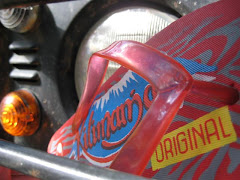
After Kirsty’s endless preaching about hygiene in Africa (I think I mentioned that she has stakes in Dettol which soared to an all time high during the past three months J) I finally buy some flip flops to use in the shower. I beg your pardon, not SOME flip flops! The ultimate red ‘KILIMANJARO ORIGINAL’ for $1,50!!! Here’s to many hygienic showers in Africa! Cheers Kirsty!

After spending too much time waiting for the revenue official to sign off and stamp my deposit slip for the foreign vehicle tax, I pick up Chogela again and we head back to camp.

The camp’s mechanic takes care of the oil change and with combined effort (by using retched straps hooked to Anse’s door frame and tied to a tree) we manage to straighten it to such an extend that the door hooks again well into its latch!

· Tuesday, 17th of June, Iringa

After having to change to a different size hose, I finally fix the water tank’s tap and meet Henry, a Dutch mechanic who lives, works and drives around in his mobile workshop, a converted truck.

Chogela leaves with another lift back to his camp in Tungamalenga.

· Wednesday, 18th of June, Iringa

I go for a run in the morning to some impressive rapids on the Ruaha River and spend a big part of the day going through my trip’s photos (with Kirsty’s and mine they have accumulated to over 3000 already!) in order to convert a selection for my blog.
In the afternoon, an elderly German couple arrives with their car’s number plate from Esslingen (near Stuttgart)! They’ve traveled around Africa for 3 years now and have just come from Selous NP which they really rave about, not so much about the abundance of wildlife but more about the amazing scenery.

· Thursday, 19th of June, Iringa

I leave the Riverside Campsite and head to an Iringa internet café to finally post my latest 28 pages of diary on my blog! It turns out to be a long session (uploading these photos is a nerve-draining process with the slow connections here!), so I decide to camp next to a guest house just outside the town center.

· Friday, 20th of June, Iringa to Mikumi

The narrow tar road to Mikumi sown with deep potholes is rather tiring especially with trucks and buses trying to outdo each other! On this about 300 km long stretch I have seen no less than 4 overturned trucks and plenty others broken down in the most awkward places.

I drive 10km off the main road to the western gate of the Udzungwa Mountains NP to get a feel for the area and to get an idea if hiking here would be worth the expensive entry fee. I learn from the not very helpful park ranger that permits are only issued at the main gate, and that’s about all the info I could get out of him! After having a look at the nice Baobab Valley Camp and buying a handful of freshly fried chapatti breads from the Ruaha village market, I carry on to Mikumi where I pitch my tent next to a Swiss run Hotel and Restaurant for a reasonable Tsh 3000. At night I meet three backpackers from the UK and watch with them the Europe Soccer Cup at another hotel down the road. Turkey vs. Croatia, boring at first and then 1:1 in the last minute of overtime! Sadly Turkey beats Croatia in the shootout. Should make for an exciting game against Germany though!

· Saturday, 21st of June, Mikumi to Jukumu Campsite near Mvuha

Driving through Mikumi NP on a tarred highway feels weird! While busses and trucks race past me, undeterred by the vicious speed bumps I can spot some wildlife from the road, mainly zebra, impala and giraffe. In Morogoro I fill up diesel, buy some supplies at a well stocked (Meaning they had Nutella J !) Indian supermarket and even get mandarins and strawberries from street vendors!

After asking lots of locals about the road from here via Kisaki to Selous Game Reserve, I finally find the right turn off marked ‘Old Morogoro Road’. The following stretch of road is absolutely spectacular! I am driving through a jungle like area which reminds me of the Ngozi Crater area! Village after village (Misongeni, Pangawe, Kiloka, Madam, Mkuyuni, Matombo, Mvuha to name a few) the in patches muddy road winds its way along the eastern flank of the Ulugurus through dense vegetation consisting of mainly banana trees, coconut palms and other tree giants, sometimes revealing jaw dropping views of impressive overgrown mountain ranges in the backdrop. Past Mkuyuni there is a sign for a community run campsite, but for Tsh 10000 with no facilities I decide to push on to the Jukumu Scout Campsite at Mambarawe Ridge mentioned in my Rough Guide (Tsh 5000).

· Sunday, 22nd of June, Jukumu Campsite near Mvuha

Since according to my Rough Guide the next 45 km of road supposed to be one of the worst stretches in Tanzania, I decide to put in a rest day to be prepared for the challenge! It also rained last night and I hope that one day of sun will hopefully make some of the water disappear and dry out the track again…let’s see tomorrow!

· Monday, 23rd of June, Jukumu Campsite to bush camp near Stiegler’s Gorge, Selous Game Reserve

The road to Kisaki and on to the Matambwe Gate of Selous Game Reserve turns out to be quite a drag but is in good condition (not wet as I feared). I get there around lunch time but by the time they have signed me in and organized the compulsory armed game ranger for me it’s more than an hour later. The young game ranger Francis, who will be glued to my hip for the next 48 hours, is dressed in green, wearing his burgundy barrette and armed with a rifle which is rather intimidating!

We throw Francis’ few belongings and his tent into the car and head off towards Stiegler’s Gorge. Even though Francis has been working in the reserve for over two years, he has never been to Stiegler’s Gorge and to my annoyance we drive around in circles for a while trying to find the correct turn-off. We eventually get to the long closed and now dilapidated Tambo Safari Lodge which I thought should have stunning views into the gorge, but it wasn’t at all what I expected. The view is obstructed by the dense bush and even after picking up the left-to-his-own-devices security guard there who guides us on a rough track to the old cable way (Which during its time of operation used to haul game viewing vehicles and their passengers to the other side of the gorge!) we can only catch a glimpse of the Rufiji River by standing right on the edge of the sheer drop. The security guard helps us find a nice bush camping spot a few km away from the lodge and is more than happy to join us at the campfire.

· Tuesday, 24th of June, bush camp in Selous Game Reserve

Back north again past the beautifully situated Beho Beho Lodge and the Selous Grave we visit Lake Tagalala and the ‘Maji Moto’ hot spring which cascades out of a rocky outcrop into a natural pool amid a patch of palm trees. I refrain from jumping into the water as we rather want to carry on to Sand Rivers Lodge where I am hoping to get onto a boat trip on the Rufiji River.

After a lengthy drive on a shocking road we arrive at the posh lodge, only to learn from the Aussie manager couple that the boat rides are exclusively reserved for paying guests and that they shouldn’t have told me otherwise at the Matambwe Gate. I must have looked quite disappointed because after reflecting for a few seconds the manager Steve says: ‘I think I can make a plan!’ He sends my guide Francis (still walking around with his rifle!) into the kitchen to be fed and says that he could put me onto a boat which had a new engine that needed a two hour run-in at half throttle. He shows me around the amazingly located lodge and after the guests finished with their lunch, sits me down next to their office (behind the ‘scene’) and puts a plate of delicious leftovers from the lunch buffet in front of me.

Not to make my illegitimate presence too obvious, he introduces me to his river guide as being a ‘researcher’ who wants to see this part of the Rufiji River! So the guide takes me onto the small aluminum boat (so ‘ne ‘Zwiebackfräse’ for those who knowJ) and upstream we go at leisurely speed. We get to see giraffes, elephant, crocs and especially heaps of hippos. It’s amazing to see these huge creatures up so close! Since Steve had introduced me as such, the conversation shifts inevitably towards my ‘research’ and I make up that I do my private research in amphibians. Ooops! Bad choice I realize quickly, since the river guide proved to be pretty knowledgeable! He wanted to know what my findings were and what the outcome of my research has been so far, so I had to wiggle a bit to get away from that topic and prevent my nose from getting even longer…! After a free two-hour boat ride I thank the manager couple for their generosity, collect a filled up Francis from the kitchen and head north again, away from the Great Rufiji River.

It’s late in the afternoon and the vast barren area between Lake Tagalala and Lake Manze is just awesome to see in the twilight! In the setting sun the short, golden glowing grass stands in contrast to the low hanging, almost imposing blue grayish clouds and is only interspersed by long, scurrile shadows of the many dead trees standing guard resisting the elements. We try to cross one of the tributaries to Lake Manze on a badly hippo-trampled dirt track to get to a designated ‘public’ campsite, only to end up at a marshy area with too much water to cross. We turn around, drive a few hundred meters back and decide to bush camp at a beautiful spot encircled by fan palm trees in the shade of a big acacia tree. Not far away we find numerous scattered bones from a buffalo kill… like I imagined it was a night full of noises from the bush! Elephants trumpeting, lions roaring, hyenas howling!

· Wednesday, 25th of June, Selous Game Reserve to Selous River Camp

We go on a 3 hour walking Safari which is a great experience! Feels quite vulnerable being so exposed and trying to walk silently, alert about any beast that could possibly be lurking in the bush, waiting for the right opportunity to chase us down! Treading through the denser vegetation, Francis is especially cautious about buffalos which are known to be very aggressive and not as easy to spot as elephant. We get a close look at impala, waterbuck, wildebeest as well as elephants (from the distance!).

We take a detour which we found during our walk, avoiding the marshy section that stopped us yesterday and cross over towards Lake Manze, another one of the lakes that get fed by the Rufiji River. We disturb two buffalos which gallop across our track. Before reaching the sheltering bushes the second one stops abruptly, turns around (a handbrake u-turn couldn’t have been quicker!) stands there in all is might about 50 meters away, just staring at us with disapproval for what seemed an eternity and eventually, after a loud condemning blow disappears into the bush. Thank god we didn’t have this encounter on our walk this morning!

After passing Lake Nzerakera where we wake up what we thought to be a dead hippo (must have fallen fast asleep half-way out of the water!) we make our way to Mtemere Gate. A few kilometers short of the gate I spot some lionesses with cubs in a shady spot of a dry river bed, apparently their all time favorite location as I found out later (not from my ‘ranger’ though!).

I drop off Francis at Mtemere Gate, leave the reserve around 2pm and pitch my rooftop tent at the nearby Selous River Camp where I meet Alan and Andrea, a friendly New Zealand couple who rave about the Usambara mountains.

· Thursday, 26th of June, Selous River Camp to Kipepeo Beach, Dar Es Salaam

I still chat a while with the Kiwi couple and drive north east on the sandy track which finally meets the tar road in Kibiti.

With the help of Priscilla’s (almost) never fading voice I find my way safely to Kipepeo Beach, about 10 km south of Dar Es Salaam. It’s quite amazing experiencing the sandy palm tree lined beaches and the turquoise waters of the Indian Ocean after a lengthy time in the bush! I join a crowd from an overland truck for drinks.

· Friday, 27th of June, Kipepeo Beach

After taking the crowded ferry from the Kigamboni Peninsular in the south, I hit the center of Dar Es Salaam to get some spare parts and a new battery for Anse. For a new battery I supposed to go to a place specialized in dry batteries in the outskirts of the city so I first run around doing my other errands in town: Getting gas bottle refilled, trying to find replacement for depleted watch battery, buy extension cable, new gas cooker top… It’s exhausting asking hundreds of people to find out where to get stuff but also fun to run around and explore the hidden corners of the city.

This city is buzzing with people and its Arabic influence apparent everywhere. I can’t resist eating in tiny Moslem lunch joints where I stick out like sore thump amongst the locals. The food here is superb! I’ve never ever eaten tastier samoosas before (no offence Jasmine!) served with a fresh coconut coriander dip and washed down with the strongest masala chai my already burning throat can take!

At the place recommended by Land Rover I get a new battery but my battery charge indicator shows that the new battery doesn’t get charged properly. Back to Land Rover but it’s already 5 pm, they are about to close, it’s better if you came back on Monday!

Thinking I could get some free wireless, I park off at the Mövenpick Hotel for a cup of coffee, unfortunately without the free connection I’d hoped for. At least the parking is secure and free so I head off a few blocks up the road to attend the weekly performance of traditional songs and dances at the Nyerere Cultural Center. I meet some German volunteers there who offer me joining them to go to this Casino in town where one gets free food as long as one spends some money gambling. So off we go stuffing our faces on a very delicious hot buffet only to loose more than the meal’s worth in roulette!

I have to wait a dreadful 1 ½ hours at the Kigamboni ferry before I get back to the camp that night.

· Saturday, 28th of June, Kipepeo Beach

Pretty much a laundry and cleaning day!

· Sunday, 29th of June, Kipepeo Beach to Kendwa Beach, Zanzibar

Hoping that Anse will be safe at the campsite, I strap my backpack stuffed with some basics to the carrier rack of my mountain bike and pedal the 10 km to the ferry then on to the meeting point of the guided Dar Es Salaam cycling tour I have booked. Quite a nice informative tour exploring some of the poorer areas of the city and combining it with having local chow in different places! The lunch after the 4 hour tour takes longer than planned and I speedily pedal to the other side of the city again in time to get the 4 o’clock ferry to Zanzibar.

Reaching Stone Town at 6 and leaving immigration about half hour later, it makes it a bit of a late start for my mission: Cycling to Kendwa Beach 60 km further north where I promised to meet Nacho, a Spanish guy I got to know among the overlanders in Kipepeo, in time to watch the European Soccer Cup final Germany vs. Spain!

The ride is surely a bit of a crazy idea in genuine Koch (Kirsty would’ve said ‘Volkernator’) style, but turns out to be truly amazing! I leave the hustle and bustle of Stone Town on the one major main road leading north, racing with daladalas (local taxis which on Zanzibar are trucks with benches) and competing for road space in between cars, motor bikes, Vespas, hand pulled carts, pedestrians and cyclists. No map, but I knew it was north and just short of Nungwi.

Even way outside Stone Town the road is still busy. Not so much with cars anymore but with lots of locals on their bikes or walking. The sun sets quickly and soon I am riding in the pitch dark, no streetlights. Only in the villages I pass the diffuse shine of Kerosene lamps show that there is still activity. I put my dim headlamp on. Seemingly not enough light for an oncoming cyclist without lights who almost crashes into me. To avoid him I pull both brakes as hard as I can and come to a standstill – only to hear the alarming screeching of non-gripping, worn-out brake pads and then the abrasive slithering of flip flops on the rough tarmac from another cyclist behind me! I carry on more cautiously, riding ‘by ear’! Some dry chain squeaking coming towards me, I bear more to the left – oops, there I can make out some people murmuring leisurely in front of me so I better keep to the center of the road again! Every now and then approaching cars’ brights produce long shadows of every road user, giving me a chance to adjust my path for a few hundred meters. To prevent another crash I start whistling a tune because my bike doesn’t squeak. Occasionally somebody shouts out of the darkness ‘Hey Mzungu! Jambo!’. No idea how they figure that out! Maybe it’s my pace or my strange looking headlamp. Or my silent bicycle?

Sometimes between the villages there is nobody. Not a soul on the road. Just me riding along past shadows of palm and banana trees under a beautiful starlit sky. There are some patches where I ride past a multitude of fireflies, flickering joyously on both sides of the road as if to brighten up my way. It’s like they are extending the starlit sky and embracing me in it! I get a sensation like I’m sitting in a roller coaster at lightning speed. And that without even smoking a joint J!

Some ‘squeak clank, squeak clank, squeak clank’ and the purr of a dynamo approaching from behind. Linked to two Zanzibaris pedaling hastily towards me, the one’s erratic front light creating my own shadow on the tarmac. ‘Jambo! Where from? Where to?’ The two set a fast pace and we chase each other for a few kilometers until they have enough of me. A few kilometers further I catch up to another cyclist. ‘Jambo! Kendwa?’ I ask pointing straight ahead. The guy doesn’t understand, but I follow him anyway. Should be on the right track here or maybe not? At one of the villages he suddenly stops and points left towards a turn off, then calls another chap from the street who makes me understand in broken English that this is the turn off I have to take to Kendwa!

3 ½ hours after leaving Stone Town I make it pretty exhausted to the Sunset Bungalows on Kendwa Beach, just in time to meet Nacho and the overlander crowd for the European Soccer Cup final. Too bad but the strong Spanish team wins deservingly!

· Monday, 30th of June, Kendwa Beach, Zanzibar

I do a refresher course in diving at the dive school next door.

· Tuesday, 1st of July (My birthday!), Kendwa Beach, Zanzibar

As a birthday present to myself I go for a dive at the north eastern part of the island. It’s amazing to see the underwater world here and amongst many beautiful fish and anemones we are also privileged to spot a turtle which is more curious than scared and lets us approach her closely.

With the present of my dive also comes what seems to be an infection of my right ear! So I hop onto my MTB and ride to the neighboring village Nungwi 6 km further north. Miraculously there is a tiny pharmacy and the ear drops kill the pain at least for now.

· Wednesday, 2nd of July, Kendwa Beach, Zanzibar

A chill day. I would love to rent one of the Hobie Cats which I spot in the resort next door but at Euro 30 per hour I don’t feel like supporting their business plus my right ear doesn’t need more water right now. Instead my dive master gets me hooked onto a local drink called ‘Dawa’ which literally translated means medicine! With a double shot of local ‘Konyagi’ spirits, lime and honey it definitely makes the pain in my right ear more bearable!

Talking with a few true Zanzibaris I learn how unsatisfied they are with the fact that Zanzibar has formed a union with Tanzania. They are still proud Zanzibaris even if their home country has only a pseudo president but with no real power.

· Thursday, 3rd of July, Kendwa Beach to Stone Town, Zanzibar

I leave around noon and cycle the 60 km back to Stone Town. The air is humid with some showers. After riding for a few kilometers and scrutinizing other local men on bicycles, I decide (despite the heat) to zip my pant’s legs back on again so that I don’t offend the local Moslem community. I somehow feel more comfortable that way and it also seems like the locals are less reserved towards me. It’s great and again different to see in the daytime what I went past in the dark. Now there are crowds and crowds of school kids on their way home in their uniforms, the girls all in long dark dresses and white veils. And I can tell that on Zanzibar every inch of soil gets used for growing something!

I arrive on the outskirts of Stone Town and stop at a street vendor who serves me a delicious drink of sugar cane, ginger and lime freshly squeezed through his hand operated press. It totally reminds me of my favorite juice bar on Union Square in New York, where I had tasted this yummy drink for the first time. Weird to be sipping the taste of Zanzibar combined with memories of New York in one drink!

After looking at the rooms of the very nice but pricy Malindi Guesthouse, I decide to look at the close by Bandari Lodge. As I stand at the reception desk enquiring about the price I bump into Eva who Kirsty and I had met at the Ruaha NP picnic spot!

Together we walk the maze of Stone Town, have a freshly brewed cup of Arabica at Jaws Corner and later meet up with Eva’s travel friend Nick and Lori to have delicious street food at the Forodhani Gardens market. We later on go for drinks at the posh, sea facing Africa House Hotel and hear apart from the solo background musician also all about Lori’s relationship misery. Our attempt to find a cool local joint with a life band later on ends in a dodgy bar where we can bear it only for one Kili.

· Friday, 4th of July, Stone Town, Zanzibar

I have breakfast in the street in true local style: Freshly fried chapattis wrapped in islamic newspaper and a thin, sweetish spicy porridge, I guess made of maize or millet. When paying the old veiled lady it takes her a while to get a plastic bag of change out of the hiding place in her baggy bra...! Then I go onto an organized spice tour which really gives an amazing insight about how spices look in their growing form! By our very knowledgeable guide we get shown ginger and turmeric (curcuma) roots, pepper corns, vanilla pods, clove flowers, cardamom seeds, nutmeg and cinnamon bark. We also get to taste jack fruit, star fruit, Seville and navel oranges, mandarins, flesh of the cocoa fruit, ruby grapefruit and numerous other weird but wonderful tasting fruit.

Back in Stone Town I hit the maze of streets again. This time I am on the hunt for a locally made batik shirt. I find a great one, but it doesn’t fit, so the shop owner drags me to another store where I try another one that fits, but I don’t like it! A local chap, one of the many ‘leeches’ wondering around in Stone Town, had been watching me and latches on to help me find a batik shirt. After visiting numerous clothing stores unsuccessfully he suggests looking for batik fabric and giving it to a tailor to have a shirt made. Having a shirt made for me sounds a bit extravagant but I am curious to see what fabrics are available here and after all a custom made shirt would indeed be a unique souvenir of Zanzibar! Before heading off for the fabric hunt we have another cup of Arabica at Jaws Corner where I can’t resist ordering 30 of those delicious diamond shaped peanut/coconut fudges (sweet and yummy with coffee!) with the lady that makes them, hoping that I’ll find my way back to her door again tomorrow in this labyrinth of alleys!

Once I have visited the slave cells and the slave market on which the Anglican Cathedral was built, I follow my guide to the ‘real’ local market where the Zanzibaris shop for fabrics. Browsing through bundles and bundles of beautiful batik fabrics, I still can’t find the one I was looking for. Instead I find another really interesting one in dark brown with a yellowish glowing tie dye pattern that reminds me of flames in a campfire. After bargaining the price I buy the fabric and before I know it my guide takes me to three of his tailor friends all of whom say that they’d love to make a shirt for me, but because of a planned power outage tomorrow morning they would not finish it in time for me to collect it before my ferry departure back to Dar at noon. I leave it at that, had enough of shopping for the day, remunerate my guide and head for a sundowner up onto the roof top restaurant of the Hurumzi Hotel which boasts the most amazing views over Stone Town. When ordering a dawa I notice that the barman is wearing a nicely cut shirt and ask him if he knows where it was tailored. Two minutes later I put a piece of paper in my wallet with the name of the Hotel’s own tailor scribbled on. ‘Be here tomorrow morning at 8! He’ll sort you out!’ says the barman. Power outage? He grins about my concern and says: ‘This hotel has the biggest generator in Stone Town! You don’t need to worry!’
Two German volunteers Sophie and Jan from Münster who I’ve met at the spice tour join me for a drink up on the rooftop. When the fancy crowds arrive for their pre-booked dinners we leave and walk to Forodhani Gardens devouring one of the delicious ‘Zanzibar Pizzas’, a concoction of chopped onions and tomatoes, spicy ground beef all mixed with an egg, wrapped into a thin, square pizza base and then fried from both sides – delish! The same afterwards with a sweet filling for desert (banana and chocolate), all washed down with fresh sugar cane juice, it’s a feast! With our stomachs lined we head for the Livingstone bar where we can sit right on the beach.

· Saturday, 5th of July, Stone Town to Kipepeo Beach

At 8 ‘o clock I enter the Hurumzi Hotel and ask for the tailor at the reception desk. He’s not there yet so I go find my 30 diamond shaped fudges and after some challenging navigating in the maze collect them successfully from the woman’s house. Back to Hurumzi where I finally meet the tailor. It’s almost 9 ‘o clock, my ferry leaves at 12! No problem, he can make it and confidently takes my measurements in his tiny workshop. Zap! The power goes off as predicted and we walk to the Hotel’s courtyard watching the guys getting the generator going. 15 minutes later diesel fumes fill the court yard and the power is back on. Some final discussions with the tailor on how to place the tie dyed part on the sleeves, back and front and then I leave him to it.

One last time I explore the main local market. Fruit, vegetables, spices neatly presented to the crowds of eventual buyers. Passing through the fish market makes me sad as I see two huge beautiful marlins and a manta ray cut up. The meat market is pretty much like watching a horror movie! Half cows still dripping of blood, a goat’s head just sitting on the counter, a cow’s head with the skull pealed backwards revealing brain and all! By 11:30 I am cured of exploring the markets and after a quick lunch at one of the local joints next to Mercury’s I head back to the Hurumzi Hotel’s tailor who is already ironing and folding my new shirt! Wow, am I impressed! After all things do get done here as promised! I quickly try it on. It fits and looks pretty eclectic but beautiful and definitely not ordinary! Once I also get my torn fleece mended, I pay the tailor for his excellent job and hurry to the ferry on my bike, new shirt, fresh spices, yummy cookies and all!

Zanzibar! I am missing you already!

· Sunday, 6th of July, Kipepeo Beach

One of those cleaning, washing and diary days!

· Monday, 7th of July (Traders Day in Tanzania), Kipepeo Beach

I had planned to go into Dar to have my alternator checked by Land Rover, but it is public holiday, so everything is closed.

· Tuesday, 8th of July, Sunrise Beach

I head to Land Rover where my alternator proves to be okay, but according to their digital battery gadget my new battery seems to be faulty! So back to the battery place, to have battery changed, back to Land Rover to find the same result! We find it odd, change some of the values in their digital gadget and all of a sudden the battery is fine! Must be a typo or wrong sticker on the battery! I am not convinced but leave it at that anyway. I also bump into Andy Weller (www.AnAdventure.info) again who is waiting for his Defender to be finished which gives me some time to hear about his travels through Ethiopia.

That afternoon I change campsite to the Sunrise Beach Camp next to Kipepeo which is quieter, has a friendlier staff and comes at only 4000 Tshillings a night! This place seems to entice everybody longer than planned (including me!) with its beautiful palm lined sandy beach, neat facilities, good Indian food and cheap bar!

I also meet plenty of other overlanders there, amongst them Uwe and Nicole who came down through Tunisia and Libya from Germany in their converted Merc truck (www.karifa.de). Then there are Chris and Leon George from the UK (www.traveleor.com/chrisleongeorge) who are going north on a similar route like me in their Defender as well as two South African girls Stacey and Tina who are backpacking north!

· Wednesday, 9th of July, Sunrise Beach

Back into town to have Priscilla (my GPS) seen to. She keeps on freezing on me and my friend Bessie seems to have a contact in Dar that can sort it out! Unfortunately the GPS doesn’t get fixed, but I get quite a few other things done including getting hold of a new road atlas and a rechargeable spot light. My right ear seems still blocked since my birthday so I drive to the Aga Khan hospital to have it checked. Their ear, nose and throat specialist is gone home so they refer me to another clinic on the outskirts of the city. By that time it’s getting dark and I am lucky to have a helpful driver of a delivery truck lead me the way all there! After a long wait I can see the Masai Dr. Ole who looks at my ears and prescribes me some nose spray and tablets that come in folded recycled paper sachets. At least he says my eardrum is not ruptured, which is good news!

Back to the campsite after another dreadful wait at the Kigamboni ferry. On the way there Kirsty calls from Cape Town and has decided to join me again this time all the way to Europe! She will fly into Dar on July 26.

· Thursday, 10th until 15th of July, Sunrise Beach

The next couple of days I feel pretty exhausted. Not sure if it’s the medication, my ear or just this place that makes me mellow.

Stacey and Tina got a nice fish from the market and invite me for a braai. The girls get the fire going, salad prepared, the fish gutted and stuffed in no time – impressive! Soon the table is laid on the beach and we are munching away on a delicious feast! The super friendly security guard appears out of nowhere with a heap of firewood and we sit around the camp fire playing a couple of rounds of Uno. The pleasant evening gets rounded off with coffee and biscuits. The next day I bid the girls farewell as they leave to catch their train to Mwanza.

Wednesday, 16th of July, Sunrise Beach to Bagamoyo

For the last couple of days I have now rested enough and want to see some new things before I head back to Dar to fetch Kirsty. I say goodbye to Uwe and Nicole (
www.karifa.de) who are also packing up to spend a few days on Zanzibar.

After updating my blog at the main post office in the center of Dar, I drive to Bagamoyo where I stay in one of the many beach resorts.

Thursday, 17th of July, Bagamoyo to Amani Nature Reserve, East Usambara Mountains

Bagamoyo has a bizarre feel to it. Dilapidated ruins, remains from the German East African era, an arty side by craftsmen showing colorful contemporary paintings and wood carvings in the streets mixed with the tranquil charm and filth of a working fishing town. After paying tribute to eight German soldiers of the colonial ‘Schutztruppe’ who all fell in 1889 during the uprising of the Abushiri rebels and are buried at a neglected cemetery right next to the beach, I get back onto the road, heading north to the Amani Nature Reserve in the East Usambara Mountains where Rene, who I met a few weeks ago as part of the casino crowd in Dar Es Salaam, is doing research for her masters by interviewing villagers. Amani supposed to be one of two diversity hotspots in the world (the other one is somewhere in Uganda), boasting the highest density of endemic plant and animal species per sqkm!

At Muheza I follow a dirt road which takes me up the Usambara Mountains to the Sigi Gate where I pay a once-off $ 30 entry fee. From here the track through the rain forest gets surprisingly muddy with deep ruts and it takes a hair raising low-range maneuver to pass an oncoming sugar cane truck. After Rene introduces me to her house mates I pitch my rooftop tent at the camp site of a nearby guesthouse where we both sit down for dinner.

Friday, 18th of July, Amani Nature Reserve, East Usambara Mountains

In the morning I go for a long guided walk with one of Rene’s friends. Even though the weather is not playing its part with the odd shower pouring down, I enjoy walking through the tranquil village of Amani and the dense rain forests, past many exotic looking trees and waterfalls. Pretty pooped from the walk, I spend the late afternoon reading in my tent. After dinner I go for another guided walk, this time armed with torches on the hunt for tree frogs and chameleons!
It takes some time to spot these buggars though! After an hour of getting to see the odd frog but no chameleons, my guide’s skills finally prevail and within a short time he spots three different species of chameleon in the dim beam of his torch, one of which is a male of the three horned one which is endemic only in this area (it doesn’t even exist in the West Usambaras!). On our way back to Amani village we walk past the research center where I had already seen a bunch of busy researchers in the afternoon. Now it was almost 10 pm and they still seemed intensely busy, hovering around like a bunch of bees! I find out from their coordinator that they are young biologists from all parts of the world, participating in a project organized by some Tropical Botanical Association. They formed nine teams each of which took on a different topic for their short research in Amani NR. Today is their last night before their presentations, I am invited to sit in tomorrow if I am interested says the coordinator!

Saturday, 19th of July, Amani Nature Reserve

I am pretty curious what each team’s 15 minute presentation will be about so I follow the invitation and learn about how light and slope affects the distribution of invasive plant species, how the throat’s brightness of a certain frog species affects their built and strength, how butterflies react to different color flowers of the same plant, how moth’s camouflaging adapts to different environments and about the growth of tree plants on local and invasive trees…only to name a few. Totally fascinating what these guys have come up with in their time-limited research! Some results turned out like predicted while others in turned out quite unexpectedly, triggering topics for possible further research.

It’s nice to hang out with the biologists and they kindly sort of adopt me for the day. After lunch I meet them down at the community soccer field where they play against the local league. The biologists win 4:3!

Rene invites me for supper at her house and I get introduced to her friend Theron, who has done a feasibility study about butterfly farming in Amani NR a few years ago, set up the project and then handed it over to the community. It has now being running profitably for a couple of years and basically involves farming butterfly pupae and exporting them to Zoos and ‘Butterfly Worlds’ in Europe and the US. Theron invites me to come and see the collection and dispatch of pupae from the different farmers tomorrow.

We finish up dinner and after a wild ride on the back of Theron’s motorbike, I get dropped of at the research center where the biologist’s party is already in full swing. Free drinks and good music (after organizing the proper cable for the many students’ ipods) gets everybody dancing and for once awakens this otherwise so sleepy place.

Sunday, 20th of July, Amani NR to Tembo Camp, between Same and Korogwe

I meet Theron at a small village some 5 km drive through the thick forest where they collect and dispatch the butterfly pupae. Two guys arrive on a motorbike, one of them with a cooler bag over his shoulder. The bag gets opened and out come numerous containers with different species of butterfly pupae, embedded in cotton wool. The different shapes and colors of pupae astonish me, they are really one of the most extraordinary natural things I’ve ever seen! Each species has its own weird and wonderful shape. Some have a camouflage look and totally resemble a little twig covered in moss, other pupae of the same species have different colors because they take on the color of different backgrounds which they attach themselves to, and again others have strikingly beautiful gold metallic shells which could well be put into a jeweler’s showcase if they didn’t wiggle every now and then! An assortment of pupae gets put together for each client and neatly packed into DHL boxes with layers of cotton wool in between them. I am glad I witnessed this amazing experience, say goodbye to Theron and Rene, make my way back onto the tar road again and stay at the not very spectacular Tembo Camp between Same and Korogwe.


Monday, 21st of July, Tembo Camp to Arusha

I head to Arusha, where I have my rear springs replaced for heavy duty ones at CMC Landrover. In the evening I meet up for drinks with Wieke and her boyfriend, whose contact I got from the Dutch mobile workshop mechanic Henry I met in Iringa. Wieke started her own business making colorful lamp shades made of wire and parchment goat skin which look really stunning and create a cozy atmosphere (
www.kiwieke.com). We have dinner at Masai Camp where I also stay that night.

Tuesday, 22nd of July, Arusha to Alan’s house 25 km outside Arusha

I try to get onto an organized tour into Ngorongoro since self driving is way too expensive for a foreign registered vehicle (a whooping $400 for two people to get down to the Ngorongoro Crater!), but abandon the plan after calling a couple of tour operators. It seems like joining a group that has the same route plan is not that easy while hiring a vehicle just for me is too costly.

Besides that I decide to change my front springs to heavy duty ones as well since Anse looks a little bit like a tuned-up stock racing car with only the rear raised! At both, Land Rover and Bosch I try to sort out my battery discharging problem without much of a result. At least Anse looks and feels more stable now with the new springs fitted and I spend the night at Alan and Andrea’s house (a couple I have met outside Selous) 25 km outside Arusha. We have a fabulous evening and get pretty wasted on the local spirits concoction called ‘Dawa’ (made of sugar cane spirit Konyagi, honey and lime).

Wednesday, 23rd of July, 25 km outside Arusha to Lushoto, West Usambara Mountains

I have breakfast with Alan and Andrea and am on the road just after 7. In Mombo I turn off the highway and take the windy road up into the West Usambara Mountains past Soni to Lushoto, but not before buying some cheese, banana wine and jam at the Montessori Training Center of the Usambara Sister’s Convent. At the Tourist Information I book a guided hike for tomorrow, combining the Irente View Point with a walk to the Magamba Rain Forest. Having quite a few options between guesthouses, I decide to stay at the campsite of the Lawns Hotel and have dinner at the Tomaini Restaurant where I meet Bernd, a German researcher doing his PHD in agrarian change here. His topic is actually related to my in Amani staying friend Rene, so I get the two hooked up.

Thursday, 24th of July, Lushoto, West Usambara Mountains

At 7 am I meet Jonathan, a German fellow, and our guide Kevin at the Tourist Information. The hike takes us into the lush and mountainous surroundings of Lushoto, past some real German looking houses reminding us of colonial history, through vegetable patches into the Magamba Rain Forest. If it wasn’t for the banana trees one could well think to be in the German Alps! A highlight is definitely the lunch at Irente Farm where they serve home made German style rye bread, cheese, ‘Quark’ (cottage cheese) and yummy passion fruit jam. Breathtaking sweeping views from the escarpment at Irente Viewpoint round off the awesome hike.


Friday, 25th of July, Lushoto to Sunrise Beach, Dar Es Salaam

I am on the road by 7 am and give Jonathan a lift to Segera from where he will make his own way to Tanga. Around 2 pm I reach Dar Es Salaam and see the German mechanic Frank who has a look at my battery problem. He doesn’t really find anything but thinks that the old weaker battery sucks the new battery dry overnight.

Back at Sunrise Beach I see Uwe and Nicole’s truck parked under the palm trees again, but they seem to be gone out, so I say hello to another overlander couple (
www.onewaysouth.com) who are on their way to their home country South Africa from the UK. I join them for dinner and listen to their epic travel experience in Libya.