Thursday, 25th of September, bushcamp on northern Lake Turkana in Kenya to Turmi in Ethiopia
We drive a few kilometers further north to Louis Leakey’s camp, a base from which numerous important archaeological excavations are undertaken. Unfortunately Louis Leakey is not around, but the friendly camp manager invites us for tea and biscuits while some of his staff try to repair (unsuccessfully though) Coni/Andi’s and Eric’s tires. The camp is well equipped to operate in this hostile and isolated environment and we get to have a look at the gigantic solar oven, an impressive row of batteries which get charged by solar panels and a wind generator as well as the high tech desalination plant which supplies the camp with water from Lake Turkana. Even internet is available, though at the usual snail speed.
We get closer to the Ethiopian border and since there is no official border post, we ask at the Ileret police station for a letter of confirmation, stating that we have crossed the border there. A few kilometers further north we stop in the middle of nowhere because according to our GPS’s we have now really crossed into Ethiopia without passing a single border sign! Driving ahead of Eric and the Swiss and thinking that our next official stop is the immigration office in Ormorate (Kelem), I speed past the tiny settlement of Fort Banya only to get erratically waved back by a slightly upset crowd of villagers (supposedly police officers) armed with AK47’s. What a welcome! Obviously not happy about our intention to bypass their ‘checkpoint’ we spend a while arguing with them, but after we show them our passports and the letter from the Ileret police station and after Coni, Andi and I agree to give three locals a lift to Ormorate all is good! Anse gets ‘Africanized’ with the luggage of my temporary passenger Lelibele: A sack of maize, a bag of charcoal and two live chicken get thrown onto Anse’s roof and off we go! Lelibele is a teacher in Ormorate and she explains to me in broken English that we were the first cars since five days coming past her village!
It’s not too long until we turn left onto the main gravel road towards Ormorate, (driving now on the right side of the road again) and check in at the Immigration Office there. We get asked for declaration papers for our cars, which we know we don’t require, all of us having carnets, but it takes some talking to convince them (thanks Eric!). The customs official asks us to come back in half an hour for them to check our passports, so we walk into the rather strange village where we manage to exchange some US Dollars into Birr, even though at a bad rate. After the customs official thoroughly scrutinizes each car, we are finally released and head on to Turmi where we set up camp at the shady Mango Campsite.
Friday, 26th of September, Turmi to bushcamp next to Hamer village
There are several peculiar tribes living in the Omo valley. The south is predominantly inhabited by the Hamer who number about 35000 and are known for their display of elaborate and eclectic body decorations, especially the women who are easily distinguishable by their thick plaits of ochre-colored hair hanging down in a heavy fringe, wearing beaded leather skirts, dozens of copper bracelets on their arms and heavy copper necklaces around their neck if they are married and displaying body scars on different parts of their body. Some of the men have hair buns formed into shape with colorful clay, indicating that they have killed a person or a dangerous animal within the last year.
Many organized village tours are offered in this area, but the four of us all agree that we don’t want to involve a guide and prefer to arrange our own one-on-one experience where interaction is more personal and our contributions will benefit the village directly, without a third party involved. After learning from one of the campsite staff that there is a Hamer village 2 km away which offers dancing, we drive there to find out if we can negotiate a price to see the dancing, take some photos and maybe even bushcamp there, but communication with the village elder proves to be difficult and we make him understand that we might be back later in the evening. On our way out we bump into the guy from the Mango Campsite who obviously had seen us doing our own thing and unhappy about his commission vanishing… so maybe not the best thing to visit this village!
We drive further eastwards on the Turmi – Arbore road and take a random track to another Hamer village. This village seems very large, consisting of numerous smaller clusters of huts and we arrive while a group of men are holding a meeting, so we feel a bit awkward to disturb. Three Hamer men approach us and we try to negotiate a price to be able to take some photographs. Judging the price per car they give us (can’t remember but it was way too expensive), we figure that this village is used to big tourist groups and we don’t even bother engaging into further negotiations.
A bit disappointed about our two more or less failed attempts, we have our first traditional Ethiopian lunch outside a hotel in Turmi. Today, because it’s Friday only fasting food is served, consisting of different vegetables placed on the large pancake-like ‘injera’, which is made from fermented dough using flour from a grain called ‘tef’. Yummy! A strong and sweet Ethiopian coffee to round the lunch off and we are ready for action again!
This time we head north on the Turmi – Key Afer road where we take another random turn off east and end up at a handful of Hamer huts situated on a small hill. Little do we know that we hit the Jackpot with this village…! The Hamer chief, whose name is Bona greats us and because of the language barrier, Eric tries to explain the easiest way possible what our objective is. Coni jumps in as she did her masters in Ethiopia a few years ago and still remembers a fair amount of Amharic which now comes in super handy to communicate the more tricky details! After discussing with the other men, Bona agrees to allow us into the village and we negotiate a price for seeing them dancing, taking as many photographs as we want (during the organized tours one often has to pay for each photograph) and for bushcamping next to the village!
We park our cars right next to the village and the Hamer men and some of the women gather for a dance. After handing our contribution to Bona, the atmosphere gets more relaxed and the men hang out, sitting on their little head rests/stools while the women gather to chat. Eric has the great idea not only for us to see how the Hamer live but also for them to see a bit of our culture and lifestyle, allowing a more mutual beneficial cultural exchange. So Eric pitches his rooftop tent and let Bona and the other men have a look inside it – an amusing sight! I pull out my Africa map and show them my travel route, but the Hamer men are much more interested in my Ethiopia map which has animal sketches depicted in the specific areas where they occur on the map. Bona points at each animal, saying its name in the Hamer language and all the other men repeat the name, nodding with agreement. Coni and Andi circulate photos of their families back home amongst the villagers.
We also get a chance to go inside their huts where Hamer women sit on goat skins, craft new leather skirts and grind some grain to make flour using a flat stone. Bona invites all of us into his hut where we get served a coffee-tea, brewed from the husks of coffee beans which gets scooped out of a clay pot on the fire into huge calabash bowls and passed to each of us. While the four of us are sitting in a circle sipping tea with the Hamer men (only one woman was present serving the tea), I really feel privileged to be able to experience the Hamer hospitality at such personal level!
Not sure if it was Andi or Eric who came up with the idea to ask if we could have a goat for supper, but not long after we agreed on a price, a goat gets slaughtered right in front of us, put onto a bed of leafy branches right there, skinned, gutted and cut into pieces which get pushed onto pointed wooden spits and arranged around the fire by ramming them into the ground. Andi does a brilliant job basting the meat with a honey/beer marinade and soon, after giving a big part of the meat to our hosts, we all sit around the fire, munching away at this special communal feast!
After the meal Bona disappears and comes back with a calabash bowl filled with honey in honeycombs which we all fish out with our fingers– delicious! One only has to avoid eating the odd (bitter tasting) bee that got drowned in the sticky juices. More than content with our Hamer experience, we head to our tents, trying to digest today’s events.
Saturday, 27th of September, bushcamp next to Hamer village to Jinka
Today is market day in Dimeka and after handing over some presents and saying goodbye to the villagers, we give Bona, another man and two Hamer women a lift to the weekly event. We arrive a bit early for the market who really only starts happening from around 10 am and have breakfast at a hotel (scrambled eggs fried in rancid butter). It’s an awesome experience to dive into the hustle and bustle of this busy market, surrounded by trading Hamer people wherever one moves. I am surprised to find a good choice of fruit and vegetables there and stock up on bananas, papaya, guavas, granadillas and tomatoes. I also find ‘itaan’, pieces of dried tree sap (amber?) which gives off a pleasant scent when put onto hot coals. After we are done with all our shopping, we hit the road again, via Key Afer to just outside Jinka where we pull in at the neat Rocky Campsite. Coni cooks for us a delicious risotto with dried mushrooms – yummy!
Sunday, 28th of September, Jinka to bushcamp outside Mago NP
We plan to drive into Jinka town but get stopped by a check point with a rope where we supposed to pay an entrance fee even though we are only passing through the town! Eric gets into an argument about that with the ‘official’ and drives through the gathering crowd around the barrier. We drive straight to the police station to report the incident and slowly it becomes a big issue, with Eric having to talk to the head of the tourism bureau and him being demanded to pay for a chair that he allegedly damaged when going around the barrier.
We also try to exchange some more dollars on the black market (it’s Sunday and banks are closed) which turns out to be a huge headache, but eventually we manage to change some at the Jinka Resort, where we have lunch while waiting for Eric who is still sorting out his chair issue. Eventually all is good and we leave for Mago NP where we are planning to see another village of the Mursi tribe. The drive is stunning as the park lies on the bottom of the Rift Valley and the windy road descends from the 2400 high escarpment. Just outside Mago NP we find a great bushcamping spot and wash down the annoying events of the day with Eric’s screwdriver and a communal ‘dawa’.
Monday, 29th of September bushcamp outside Mago NP to Key Afer
At the Mago NP headquarter we hire a scout and visit a Mursi tribe, whose women are known for wearing their clay lip plates which are inserted into their lower lip. As the entrance into a village is 200 Birr per vehicle, we leave Eric and my cars at the headquarters and the four of us plus the scout squeeze into Coni and Andis Nissan. This village experience is totally different to our Hamer one and we are not enjoying the encounter at all. The Mursi come across as very aggressive people, partly because some of them are drunk and as one has to pay 2 Birr for each photograph to the person one took a picture of, we get pestered and beleaguered constantly, with Mursi pulling on our clothes, trying to get our attention and money.
Visiting the Mursi village was a disturbing experience for me and it’s clearly visible that the effects of tourism can cause a lot of damage if the revenue generated by it doesn’t get managed properly. If I had known beforehand that I am supporting the drinking problem and therewith also the loss of the identity of the Mursi, I would have definitely not spent my money there!
Back at the headquarters, we all hop into our own cars again, drive up the windy road again through Jinka and just manage to arrive before the market at Koko closes. We stock up on some supplies (mainly beer!) and drive further to Key Afer where Coni runs after a boy who hit her, gathering the crowds and creating some action in that otherwise sleepy town! We eat a yummy ‘kai wat’ and camp at a little pension with a shower next door across the road.
Tuesday, 30th of September Key Afer to Arba Minch
Pretty much a driving day form Key Afer to Arba Minch. After boycotting an overpriced hotel venue, we stop for lunch at a small local restaurant in Konso, where we some local brew ‘tej’ made with honey.
When driving through the villages we get pestered by children a lot who shout: ‘You, you, you!’, ‘Give me your money, give me your money!’ ‘Highland, Highland, Highland!’ (referring to the plastic bottles of a local brand of mineral water). One boy throws a stone at Eric’s car and he makes a point in stopping and running after him.
After checking in at the Bekele Mola Hotel Campsite in Arba Minch we hit the local internet café. My mum and my brother both send me concerning news about 5 Germans who were part of a tourist group that was kidnapped in Gilf Kebir on the Egyptian/Sudanese border.
Since our ways will part from here tomorrow we exchange all our photos.
Wednesday, 1st of October, Arba Minch to Awasa
Eric also decides to head to the Bale Mountains, so we say goodbye to Coni and Andi who will head north to spend some time on Lake Langano before taking on their volunteering jobs in Mekele. It’s sad to see them leave but we can hopefully catch up with them again in a few days on our way to Addis. After exchanging some Birr (thereby experiencing the most serene and professional banking service ever!) and me slipping into a barrel of old oil while tightening some of Anse’s bush nuts in a garage pit, Eric and I get on our way to Awasa. On half tarmac and half bumpy gravel road it turns out to be a six hour drive. The Adenium campsite in Awasa doesn’t exist anymore, so we end up camping in the courtyard of the Lalo Pension where the generous lady owner lets us stay for free after we having kai wat and injera at her restaurant.
Thursday, 2nd of October, Awasa to Bale NP
It’s a long haul to Dinsho where we pay for our park and camping fees at the Bale Mountain NP office. Luckily we get around hiring a guide as I intend to do some mountain biking. Eric and I pass the towns of Robe and Gobe and then crawl up the pass to the Saneti Plateau on the highest all-weather road in Africa! Anse’s right roof rack support, the one that links it to the chassis snaps through the vibrations and we pull the loose lower part away and secure it to the snorkel to keep it from knocking against the rack.
Our cars struggle to ‘breathe’ in this thin air and even with putting my foot completely down Anse’s response is pretty slothful! Often I catch myself shifting too early into the next gear only having to shift one or two gears down again not to stall the engine. So frequently we end up screaming up the steep roads in first or second gear.
By the time we reach the turn off to the campsite it is dark already. As we drive up the last 500 meters on a muddy track, Eric gets bogged! Luckily he is in front of me and we manage to get him out pulling his Cruiser backwards with my winch. At this altitude of 4100 meters it is freezing cold and our numb hands struggle to do the right moves! We manage to bypass the muddy section and pitch up tent at the Saneti Campsite where two wardens welcome us.
Eric whips up one of his magic minute noodle soups (prawn flavor!) and two extra strong screw drivers and we hop into our tents wearing layers and layers of clothes. I don’t sleep much that night as my altitude sickness symptoms are kicking in again and it’s anyway so freezing that I struggle to keep warm.
Friday, 3rd of October, Bale NP to bushcamp near Abule Bassuma Lodge Lake Langano
At 2 am Eric starts his car because he realized that he doesn’t have anti-freeze in his cooling system and fears that the radiator might burst if the water freezes. I do the same and lie down again until just before 6 am when I can’t stay in my freezing tent anymore and go for a walk to warm up a bit. I abandon my intention of mountain biking since my bike has a flat and there’s no ways I could repair a tire in this cold, so we both pack up and go for a drive on the plateau.
The sun slowly breaks through the mist and cloud cover and soon the temperature gets a bit more bearable. While driving along and enjoying the vast scenery, I even manage to see a pair of Ethiopian wolves (which actually look more like foxes)! We drive up the highest elevation of the Bale Mountains which is Mount Tullo Deemtu, with 4377 m the second highest peak in Ethiopia. We can’t stay up there in the icy wind for too long and drive towards the other side of the plateau where we enjoy an amazing view over Katcha and parts of the Harena Forest, but refrain from descending all the way down that southern side of the escarpment and rather make our way back towards Goba again. As I pass some kids on my way to Goba, I see an maybe 5 year old boy grabbing a stone and wanting to throw it at me! I stop, jump out of my car immediately and run after him. I just grab him, shake him by his shoulders and shout at him: ’You don’t throw stones at us, okay? Don’t!’ As I look at him furiously, the little boy just starts crying terribly and I notice pee dripping out of his pants! ...Um, okay, that must have been a good lesson then! ;-)
Since it is Friday, Eric and I order fasting food (=vegetables) for lunch at a restaurant in Robe and get ripped off as we are asked to pay for a much more expensive meat dish! We head to Dodola where we hope to camp at a hotel but the security is not great there and we decide to push on. It is getting dark but the accommodation options are limited and instead of spending the night in Awasa we decide to rather head north on the tar road and try to find Coni and Andi who planned to stay a few days on Lake Langano. After checking a campsite and the fancy Sabana Lodge we think they might be all the way at the north of the Lake and drive to the Abule Bassuma Lodge. When we arrive at the gate it is already past 11 pm. Two watchmen make us understand that the lodge is closed but that we can bushcamp next to the gate for 40 Birr per person without the use of a toilet or a shower! We stuff that, drive a few kilometers away from the Lodge and bushcamp next to an acacia tree. It turns out to be a strange night with dogs barking, horses making noises people’s voices in the distance and two hyenas howling!
This must have been one of my longest travel days ever!
Saturday, 4th of October, Karkaro Beach, Lake Langano
We pack up at the crack of dawn to avoid getting troubled by anybody and head south again to the only campsite that we haven’t checked yet since Coni and Andi didn’t plan to stay there as it has a reputation for its terrible facilities. But when we arrive there we can see their red Nissan already from the distance! We are glad to see Coni and Andi again and they are happy to leave this campsite since there was a disco going on right next to their tent last night! So we all decide to go to a place called Karkaro Cottages that turns out to also have an awesome campsite right next to Lake Langano!
Sunday, 5th until Tuesday, 7th of October, Karkaro Beach, Lake Langano
The next three days we just spend relaxing, writing, editing photos and I even manage to fix my faulty door lock! We also eat like kings: Coni creates a delicious coconut curry and for Sunday night’s supper I try to invent a new recipe: The ‘Langano Pie’, a Bobotie-like ground goat/beef bake wrapped in puff pastry and baked over hot coals in the cast iron pot. Yummy!
On Monday we get some Langano fish which we buy from the local fishermen and put it on the braai and have it for dinner with baked veggies. As I am finishing off the meal, I feel something creeping over my foot and get a huge fright – it’s a small snake! Luckily nothing happened!
Coni, Andi leave Tuesday morning as they have to attend to admin things in Addis and little later Eric is also on his way again. He is planning to go into Somaliland, Djibouti and Eritrea, then north into Sudan and has to figure out the visa situation in Addis. He offers me to come along and it really sounds tempting, but with Christmas being around the corner I won’t manage to fit this lengthy and pretty adventurous detour into my trip. Too bad!
Wednesday, 8th of Ocotber, Lake Langano to Butajira
I catch up with my long neglected diary and only leave the camp around 3 pm. I drive on gravel to Butajira, which lies about 60 km west of Ziway and stay there in a local Hotel for the night.
Thursday, 9th of October, Butajira to Addis Ababa
I leave very early and hit the tar road north to see the stelae, 700 year old grave stones with peculiar engravings in the little village of Tiya. On my way out from the stelae site I get invited by a local family to have ‘bona’ (coffee) in their simple hut. Sitting down on yellow water canisters, we gather around the fire place and sip salted (!) coffee, definitely a taste to acquire! (The taste reminds me on my first long distance sailing trip to Norway in 1987, where one morning I brewed coffee for the whole crew, not knowing that I had actually used the sea water tap to fill the coffee jug! ;-)
One of the elder women offers me something that looks like a piece of bread but when I put it into my mouth, I almost want to spit it out straight away as it has an incredible stench and taste to it! It’s like sour dough bread, rancid butter and stinky goat fat all put together! The bits that I have already put into my mouth I quickly try to wash down (unchewed!) with the salty coffee, but even the coffee is not strong enough to get rid of that awful taste! Eventually I manage to shove the remaining piece of bread in a quick movement into my pocket, ensuring the old lady that I don’t want to have another piece! ‘I think I’d better be on my way now, thank you!’ I pay for the coffee and get quickly into my car. The smell from my pants’ pocket only went away with the next wash!
A few kilometers northwards, about 10 km west of the tar road I visit the Adadi Mariam monolithic (rock-hewn) church, which is – having the photographs of the Lalibela churches in my mind – not that spectacular, but gives me a good idea what rock-hewn churches are about. They basically get created by carving the entire church out of the solid rock, resulting in a structure below ground level that stands free from the surrounding rock on three sides (semi-monolithic) or all four sides (monolithic).
I give one of the priests a lift back to the main road and then head through the lush and hilly countryside to the next interesting location, Melka Kunture, a prehistoric site which is regarded to be one of the most important Stone-Age sites in Ethiopia. I walk through the impressive exhibit which boasts an overwhelming amount of information and an unbelievable collection of fossils, ranging from (in Ethiopia) extinct mammal species including hippo, giraffe, and wildebeest over perfectly shaped hand tools to hominid fossils like cranial fragments of homo sapiens.
I reach the center of Addis around noon and head straight to the Sudanese embassy, which turns out to be closed for visa applications on Thursdays! So I head to the Egyptian embassy, only to learn that their visa section is only open until 12:30 – please come back tomorrow! Well, I sort of expected to pay the price for taking a route off the beaten path, thus arriving in Addis late and only towards the weekend and mentally prepared myself already for a longer stay in the capital…
So then I tackle the next official hurdle: Getting an official letter from the customs authority which explains that my carnet is not stamped in because I entered through Ormorate which doesn’t have a customs office. It takes quite some time and a lot of running around to find the right responsible for this task, even though Coni and Andi who had been at the Ethiopian Customs and Revenue Authority only a few days ago had emailed me the exact room number, but obviously this seems to change by the day! My Swiss friends had to come back the next day to collect the paper, so I made sure I insisted of them issuing it the same day, and it worked!
I park off at the centrally located Baro Hotel where rooftop camping in their courtyard costs an affordable 40 Birr! Through email I find out that Eric is also in town camping at the hidden away ‘Wim’s Holland House’, a spot that had been recommended to him by some overlanders he met at Jungle Junction in Nairobi.
Friday, 10th of October, Addis Ababa
In the morning before I go to the Sudanese embassy, I stop quickly at Wim’s Holland House to see if Eric is around. I call his name, hoping to catch him sleeping in his rooftop tent. Instead I just get this sleepy, muffled response from him sitting behind closed doors on the throne: ‘Hey V-dog (that’s how he calls me)! Is that you???’
Refraining from further elaborate conversation (for obvious reasons!), we agree to meet tonight around 6 at Wim’s place and I hurry to get to the Sudanese embassy in time to collect the visa application forms. But when I arrive there the gates are still closed and lots of people are standing outside waiting. The embassy supposed to open at 8.30 am but when even after half an hour nothing moves, I figure I would be better off going to an internet café to download the forms the net and make my way to the Egyptian embassy where I hand in my passport and visa application.
After visiting some Land Rover spare part shops I also manage to find a Swiss-owned aluminum welding workshop to have Anse’s roof rack support bracket repaired. Since the staff is about to knock off, I leave the broken part there for them to fix it in the morning and drive to Wim’s Holland House where I hook up with Eric again. Wim and his lovely partner Rahel are just starting to cater for overlanders and for the time being let us stay for free in their courtyard while they are busy building proper shower facilities for the next generation overlanders! We like them, their rustic place, their crazy dog ‘Whiskey’ and most particularly their draft beer!!!
On BBC we hear about the world’s financial markets crashing and Eric, being a financial analyst, gets real excited and can’t wait to get onto the internet to take advantage of the tumbling stock market by shifting some of his options around. Unfortunately we get held up at the bar in good conversation by some local guys, so we never get to the internet but instead score an invite to the one guy Amar’s house on Sunday.
We still go out to check out the scene that night and end up walking along the endless Bole Road, looking for a nice bar with music. We first go to a place called ‘Black Rose’, pretty upmarket and full of ex-pats and later end up at the Harlem Jazz Club at the end of Bole Road which has pretty good life music and a predominantly local crowd.
Saturday, 11th of October, Addis Ababa
Still half asleep, woken up by the bright sunlight I unzip my tent in the morning and there is already Whiskey, greeting me with excitement, front paws on the bonnet and his wiggling tail knocking on Anse’s bull bar. Getting from the car to the toilet is a challenge as he tries to chew on my sandals or anything else he can get his teeth on while I walk. A few mornings in the row Eric wakes up in his rooftop tent from my outcries while I try to escape the naughty puppy: ‘Hey, no! Go away! Whiskey! Ouch, leave me alone! Hey, no Whiskey! Go away!’ Later I find out that the only thing that works to shake him off is to splash him with water, so the following mornings my route leads to the toilet via the water trough…
I give Eric a lift into town and we go past the Swiss workshop where I just want to fit Anse’s now solidly welded roof rack bracket. But fitting the thing back where it was turns out to be a 3 hour nightmare…! The bracket had been welded perfectly, but it was the bolt which connects it to the chassis that was the problem… won’t elaborate on that one, we got it fixed eventually!
Since I am looking for a breaker bar (an extra long socket wrench), we drive to the ‘Mercato’ area where one can find almost anything, from toothpaste to corrugated iron sheets…! It’s a market which most ‘faranjis’ (whities) like to avoid because it’s a crowded place with a chaotic maze of narrow roads and alleyways, supposedly an ideal ground for pickpocketers. To our surprise, in the midst of all that chaos Eric discovers a very well stocked tool stand where I even find a second hand breaker bar!
After another delicious macchiato and some pastry we visit the National Museum which has a new and very impressive archaeological collection of prehistoric hominid fossils and artifacts, including a replica of the 3.5 Million-year-old skull of Lucy which, when found in 1974 forced a complete rethink of human genealogy as it apparently proved that our ancestors were walking 2.5 Million years earlier than had previously been estimated. What I find really awesome looking at this exhibition is that it displays the different hominid species in sequence of their occurrence next to each other, so one can even spot the differences in, say the shape of the skull. The relations and connections between the various species are also explained in fairly easy-to-understand English, which makes the exhibit so much more enjoyable.
Eric and I also visit the Holy Trinity Church which is an important pilgrimage site for the Orthodox in Ethiopia. After getting our tickets, which supposed to be valid for the church and the adjacent museum, the priest leads us past many worshippers into the church which boasts beautifully colored windows and also houses Haile Selassi’s grave. After the church we go to see the museum, only to find it closed! We get into an argument with the warden since they were very quick taking the money from us at the entrance without mentioning that the Museum was about to close! The office staff has left already and nobody wants to take responsibility for giving us back half of the money… they just shrug their shoulders and smile at us so we end up leaving pretty peeved – another one of these take-advantage-of-the-faranjis episode!
Sunday, 12th of October, Addis Ababa
Amar who Eric and I met at the bar on Friday picks us up and gives us a lift to his spacious house at the outskirts of Addis. We get to experience real Ethiopian hospitality by Amar’s family, having to eat and to drink until we pop!
Back at Wim’s Holland House we are joining the Dutch ex-pats and their kids for ‘Pannekoeke’-Fest which Wim organized inside the antique royal railway wagons, now merely used as a Museum and parked on overgrown rails behind the old train station building.
Monday, 13th of October, Addis Ababa
I collect my visa for Egypt, and spend the next 4 ½ hours experiencing mind-numbing bureaucracy at the Sudanese Embassy, just to fill out and submit the visa application papers! There must have been maybe 300-400 people waiting outside the gate – first I thought it’s a demonstration or maybe people lining up for food donations, but they seriously were all there to get visa applications!
I also meet Alex and Kathy in their Landy who are also on their way north through the Middle East, however at a slightly faster pace. We exchange addresses so we can keep in touch and maybe hook up on the way up. I also meet a Dutch guy who confirms that the Port Sudan – Halaib – Aswan road is open! He runs a course in Port Sudan and has people coming down from Egypt on that road to attend it, so it gives me hope that this route is possible after all. (To fellow overlanders wanting to attempt this route - don’t get your hopes up! Please read diary entry of 31st October).
After sitting around and pretty much wasting the whole day at the Sudanese Embassy I have my hair cut in the afternoon and get at least a bit of a visible sense of achievement for the day!
Tuesday, 14th and Wednesday, 15th of October, Addis Ababa
The next two days are a bit of errands and pottering-around days… I finally fix my rattling high lift jack, grease Anse’s ‘nipples’ ;-) (Universal joints), have the extension lead repaired, filter 12 liters of water, do some grocery shopping, get some spare parts and a Ethiopia T-shirt… and I can collect my Sudanese 14-day transit visa for a steep $100! (By the way, unlike some overlanders being questioned about being in South Africa, I experienced no problem for having a South African Permanent Residence stamp in my passport).
Eric and I hit the Harlem Jazz Club again, but it’s fairly quiet on a Tuesday night.
Thursday, 16th of October, Addis Ababa to bushcamp near Debre Sina
Last night at the bar I finally found out that there is an official Land Rover dealer and decide to pop in there this morning to do a computer diagnostic before I head north, hoping that those guys can maybe put their finger on Anse’s starting problem. But the glow plugs are working fine and the computer finds no fault!
At a Kaldis coffe shop (seemingly a Starbucks replica) I have a quick breakfast and one of those colorful juice mixes where layers of different pureed fruit juices (often including avocado!) get arranged on top of each other in a high glass – yum! A last slurp and off I am, finally heading north. The road is not great and very windy, snaking its way up into Ethiopia’s Highlands.
My special friend Priscilla is giving me trouble (Weibä!). It seems like the flip-up antenna has a loose connection and she’s loosing it completely (I mean the satellite reception) all the time. I manage to tie elastic around it to keep the antenna in place which seems to work for a while.
The highlands here are absolutely beautiful and every now and then a gap in the mountain range reveals a glimpse into the lowland hundreds of meters below with tiny villages sprawling over undulating hills, plastered in a mosaic of ‘tef’ fields in any imaginable hue of green. When I stop to enjoy one of those vistas, I even spot my first gelada baboons, real striking looking primates with electric-shock hairdos that would make even the best coiffeurs envious! I bush camp close to the road in a pine plantation right on the edge of the escarpment a few kilometers short of Debre Sina.
Friday, 17th of October, bushcamp near Debre Sina to Woldiya
From Debre Sina starts a perfect tar road (financed by the EU), winding its way down the escarpment towards Shewa Robit and Karrakora. On my way to Woldiya I explore (or rather try to explore) a few interesting spots.
There is the Geta Lion which is carved out of rock and situated protruding a rocky outcrop. I have a young boy guiding me there but when I arrive, one of the locals quickly runs up the mountain to throw a cloth over the lion, asking an excessive take-advantage-of-the-faranji 100 Birr to reveal it!!! Since the guys are not even negotiable I just give my guide a tip and leave those flippin’ crooks to their veiled boulder!
Situated further north lays the idyllic Lake Hayk with the Hayk Monastery on a little leafy peninsula. I pay entrance fee to see the monastery church and the museum – only to experience the same rip-off story Eric and I went through at the Holy Trinity Church in Addis! But this time around the museum is open and the church is closed! I get into an argument with the priest, leave half the amount of the entrance fee there and walk away, but the warden locks the entrance gate so I can’t get out! I try to explain that all it takes is a sign with the opening times of the church at the entrance gate, so that tourists are informed before they pay, but it doesn’t seem to sink in… The arguing goes on for a while and eventually they grudgingly let me go having only paid for what I saw!
In the bustling town of Dessie I need to distract my stomach after the excitements of the day and have lunch at the excellent Kalkidan Restaurant. Since it is Friday, fasting food is on the menu consisting of several dollops of differently prepared vegetables arranged on a humungous injera. After finishing the meal off at the local bakery with some great pastry and a macchiato, I drive all the way to Woldiya where I camp in the Lal Hotel kiddy’s playground.
Saturday, 18th of October, Woldiya to Lalibela
There is a fairly good gravel road leading from Woldiya to Lalibela but I turn off it and take the more direct route, a narrow rocky track which winds through tiny villages and great scenery (‘…die landschaftlich schönere Strecke!’ ;-). ‘Direct’ route is a relative and deceiving term though in mountainous Ethiopia! Looking at the distances as the crow flies, one often gets surprised when zooming in the GPS which reveals extremely windy, twisty, switch-back-strewn track, often exceeding three to four times the way and taking just as long!
I give an old Amharic man a lift to the next village as he has problems walking. It is market day and driving through the bustling community after dropping him off, I feel like a real alien! Hundreds of traditionally (with white turbans and robes) clad people staring at me while I crawl through the crowds! At around 2 pm I arrive at the Lal Hotel and meet Maria, who is the first women guide in Lalibela. She gives me an idea of what there is to do and to see in and around town. Her guide fees are Birr 250 per day which apparently is cheaper than what her male colleagues charge…I never bothered to find out.
As Maria recommends also seeing a church 42 km north of Lalibela, I decide to still go there this afternoon and leave the rock-hewn churches for tomorrow. So we drive north and turn east through the little village of Bilbela to visit the Yiemrhane Kristos Monastery Church. It’s a church that has been built of stone and wood into a huge cave. Inside the church it is pitch dark which makes it even more surprising when the beam of my guide’s torch reveals ceiling and walls covered with beautiful paintings. This church is considered as the ‘Jerusalem of Africa’ and has definitely a mystic and eerie atmosphere to it. But it gets even creepier when Maria shows me the ‘cemetery’ behind the church at the back of the cave, where corpses and bones of passed away pilgrims as far as from Israel were asked to be laid down. Some are virtually piled on top of each other and older ones have been buried in the ground with the odd shiny skull (from people walking over it) sticking out! By the time we get back to Lalibela it is dinner time and we eat at a traditional Ethiopian restaurant.
Sunday, 19th of October, Lalibela to bushcamp 52 km east of Debre Tabor
The best part of the morning is filled with visiting the rock-hewn churches of Lalibela which are definitely one of the highlights of my Ethiopia visit! Deciding on still making some headway today, I leave Lalibela around 2 pm and bushcamp between some tef fields 52 km east of Debre Tabor.
Monday, 20th of October, bushcamp 52km east of Debre Tabor to Debark, Simien Mountains
It’s a long haul to where the sheer endless and rugged ‘China Road’ joins the Addis-Gonder tar road. But once turned off north, it is pure bliss shifting into 5th gear and seeing the speedometer pointer climb up to the 100 km/h mark ;-) !
A few kilometers further north, I stop at the ruins of the Portuguese built Guzara Castle atop of a hill from which one can even make out Lake Tana in the distance. When I get to Gonder, dodging all the touts, I have lunch at the good Hebesha Kitfo Restaurant and make a turn at the well known Belegez Pension where I find Filimon who takes me on a informative guided tour of the ‘Great Enclosure’ containing several castles, amongst them the ‘Fasilidas Palace’. After this quick cultural pit stop, I leave Gonder in the afternoon and drive two hours north to Debark, the town where the booking office for the Simien Mountains is based. With plenty of other guests booked in, the small parking lot of the Simien Park Hotel is pretty full, but I manage to squeeze Anse in and pitch my rooftop tent.
Tuesday, 21st of October, Debark to Chennek Camp, Simien Mountains
At breakfast I meet an Austrian/Dutch couple who are linguists learning Amharic in order to research and document a tribal language in the Omo Valley. At the Simien Mountain NP’s office I book for one night’s camping, pick up my compulsory scout named Zenaye who happens to speak very good English and even guides me to the truly spectacular Ginbar Waterfall Viewpoint which involves a 15 minute walk to get there. After scrambling over a rocky ridge, a sheer breathtaking view over a yawning gorge unfolds! Out of a small cleft on the opposite rock face pours water, plunging hundreds of meters into the bottom of the gorge. With birds of prey circling in the thermal winds and only the buzzing of bees collecting honey from ‘red hot pokers’ subtly disrupting the stillness – a magical place!
I also spend time with my furry primate friends, the Gelada Baboons again which occur here in large groups. This time I get to sit so close amongst the friendly bunch that I almost feel connected to these ancestors! (I always knew there’s a bit of a monkey in me ;-) ! As I sit there watching them plucking the grass with their hands like high precision lawn mowers I can even hear them noisily munching away right around me, only looking up occasionally to check on me (I like how focused they are on their food, can definitely relate to that!!!). Their dense long fur is beautiful, ranging from golden to brownish in color and only sparing a pink fleshy heart-shaped spot on their chest. Sometimes they make calls that sound so human like somebody is speaking!
Past Anyameda Camp and several stunning viewpoints we drive to the Chennek Campsite where the tents of numerous organized hiking groups are busy been erected/taken down by the porters. Whilst I am busy fixing my MTB’s punctures (I will never reverse Anse into a thorny bush again with my bicycle on the rack!), Zenaye points out to me a whole group of endemic ibex bucks not far away on the other side of a stream. Together with an Israeli hiker I rush over there, armed with my camera and zoom lens to take some photos. As we approach, the beautiful males with their huge curved serrated horns walk away from us and we follow them, hiding behind every bush trying to catch a few close-up shots. Walking back to the campsite, we are approached by some really upset hikers which we in our, asking us if we are finished now taking close-up photographs and chasing the ibexes away and how we can be so selfish and inconsiderate towards other people in the park…!!! At first I think they are really overreacting a bit, thinking that these animals are pretty plentiful here. But later on when I hear that they’ve been hiking for five days and not seen a single ibex, I really feel bad and go back to them to apologize. I offer sending them some of the photos per email and while we talk it turns out that they and their whole group are members of the Mountain Club of South Africa! And they are German speaking from Somerset West with their surname being Deutschländer!
I finally get my bike tires fixed and the two linguists who had finally arrived (They had to deal with a little drama in Debark where they had an accident with an old man) invite me for wholesome pasta. It’s freezing and for dinner I open up my last precious bottle of red wine which was actually meant for my friend Kevin as a birthday present from his parents, given to me in the intention that I would hook up with him and his wife Philippa somewhere in Africa! Sadly I never managed to meet up with them but at least I now enjoy their bottle of wine (2005 KWV!) in good company! (Even though it happened that the girl linguist was pregnant and the guy linguist had a red wine allergy, so I had the whole bottle pretty much by myself!) Here’s to Kevin and Philippa’s health! Cheers!
Wednesday, 22nd of October, Simien Mountains to Gonder
Today is mountain biking day! And even though around us everything is covered in thick milky mist I hop onto the saddle, equipped with gloves, beanie and tights to bear the cold. It seems like it takes me forever to tackle the countless hairpin bends up the Bwahit Pass but once I reach the top at 4205 meters I not only get rewarded with a stunning clear view into the sunlit valleys on the other side but also with a short lekker downhill. I don’t dare to head down too much though and try to find a hiking path that’s winding its way back up to the top of the Bwahit Pass. I find a few rocky paths, however with the least part of them being cyclable so it turns out to be more of a carry-your-bike-on-your-shoulder expedition past more or less surprised looking locals on their donkeys! Eventually I make it back up to the pass and get to ride downhill from there all the way to the Chennek Campsite. The most thrilling and pretty technical part is tackling the single-tracks etched into the rocky ground by many hikers and erosion and cutting through the hairpin bends in a straight line downhill!
I definitely got my fix! ;-) Without a fall, phew!
MTB back onto Anse’s rear, drop off Zenaye and my Simien Mountain NP map (which they rent out!) in Debark and back to Gonder where I pitch my rooftop tent in the familiar Belegez Pension’s courtyard.
Thursday, 23rd of October, Gonder
Anse has developed an oil leak between the main and the transfer gear box and with the help of Kim and Tim, a Dutch couple who stays for a few days in Gonder but actually run a new overlander campsite on Lake Tana I find a local mechanic to get his opinion on it. I’ve had this happen once before on my old Landy and remember it as being a big job. My friend Kevin in Cape Town confirms that I should only have the oil seal changed at a reputable place since the whole gear box has to come out. After looking at the street mechanic’s backyard workshop, I am not so convinced and decide to rather monitor the oil level until I reach a workshop I am comfortable with. While I am in the ‘car workshop street’ of Gonder (it’s funny how in Africa all businesses of the same kind are always on top of each other) I have my more worn rear tires swapped with the front ones.
On the black market I manage to exchange some US Dollars into Sudanese Pounds (1 : 2 while the bank rates are around 1 : 2,24) and have a yummy burger and one of those delicious layered fruit juice cocktails at a coffee shop down the road where I bump into Kim and Tim and her parents again.
As tonight is my last night in Ethiopia, I feel like I have to go out and have one last party! So I follow a local tout and his friend’s invitation to take me to some happening places after dinner. The two youngsters take me to a real ‘tej’ joint where the local honey brew is served in traditional bulb shaped glass vials. From there we go to a pretty empty bar that eventually fills up and people start dancing. More of the guys’ friends gather and I end up paying the drinks for the entire crowd, of which some had already disappeared. I don’t mind paying a round for all of them but when we stay on and the second bill is handed on straight to me again I get a bit annoyed. The two guys, now with a few girls attached to them, want to go to another place. I say: ‘That’s fine with me as long as you guys contribute to the next bill. After paying the last two bills I am running low on cash now!’ That doesn’t seem to fit into their night’s plans – they were obviously expecting to have a night out on me! The one guy even has the boldness to say that I am messing it all up for them! That comment really pisses me off and I leave the crowd on the spot. Tonight confirms what I never really wanted to acknowledge during my stay in this country.
Throughout my stay in Ethiopia I thought that I/we just happened to have bad luck experiencing several incidences of particularly unethical and deceiving behavior towards white people. But tonight tops it all and I realize that sadly this behavior seems to be the norm! White tourists are generally seen as cash cows that need to be taken advantage of as long as they are in Ethiopia! I had the intention to leave this country with good memories and in good vibes. I did indeed have some awesome experiences in Ethiopia – it’s a country with mind-blowing rich heritage!
But I can’t help having a bitter aftertaste!
Saturday, October 25, 2008


Smurfing up and around Mount Kenya
Sunday, 14th of September, Jinja in Uganda to Eldoret in Kenya
Even after having reconfigured the batteries, Anse’s starting problem still seems to persist but I leave it for now since up to now, if with difficulty, she always starts somehow. In a sms conversation with the American guy Eric, it turns out that he planned to climb Mt Kenya but was turned away since one is not allowed to climb it solo. So after giving it some thought, I decide to join him to attempt the hike together!
I give Tune a lift to NRE, have a quick look at the very commercially run source of Nile (I wouldn’t bother going there again!) and buy my stash of Nutella before proceeding to the Uganda/Kenya border crossing in Malaba. It turns out to be a bit of a lengthy process since I have to convince the customs officers to stamp my carnet in and out at the same time since there isn’t any customs at the border crossing in Ileret on Lake Turkana. It’s a long drive to the Neiberi Campsite in Eldoret where I meet Sascha and his girlfriend Daniela from Germany who are overlanding in a Defender. The Indian campsite owner Raj Shah is the proprietary of the big cotton and knitting mill Rupa in Eldoret and runs the campsite by the side for the fun of it and to meet interesting people! He even offers me to make free use of his auto mechanic ‘Mebs’ who works on the company cars and trucks.
Monday, 15th of September, Eldoret to Naro Moru
I drive to the Rupa Cotton Mill, to get a second opinion from Mebs about a chafing noise on the front left that Anse makes when leaning over a lot, and he tightens all the bolts on the springs and shocks. At Chloride Exide I manage to have both my batteries replaced since I think Anse’s starting problem might be caused by my newer battery discharging into the older one. It’s a long slog to Naro Moru because of the bad road conditions and I only manage to leave Eldoret at 2.30 pm. But good thing I got a route description from Raj which helps bypassing the really bad patch of road west of Nakuru by driving via Eldana Ravine and Kampi ya Moto which makes it more bearable and after a 6 hour drive I manage to get to the Mt Kenya Youth Hostel in Naro Moru at around 8:30 pm where I meet Eric and the hostel owner Joseph. A quick pasta and Eric’s favorite mini chicken dogs in a can (Nakumatt makes it possible!) satisfy our rumbling stomachs.
Tuesday, 16th of September, Naro Moru to Mt. Kenya, hike to Met Station
Eric and I pack our backpacks for the hike, I park Anse next to the youth hostel with power connected to my fully stacked fridge and we leave around 10 o’clock in Eric’s car to Mt Kenya NP gate. The first part of the hike to the Met Station at 3100 m takes us 3 hours (2 of them rainy) along a jeep track through indigenous bamboo and rainforest. The hike gives us a chance to get to know each other a bit and it turns out that Eric is the guy that I already heard so much about from other overlanders. He’s been traveling already for 2 ½ years from the UK down the west coast of Africa down to Cape Town and he is now on his way up on the east coast (www.border-crossings.com)
We leave our backpacks at the Met Station and walk uphill another half hour which supposed to give the body a better chance to acclimatize. Back at the Met Station hut we meet a friendly German couple Gaby and Werner (Martin in Africa since nobody seems to be able to pronounce his first name properly) from Bamberg who are on their descent with their guide ‘little Joseph’. We have a few good laughs with them, enjoying their south German accent (Eric also talks German fluently since his father is from Bavaria and his mother from Switzerland). Already this altitude keeps me awake at night.
Wednesday, 17th of September, Mt. Kenya hike from Met Station to Mackinder Hut
We hike 6 hours from Met Station to Mackinder Hut via the ’Vertical bog’ which is a real marshy area with the odd red and white wooden marker showing us the way. The vegetation changes from forest to bamboo to lobelias. Again the rain sets in within one hour of walking… time for what Eric calls my ‘smurf outfit’ (referring to the UK comedy Little Britain), my clashy array of violet rain pants with my turquoise/black rain jacket. As the Met Station Hut, Mackinder Hut is pretty nice with stunning views of some of the snowcapped Mt Kenya peaks. At 4300 m I can feel the altitude sickness symptoms creeping in with a headache and nausea and stay in the hut eating some hot soup while Eric walks a bit further to find a nicer (and rubbish free) spot to pitch his tent. There is a big group of hikers spending their rest day at the hut to leave for the ascend tomorrow morning at 3 am, so I am glad to get a bed in a separate dorm. Apart from my headache and nausea I also have a runny stomach and don’t sleep a blink that freezing night.
Thursday, 18th of September, Mt. Kenya, Mackinder Hut
We spend an acclimatization day at Mackinder Hut but still walk up a scree field just with the essentials in our backpacks, leaving the heavy stuff at the hut. The formidable views at the glacier, the icy blue tarns and the higher snowcapped Mt Kenya peaks glistening in the sun are (literally) breathtaking. At about 4500 meters, three quarters through the scree field, I stop pretty exhausted with a pounding headache and wait for Eric who manages to walk all the way to the Top and Austria Huts (which at about 4600 m are used as a base for climbers going up the technical routes) and scouts out the area for the right path. It’s really freezing up there and I am glad to get back to the Mackinder Hut to boil us some hot soup on my little benzene cooker. Even though I eat well and keep fairly warm that night with a hot water bottle in my sleeping bag, my runny stomach still troubles me and again I don’t get any sleep that night.
Friday, 19th of September, Mt. Kenya, walk from Mackinder Hut back to NP Gate, drive to Naro Moru
We attempt to go up to summit and leave at 3:30 am(!). It’s an at the same time magnificent and eerie atmosphere, walking into the freezing darkness in the beams of our headlamps, the glacier and snow fields reflecting the moonlight and turning the rock faces into a shimmering bluish grey. After my third sleepless night, runny stomach and headache I feel too weak though to head up all the way to the summit and when we reach the scree again, I decide it would be more sensible to descend - it’s a bit disappointing but we also had an awesome experience without summiting. Reaching Mackinder Hut again I sleep a bit and around 10:15 am we walk back to Met Station where we catch a ride to the main gate with the porters (who have been logging radio equipment, solar panels and heavy batteries all the way up to the Austria Hut!). We find Eric’s car safe at the parking lot even though there is an inner tube missing out of his box on the roof! Back at (big) Joseph’s hostel we enjoy a hot shower and a well deserved meal.
Saturday, 20th of September, Naro Moru to Maralal
Our aim is to hook up with the Swiss couple Andi and Coni who are waiting for us at Loyangalani on the east shore of Lake Turkana to head up north together, so we drive to Nanyuki, where I have CMC Land Rover look into Anse’s starting problem again – to no avail. After shopping for some veggies and fruit at the local market, I leave around 12:30 on the long corrugated road via Isiolo (saw first camels grazing next to road) to the Yare Camel Club Campsite in Maralal, where I meet Eric again (who had left some time before me) some 6 ½ hours later. We enjoy a hearty chicken curry with chapattis, wash it down with a few beers and enjoy the nice vibe at the bar.
Sunday, 21st of September, Maralal to Loyangalani on Lake Turkana
Eric and I leave around 8:30 for another long almost 9 hour drive to Loyangalani on Lake Turkana. The road is rocky and slow going in places but otherwise fine and the surroundings are initially a lot greener than I imagined. That changes though further north and when Lake Turkana comes into sight it seems totally surreal in that arid landscape – an awesome view that shimmering bluish water against the rust brown volcanic gravel with the odd solitary white barked contorted tree strewn in it!
Loyangalani is quite a bizarre place, an oasis-like community of igloo-shaped huts made of palm leaves and corrugated iron in the midst of this deserted landscape! After all the sms conversations between us, we finally meet Coni and Andi (and their red Nissan Patrol) in person. They have settled at the Palm Shade Camp, but Eric and I are not happy with the price (KSh 450!) and find a cheaper option not far away, the Rhino Women’s Group Campsite for KSh 250 where we position our cars amongst a bunch of palm trees in such a way that the rooftop tents are somewhat sheltered from the strong thermal winds that come up every night from about 11 pm. Eric’s screw drivers (vodka orange) compensates for the rather meager dinner that night.
Monday, 22nd of September, Loyangalani, Lake Turkana
We put in a rest day and have our laundry done by the women who run the campsite. For lunch the four of us have a tasty (but rather tough) chicken with rice and discuss the upcoming route. Eric and I visit the Masai fishing village El Molo on the shore of Lake Turkana where in this unbearable heat I can’t help myself but jumping into the Lake with all my clothes on (to the amusement of Eric and our guide). After buying some local souvenirs (I get one of the wooden headrests) we drive back to Loyangalani and civilize ourselves as we are invited to a goat braai by four Czech researchers who examine Lake Turkana’s fish for parasites and were given a lift the previous day by Coni and Andi when they were stranded in their broken down car 20km outside Loyangalani. It turns out to be a joyful evening with delicious food being prepared for us, the local beers and imported Czech spirits flowing and the lightly clad Czech blonde researcher twisting our heads in her ‘Jane’ outfit.
Tuesday, 23rd of September, Loyangalani to bushcamp south of Sibiloi NP
The four of us leave around 8 am, (slightly troubled by hang over symptoms), visit the nearby rock engravings and drive north past the small Gajos Oasis where a row of maybe 15 local herdsmen scoop water out of a deep well by handing buckets from one to another and emptying them into long troughs where hundreds of grunting camels gather to quench their thirst. Just south of Sibiloi NP we cross an area with several sandy dry river beds lined with scattered bushes and big acacia trees – bushcamping heaven! We find a nice spot in the shade of a big tree right next to the river bed and enjoy the evening next to a roaring campfire.
Wednesday, 24th of September, bushcamp south of Sibiloi NP to bushcamp on northern Lake Turkana
We reach Sibiloi NP where we make a point in informing the deputy park warden about the wrong pricing for the public campsites (they charge the special campsite fee ($15) for the public ones which should be $5). The impressive sites of a petrified forest, a huge, well preserved turtle and a crocodile fossils make up for the scarce wildlife. Even though we make an effort to look for it, we don’t manage to find the poorly signposted elephant fossil and carry on driving on a sandy track to the rather strange Koobi Fora ranger’s post. Since we didn’t see the turn off an and it’s anyway not included in the park fee, we give the Koobi Fora Museum a miss and find a (in places faint) track going straight north from there through the former now dried out lake shore where we see, even though still within the park boundaries, numerous cattle herds grazing in the distance. After taking a rocky track that we think links to the main road, we end up in a cul-de sac of a deserted village with dilapidated houses where Coni and Andi prove that Swiss precision and team work doesn’t always have to take ‘Bern Time’ when they change their punctured tire in remarkable 12 minutes! On our way down the escarpment Eric also gets a puncture – the 29th on his trip! From Karl and Karen who Kirsty and I met in Queen Elizabeth NP I received a waypoint for a bushcamp on Lake Turkana and we follow a faint track right to the beach where we pitch our rooftop tents just before darkness sets in.
Even after having reconfigured the batteries, Anse’s starting problem still seems to persist but I leave it for now since up to now, if with difficulty, she always starts somehow. In a sms conversation with the American guy Eric, it turns out that he planned to climb Mt Kenya but was turned away since one is not allowed to climb it solo. So after giving it some thought, I decide to join him to attempt the hike together!
I give Tune a lift to NRE, have a quick look at the very commercially run source of Nile (I wouldn’t bother going there again!) and buy my stash of Nutella before proceeding to the Uganda/Kenya border crossing in Malaba. It turns out to be a bit of a lengthy process since I have to convince the customs officers to stamp my carnet in and out at the same time since there isn’t any customs at the border crossing in Ileret on Lake Turkana. It’s a long drive to the Neiberi Campsite in Eldoret where I meet Sascha and his girlfriend Daniela from Germany who are overlanding in a Defender. The Indian campsite owner Raj Shah is the proprietary of the big cotton and knitting mill Rupa in Eldoret and runs the campsite by the side for the fun of it and to meet interesting people! He even offers me to make free use of his auto mechanic ‘Mebs’ who works on the company cars and trucks.
Monday, 15th of September, Eldoret to Naro Moru
I drive to the Rupa Cotton Mill, to get a second opinion from Mebs about a chafing noise on the front left that Anse makes when leaning over a lot, and he tightens all the bolts on the springs and shocks. At Chloride Exide I manage to have both my batteries replaced since I think Anse’s starting problem might be caused by my newer battery discharging into the older one. It’s a long slog to Naro Moru because of the bad road conditions and I only manage to leave Eldoret at 2.30 pm. But good thing I got a route description from Raj which helps bypassing the really bad patch of road west of Nakuru by driving via Eldana Ravine and Kampi ya Moto which makes it more bearable and after a 6 hour drive I manage to get to the Mt Kenya Youth Hostel in Naro Moru at around 8:30 pm where I meet Eric and the hostel owner Joseph. A quick pasta and Eric’s favorite mini chicken dogs in a can (Nakumatt makes it possible!) satisfy our rumbling stomachs.
Tuesday, 16th of September, Naro Moru to Mt. Kenya, hike to Met Station
Eric and I pack our backpacks for the hike, I park Anse next to the youth hostel with power connected to my fully stacked fridge and we leave around 10 o’clock in Eric’s car to Mt Kenya NP gate. The first part of the hike to the Met Station at 3100 m takes us 3 hours (2 of them rainy) along a jeep track through indigenous bamboo and rainforest. The hike gives us a chance to get to know each other a bit and it turns out that Eric is the guy that I already heard so much about from other overlanders. He’s been traveling already for 2 ½ years from the UK down the west coast of Africa down to Cape Town and he is now on his way up on the east coast (www.border-crossings.com)
We leave our backpacks at the Met Station and walk uphill another half hour which supposed to give the body a better chance to acclimatize. Back at the Met Station hut we meet a friendly German couple Gaby and Werner (Martin in Africa since nobody seems to be able to pronounce his first name properly) from Bamberg who are on their descent with their guide ‘little Joseph’. We have a few good laughs with them, enjoying their south German accent (Eric also talks German fluently since his father is from Bavaria and his mother from Switzerland). Already this altitude keeps me awake at night.
Wednesday, 17th of September, Mt. Kenya hike from Met Station to Mackinder Hut
We hike 6 hours from Met Station to Mackinder Hut via the ’Vertical bog’ which is a real marshy area with the odd red and white wooden marker showing us the way. The vegetation changes from forest to bamboo to lobelias. Again the rain sets in within one hour of walking… time for what Eric calls my ‘smurf outfit’ (referring to the UK comedy Little Britain), my clashy array of violet rain pants with my turquoise/black rain jacket. As the Met Station Hut, Mackinder Hut is pretty nice with stunning views of some of the snowcapped Mt Kenya peaks. At 4300 m I can feel the altitude sickness symptoms creeping in with a headache and nausea and stay in the hut eating some hot soup while Eric walks a bit further to find a nicer (and rubbish free) spot to pitch his tent. There is a big group of hikers spending their rest day at the hut to leave for the ascend tomorrow morning at 3 am, so I am glad to get a bed in a separate dorm. Apart from my headache and nausea I also have a runny stomach and don’t sleep a blink that freezing night.
Thursday, 18th of September, Mt. Kenya, Mackinder Hut
We spend an acclimatization day at Mackinder Hut but still walk up a scree field just with the essentials in our backpacks, leaving the heavy stuff at the hut. The formidable views at the glacier, the icy blue tarns and the higher snowcapped Mt Kenya peaks glistening in the sun are (literally) breathtaking. At about 4500 meters, three quarters through the scree field, I stop pretty exhausted with a pounding headache and wait for Eric who manages to walk all the way to the Top and Austria Huts (which at about 4600 m are used as a base for climbers going up the technical routes) and scouts out the area for the right path. It’s really freezing up there and I am glad to get back to the Mackinder Hut to boil us some hot soup on my little benzene cooker. Even though I eat well and keep fairly warm that night with a hot water bottle in my sleeping bag, my runny stomach still troubles me and again I don’t get any sleep that night.
Friday, 19th of September, Mt. Kenya, walk from Mackinder Hut back to NP Gate, drive to Naro Moru
We attempt to go up to summit and leave at 3:30 am(!). It’s an at the same time magnificent and eerie atmosphere, walking into the freezing darkness in the beams of our headlamps, the glacier and snow fields reflecting the moonlight and turning the rock faces into a shimmering bluish grey. After my third sleepless night, runny stomach and headache I feel too weak though to head up all the way to the summit and when we reach the scree again, I decide it would be more sensible to descend - it’s a bit disappointing but we also had an awesome experience without summiting. Reaching Mackinder Hut again I sleep a bit and around 10:15 am we walk back to Met Station where we catch a ride to the main gate with the porters (who have been logging radio equipment, solar panels and heavy batteries all the way up to the Austria Hut!). We find Eric’s car safe at the parking lot even though there is an inner tube missing out of his box on the roof! Back at (big) Joseph’s hostel we enjoy a hot shower and a well deserved meal.
Saturday, 20th of September, Naro Moru to Maralal
Our aim is to hook up with the Swiss couple Andi and Coni who are waiting for us at Loyangalani on the east shore of Lake Turkana to head up north together, so we drive to Nanyuki, where I have CMC Land Rover look into Anse’s starting problem again – to no avail. After shopping for some veggies and fruit at the local market, I leave around 12:30 on the long corrugated road via Isiolo (saw first camels grazing next to road) to the Yare Camel Club Campsite in Maralal, where I meet Eric again (who had left some time before me) some 6 ½ hours later. We enjoy a hearty chicken curry with chapattis, wash it down with a few beers and enjoy the nice vibe at the bar.
Sunday, 21st of September, Maralal to Loyangalani on Lake Turkana
Eric and I leave around 8:30 for another long almost 9 hour drive to Loyangalani on Lake Turkana. The road is rocky and slow going in places but otherwise fine and the surroundings are initially a lot greener than I imagined. That changes though further north and when Lake Turkana comes into sight it seems totally surreal in that arid landscape – an awesome view that shimmering bluish water against the rust brown volcanic gravel with the odd solitary white barked contorted tree strewn in it!
Loyangalani is quite a bizarre place, an oasis-like community of igloo-shaped huts made of palm leaves and corrugated iron in the midst of this deserted landscape! After all the sms conversations between us, we finally meet Coni and Andi (and their red Nissan Patrol) in person. They have settled at the Palm Shade Camp, but Eric and I are not happy with the price (KSh 450!) and find a cheaper option not far away, the Rhino Women’s Group Campsite for KSh 250 where we position our cars amongst a bunch of palm trees in such a way that the rooftop tents are somewhat sheltered from the strong thermal winds that come up every night from about 11 pm. Eric’s screw drivers (vodka orange) compensates for the rather meager dinner that night.
Monday, 22nd of September, Loyangalani, Lake Turkana
We put in a rest day and have our laundry done by the women who run the campsite. For lunch the four of us have a tasty (but rather tough) chicken with rice and discuss the upcoming route. Eric and I visit the Masai fishing village El Molo on the shore of Lake Turkana where in this unbearable heat I can’t help myself but jumping into the Lake with all my clothes on (to the amusement of Eric and our guide). After buying some local souvenirs (I get one of the wooden headrests) we drive back to Loyangalani and civilize ourselves as we are invited to a goat braai by four Czech researchers who examine Lake Turkana’s fish for parasites and were given a lift the previous day by Coni and Andi when they were stranded in their broken down car 20km outside Loyangalani. It turns out to be a joyful evening with delicious food being prepared for us, the local beers and imported Czech spirits flowing and the lightly clad Czech blonde researcher twisting our heads in her ‘Jane’ outfit.
Tuesday, 23rd of September, Loyangalani to bushcamp south of Sibiloi NP
The four of us leave around 8 am, (slightly troubled by hang over symptoms), visit the nearby rock engravings and drive north past the small Gajos Oasis where a row of maybe 15 local herdsmen scoop water out of a deep well by handing buckets from one to another and emptying them into long troughs where hundreds of grunting camels gather to quench their thirst. Just south of Sibiloi NP we cross an area with several sandy dry river beds lined with scattered bushes and big acacia trees – bushcamping heaven! We find a nice spot in the shade of a big tree right next to the river bed and enjoy the evening next to a roaring campfire.
Wednesday, 24th of September, bushcamp south of Sibiloi NP to bushcamp on northern Lake Turkana
We reach Sibiloi NP where we make a point in informing the deputy park warden about the wrong pricing for the public campsites (they charge the special campsite fee ($15) for the public ones which should be $5). The impressive sites of a petrified forest, a huge, well preserved turtle and a crocodile fossils make up for the scarce wildlife. Even though we make an effort to look for it, we don’t manage to find the poorly signposted elephant fossil and carry on driving on a sandy track to the rather strange Koobi Fora ranger’s post. Since we didn’t see the turn off an and it’s anyway not included in the park fee, we give the Koobi Fora Museum a miss and find a (in places faint) track going straight north from there through the former now dried out lake shore where we see, even though still within the park boundaries, numerous cattle herds grazing in the distance. After taking a rocky track that we think links to the main road, we end up in a cul-de sac of a deserted village with dilapidated houses where Coni and Andi prove that Swiss precision and team work doesn’t always have to take ‘Bern Time’ when they change their punctured tire in remarkable 12 minutes! On our way down the escarpment Eric also gets a puncture – the 29th on his trip! From Karl and Karen who Kirsty and I met in Queen Elizabeth NP I received a waypoint for a bushcamp on Lake Turkana and we follow a faint track right to the beach where we pitch our rooftop tents just before darkness sets in.
Wednesday, September 3, 2008
Buying a Rolex in Uganda
Friday, 29th of August, Imbabazi in Rwanda to Mgahinga NP in Uganda
After an early start (partly because it was a freezing night!) I stop over at the Volcanoes NP head office in Kinigi to enquire about hiking in the Virunga Mountains, but after I find out that fees are $75 for a hike opposed to $40 from the Ugandan side, I move on to have breakfast at the Muhabura Hotel in Ruhengeri where I bump into Dave and the American NGO crowd again. Content and definitely awake after having one of the strongest coffees I have had so far on my trip, I drive the 20 odd kilometers of tar to the border. Crossing back into Uganda at the Cyanika border control is a quiet and pleasant affair, dampened only by the fact that the tar road ends here! Back at driving on the left side of the road again, I enquire about the Mt. Sabinyo hike in Kisoro and then head to the Mgahinga NP and community campground at Ntebeko, giving Kevin, a backpacking Swiss fellow who also intends to climb Mt. Sabinyo, a lift.
On arrival Kevin and I still take a quick walk to a viewing platform from where we watch the sunset but also a huge thunderstorm brewing above us. We manage to get back before the rain sets in and have a huge dinner with avocado salad, rice, ground nuts, veggies and chapattis which we ordered in advance at the camp’s community run restaurant.
Saturday, 30th of August, Mgahinga NP
Kevin and I get joined by Amanda (Australian of origin), and together with our guide Sunday and two armed guards we head off to tackle Sabinyo, which translates into ‘old man’s teeth’ referring to the summit which consists of 4 individual peaks, the highest being 3669m. The hike leads through indigenous bamboo forest and then winds its way through a real mythical forest where light green moss (referred to by our guide as the ‘old man’s beard) hangs off contorted trees. Luckily many wooden ladders have been put into slippery and steep places, helping us a lot during the ascent. It’s a strenuous climb to the first and second peaks, revealing stunning views into Rwanda and the DRC. The third (and highest) peak is even more challenging as we reach its summit by scrambling (sometimes vertically) over a sheer never ending row of rickety ladders. It’s a peculiar feeling to stand in all three countries at the same time as this is where Uganda, Rwanda and the DRC meet – no visas required! While resting on the summit after the six hour climb we are pleased that, as if pre-arranged, the cloud cover lifts, exposing commanding views of the neighboring volcano peaks Mt. Gahinga and Mt. Muhabura as well as Lake Mutanda and Lake Bureya with Ruhengeri. I experience first signs of altitude sickness (headache and nausea), most definitely due to the fast ascent and am glad that the symptoms subside gradually as we descend. It takes us three hours walk in the rain to get back to the camp. A hot bucket shower, a good meal and a beer at the fireplace – Mt. Sabinyo was an awesome experience!
Sunday, 31st of August, Mgahinga NP to Lake Nkuruba south of Fort Portal
I leave at 7 am, fill up in Kisoro and then head north on some of the longest and windiest dirt roads of Uganda. The diversion from Ikumba to Kanungu, caused by a broken bridge takes longer than I think and is passable, but thank god there was no oncoming traffic! Going past another vehicle on that narrow road would have been impossible! Further on via Kambuga, Rukungiri, Ruhinda and Mitoma to Ishaka, where I finally hit the tar road. In retrospect, taking the tar road from Kabale, even though a lot longer in distance would have been the better option! Past Queen Elizabeth NP and Kasese I finally make it after a 12 hour drive to the small and idyllic Nkuruba Crater Lake south of Fort Portal where I pitch my tent at the community run campsite. After a wholesome meal made with the gooiest millet pap I’ve ever eaten (would make good window putty!), the manager Patrick introduces himself and tells me about all the local activities and I decide to book the bike ride to the ‘On top of the world’ viewpoint, other crater lakes and the waterfall in the area. Having parked Anse right on the densely forested rim of the small crater lake, the echoing croaking coming from what must be hundreds of frogs down at the lake, puts me asleep in a blink.
Monday, 1st of September, Lake Nkuruba
I wake up to the calls of black and white colobus monkeys and am amazed how close they get to the camp. There are also red tail and vervet monkeys as well as great blue turacos, the whole bunch of them hanging out in the same treetop like good old buddies!
After a huge breakfast and cleaning my dust-infected mountain bike, I go on a
3-hour guided ride with Patrick, exploring the surrounding crater lakes and a nearby waterfall. This area is really amazing mountain bike terrain and on dirt roads and narrow footpaths we zoom through banana plantations, navigate through the bustling market of Rwaihamba and pedal up a sweat climbing yet another hill which rewards us with amazing views all the way to the snow-capped peaks of the Rwenzori Mountains. Just before we get back to the campsite it starts pouring and within minutes we are totally drenched. Instead of heaving a shower I go for a swim in the crater lake in the pouring rain! Real fun!
Tuesday, 2nd of September, Lake Nkuruba
I spend the rainy day writing diary and eating banana pancakes under the porch, while watching great blue turacos and colobus monkeys hopping around in the trees.
Wednesday, 3rd of September, Lake Nkuruba
I combine exploring the area with updating my blog by riding 20 km to Fort Portal on my mountain bike to go online there. Even after hopping between different internet cafes, the best one is still so frustratingly slow that I end up buying a Mickey Mouse kiddy’s torch to pedal my way back to Lake Nkuruba in the dark!
Thursday, 4th of September Lake Nkuruba to Boomu Camp, outside Murchison Falls NP
It’s hard to leave the Lake Nkuruba Community Campsite, it’s a nice place! I clean my muddy bike in the lake and go for one last swim, when I notice a local fisherman initially wading through the water along the lake shore and then mounting his floating contraption. What a sight! I whish I’d had a camera there! He was sitting on not much more than a narrow bundle of bamboo canes, roughly tied together with strips of bark, keeping him merely afloat! As he was paddling, the bamboo bundle got totally submerged, merely a tiny wooden plank he was sitting on speared him from getting wet! As he paddled further away, I couldn’t really see the submerged canes anymore, so it sort of looked like he was hovering around the lake sitting just above the water like a supernatural mirage! I watch him pulling himself along the fishing net, plucking one small fish after the other off the net an putting them behind him into one of those woven plastic shopping bags, which keeps on quivering with the flapping fish inside!
The direct dirt road to Fort Portal via Hoima is a rough one, only about one third of it is graded and it takes me about six hours to get to Masindi. At the lively street market there I acquire my first genuine Rolex – at only 800 Ugandan Shillings (about $0.50) a real bargain!!! Well, for those thinking I bought the reputable timepiece, I must disappoint you! The model I got is edible and nothing more than an omelet, chopped onions, tomatoes, green peppers and cabbage rolled up (hence the name) into a freshly fried chapatti and wrapped into a snippet of yesterday’s newspaper! Definitely fills part of the gap in my hungry stomach!
To avoid entering the NP in the evening, I had planned to camp at Chimp Tracking Site ‘Kanyiyo Pabidi’ in the Budongo Forest, which according to my Bradt guide’s map seems to be a separate reserve just south of Murchison Falls NP, but when I arrive at the gate I learn that it is actually integrated into the NP and that I would have to pay park fees to enter it. Luckily there is a neat camp run by the Boomu Women’s Group just 200 m outside the NP gate, where I pull in to pitch my tent.
Friday, 5th of September, Boomu Camp to Murchison Falls NP
I enter Murchison Falls NP through the south gate and have a quick look at the Kanyiyo Pabidi Chimp Tracking Camp which, as it turns out, doesn’t offer camping anymore as it is promoting its rather nice, newly built cottages and bunk accommodation. I get back onto the dirt road when after a few minutes drive past the Tracking Camp I see a whole group of chimpanzees crossing the road right in front of me about 150 meters away! What an awesome sight!
I head to the beautifully situated ‘On top of the Falls’ camp and picnic site right on the rapidly flowing Victoria Nile and have a dip in one of the natural pool – only to put on my clothes in a hurry again after spotting a few resident hippos eying me out from the river!
A few hundred meters downstream, Murchison Falls are spectacular and wandering on the numerous paths along the Nile’s southern bank I can’t leave one viewpoint unexplored as each of them is revealing yet another awesome sight! To me they are somehow even more impressive than Vic Falls as one is able to get only meters from where the white water gets funneled, thundering down the narrow cleft.
I had planned to cross over to the northern section of the park where the game supposed to be more abundant and easier visible in the grassland, but the only link to the northern banks of the Nile River is the Paraa Ferry which has broken down! Apparently they were working on it last night, but when the generator switched off, the mechanics had to work in the dark and dropped one of the new spare parts into the water! Apparently someone has gone to Kampala to organize a new spare part and they are hoping to get the ferry going again tomorrow, so I head to the Red Chili Camp for a beer, where I bump into some German backpackers. While on an afternoon stroll with them to the river bank I learn to my surprise that the ferry is working again and quickly run back to Anse, taking advantage of the second last crossing for the day at 6 pm! Ensuring the officer that I know the area and don’t need a guide (thereby avoiding another $20 per day!), I only pay for two nights bush camp and speedily make my way to the delta where I find a suitable bush camping spot close to the water edge just before darkness setting in. This is sooo much better than spending a night at the rather bleak Red Chili Campsite!
Saturday, 6th of September, Murchison Falls NP
Apart from a long lunch break under the shade of a big tree, I spend most of the day game driving, spotting oribi, kob, buffalo, giraffe, warthog and have a great time being close to a herd of elephant (unfortunately interrupted at the approach of a helicopter). No sign of lion though L. There are also millions of dragon flies which sunbathe on some patches of the dirt roads and take off in swarms on the approach of Anse.
Bushcamping is stunning here with an awesome view onto Lake Albert and mountain ranges of the DRC merely a few kilometers away across the lake. I watch the Congolese fishermen during their work and fall asleep to the echoing thuds of their peculiar Tilapia fishing technique, which involves scaring the fish into their net by repeatedly throwing what the locals call a ‘bazooka’ (woven from strips of tree bark, it’s a soccer-ball-size contraption on a rope) into the water, pulling it in on the rope only to throw it out again, repeating this practice relentlessly until their long net has encircled the fish.
Sunday, 7th of September, Murchison Falls NP to just outside the NP
I am really keen to find the resident pride of lion today, even though I didn’t even hear a beep of them last night. After driving on every track there is in this northern section of the park it seems, though, that the lions of Murchison Falls NP will always remain a mystery for me! Later I hear from a park warden that for the last 4 days some rich dude has been holding a private bush camping gathering right in the reeds of the Nile delta and has hired two helicopters to fly his mates around, which have obviously disturbed and scared away the animals within the park (and have definitely dampened my game viewing experience as well!). According to the warden he’s seen giraffe in parts of the park, where he’s never ever seen them in eight years he’s been working there!
On my way back to the Paraa Ferry I experience a more enjoyable phenomena caused by human intrusion into natural habitat: As I drive along the grass-lined dirt road, many colorful Bee Eaters soar at the same speed very close (almost reaching distance!) to Anse, picking up the flying insects that get scared off.
I exit the NP through the Bugungu Gate and camp at the Nile River Lodge just outside the park, where sitting at the camp fire I have an interesting chat about Ugandan politics with the Lodge’s security guard.
Monday, 8th of September, Nile River Lodge to Kampala
After heavy rain last night which transformed the dirt track into a stretch of slippery sludge, I almost get bogged departing the campsite in the morning. Eventually I manage to drive away leaving a bunch of unhappy locals behind who where hoping to make a quick buck…
Having such an Adrenaline start, I am worried about the rest of the road to Hoima, but the Lodge’s manager said only the first 3 km are bad, so I give it a try and soon find myself on perfectly graded track to Biso and on to Homa! From there it’s pure bliss on the new tar road all the way to Kampala!
I decide to go past CMC Land Rover to ask for a quote to have an engine computer diagnostic done for peace of mind, but apparently there’s a burial of one of the important Ugandan tribes’ king and today was declared a public holiday, so there is no workshop staff around and I head straight to the nearby Red Chili Backpackers.
Tuesday, 9th of September, Kampala
I drive to CMC again to get a quote, but after talks with the Land Rover mechanic Dave in Jinja I decide not to have the electrics messed with while they are working well. Giving a Dutch guy Jerome a lift from Red Chili to the center of Kampala turns out to be quite a nerve wrecking experience and definitely not for the fainthearted! My god, I’ve never felt so claustrophobic in my life driving past Kampala City Center Taxi Rank!!! People everywhere, Taxis squeezing into every possible gap, trucks getting stuck, because nobody allows them an inch for maneuvering, buses pushing from behind and it is impossible moving Anse forward without having a boda-boda (mopeds with at least one, usually two or more passengers at the back) wedged in between her and the next vehicle. Among this total chaos I actually feel surprisingly safe. Ugandans leave you alone as everybody minds their own business here.
Then I do the Tour d’Embassies traveling Ethiopia, Sudan and Egypt in one day! I apply for my Ethiopian Visa which I can apparently collect tomorrow afternoon. The Sudanese Embassy requires a visa of the destination country (Egypt in my case) before applying to theirs and according to the Egyptian Embassy their 30 day visa starts at the date of issue…so seems like I will have to get these in Addis (even though I checked on the official Egyptian Government website which allows tourists a 90 day visa…rather confusing!)
Wednesday , 10th of September, Kampala
After a late breakfast this morning, collecting my Ethiopia Visa (90 days, multiple entry, $30), putting up a note on the message board at Kampala Backpackers and having another Rolex while enjoying superb views over the city atop Namirembe Cathedral, I go for a major grocery shopping for my onward journey at Game and Shoprite.
Thursday, 11th of September, Kampala
Pretty much a chilling and diary writing day! I also make contact with Berry, Eric and a Swiss couple Coni and Andi, thanks to Rainer from ‘The Haven’ and Chris from Jungle Junction in Nairobi who both spread the word that I am looking for other overlanders going to Ethiopia.
Friday, 12th of September, Kampala to Jinja
I update my blog since I can make use of the free internet at the Red Chili Backpackers and then drive to Jinja where I have Anse checked by David, a UK mechanic recommended by Reiner who assesses that Anse’s front bushes need to be changed, which we agree to do tomorrow, together with the 70000km service. As I drive past Nile River Explorer Backpackers I meet a Swedish overlander and Defender owner Gustav who shows me his great electric water filtering system (General Ecology, Nature Pure) and a really cleverly mounted draw-out solar panel. He also gives me some negative feedback from the ‘Hairy Lemon’ (poor food, since owner doesn’t run the place anymore), a lodge situated on an island in the Nile River which I initially wanted to check out. Driving slowly through a torrential downpour I make my way to the familiar ‘Haven’ where I indulge once again in an amazing dinner and also meet Rainer’s girlfriend who just moved down from Germany. Both are excited to be reunited in Uganda and are planning to build their own home next to the lodge.
Saturday, 13th of September, Jinja
After an extensive breakfast, I drive back to the mechanic Dave where Anse gets serviced and her front bushes exchanged. Dave also changes my dual battery configuration since I sometimes still have starting problems in the morning and he tries to get a grip (unsuccessfully unfortunately) on a squeaking noise inside the driver compartment. Back at the Haven I meet a Dutch couple Tune and Marieke at we spend the evening sitting around the campfire chatting.
Impressive Rwanda
- Sunday, 24th of August,
Kirsty’s laundry is still wet on the line so we have breakfast at the campsite’s restaurant and leave a bit later that morning. In Kabale we hit once more the internet café and then head to the Rwandan border only some 17 km away! The border formalities go very smoothly and I even manage to have me stamped out of Uganda in my second passport to hopefully avoid paying for another visa when entering back into Kenya (one is allowed to enter Uganda and re-enter into Kenya on the same visa, but once one goes outside Uganda, a new visa which means shelling out another $50 would be necessary to enter Kenya). Luckily German citizens don’t need a visa entering
Just by driving the stretch between the border and the capital
Dealing with the Rwandan receptionist Claude at the guesthouse Auberge la Caverne even proves that the locals have adopted not only French names but also their sarcasm and French attitude! We enquire about the breakfast which is included in the price for the room but hear that it consists only of toast and jam with egg in any form attracting additional costs. ‘So how much is a room without breakfast?’ we negotiate. The answer from Claude is: ‘You deserve to have breakfast! And anyway, it will be the same price without it…’ ‘Not even a Spanish omelet included?’ I ask. ‘Well, you can get the Spanish omelet without the egg if you’d like!’ comes the answer!
The only room available is in a different building 100 m up the road and it seems all too much effort for Claude to take us there so we can have a look. (One of my dad’s favorite proverbs towards his kind of attitude would have been: ‘Kunde droht mit Auftrag!’ which roughly translates to: ‘Client is threatening with purchase!) ‘Camping in the courtyard? Only if the last room has been taken by somebody else!’ so we decide to go out and come back to check later.
We have drinks at the posh Hotel des Milles Collines, where it looks like Rwandan well-to-do businessmen hang out with their families around the swimming pool on Sunday afternoons and later (after standing in front of closed gates at the Genocide Memorial which opens 8-4) head out for dinner. In Claude’s defense we must admit that the Indian restaurant he has recommended to us for dinner is really exceptional and we have an amazing meal there under the lofty and cozy tiled roof, open to all four sides and supported by massive wooden columns. Checking in later on at the Auberge we have to take the unappealing room since it’s still available, but nevertheless pitch our tent in the courtyard, overlooking the back hills of
- Monday, 25th of August,
After treating ourselves to coffee and croissants at the Milles Collines Hotel top floor breakfast area and visiting the fancy Nakumatt shopping center I feel almost inadequate visiting the Genocide Memorial. It is an intense experience. Not only are the roots of the 1994 Genocide and the sequence of events explained in detail and illustrated by survivors’ testimonies but there is also a heartbreaking display dedicated to thousands of children who lost their lives in the most appalling ways, depicting photos and details about life and death of each of them. For me one of the most disturbing ones has been:
A huge photo of the cutest little girl and underneath a plaque:
Fillette Uwase
Age: 2,
Favorite toy: Doll
Favorite food: Rice and chips
Best friend: Her dad
Behavior: A good girl
Cause of death: Smashed against a wall.
The memorial also houses mass graves and a display of other Genocides that took place in the world, leaving me pondering how humans can be brainwashed to such an extent, developing a kind of hatred towards each other that makes them capable of these brutalities!? Kirsty and I leave the memorial shocked, touched, reflecting.
We spend the night at ‘One Love’, a center to help disabled people that also offers rooms, cottages and soon even camping (the latter being really rare in
- Tuesday, 26th of August,
As Kirsty intends to fly out of
The perched away place Paradis Malahide which was recommended to me by my dear
- Wednesday, 27th of August, Rubona on
In the morning I take in the tranquil atmosphere of the little fishing village Rubona and listen to the happy chants of the returning fishermen in their distinctive spider-like fishing boats which consist of three big dugout canoes held together by poles. Later I learn from the lodge’s manager Fidel, that each of the three canoes are named according to their duties: ‘Ishaba’ (which means ‘luck’ is the one on the right holding the net and being responsible for the income-creating catch), ‘Itara’ (the one in the middle translating to ‘light’ or ‘lantern’, in charge of attracting the fish with its gas lamps and ‘Igiza’ (the one on the left meaning ‘darkness’).
I go for an exploring run past the Bralirwa Brewery along the shores of Rubona Bay past some steaming hot springs onto a perfectly round shaped hill forming a tiny peninsula where I learn from the locals that the dregs coming from the brewery are not only used for fish bait but also as fodder for the healthy looking cows!
After a swim in Lake Kivu and an awesome breakfast, displaying Paradis Malahide’s unique wooden cutlery and crockery as well as beautifully made clay coffee pots, heavy rain starts setting in and I make use of the airy but roofed sitting area overlooking the lake to write my diary, my feet being warmed by a mini clay oven which is stacked with hot coal by the attentive staff. One of those days where having a beer at 10:30 in the morning is just the most perfect thing to do ;-) !
It clears later on and together with the Anglo-American crowd who turn out to be working for a NGO (Non Governmental Organization) in
- Thursdy, 28th of August, Rubona on
Intrigued by the returning spider-like fishing boats, I ask one of the fishermen during my morning run if it was possible to join them for a night out fishing. The fishermen are more than willing to let me on board of their boat, but the problem seems to be more the local Navy which patrols the lake and is apparently quite strict with what’s happening on their waters, specifically when it comes to tourists. So after leaving Paradis Malahide and a failed attempt to get a ‘Primus’ T-shirt from the Bralirwa Brewery (would have made the perfect souvenir!), I head to the Gisenyi Navy base in order to get a permission allowing me onto one of the fishing boats. Through the armed guard posts is as far as I get! Then I have to talk on one of the guard’s cell phone to the Colonel in charge who explains to me that permission like that lies outside his responsibilities and that I would have to apply for it at the Minister of Environmental Affairs! I leave it at that and get back on my way again, at least I tried!
After getting onto the Internet in Gisenyi I head north again and pick up a boy in a village who shows me the way to the Imbabazi Orphanage (www.imbabazi.org), which I had read about in my Bradt guide book. Founded after the Genocide by the then 82 year old American lady Rosamond Halsey Carr, it is now still home of 102 children. The director Emmanuel shows me around the orphanage and takes me to Mrs Halsey Carr’s grave which is situated right next to her house with an impeccably kept flower garden from which they still supply flowers to the community for any occasion. He also gives me an insight into Mrs Halsey Carr’s work by showing me a DVD. The orphanage is run purely through donations since the government doesn’t like to support orphanages but rather encourages orphaned children to be adopted and integrated by local families. After having supper with Emmanuel I get into my tent for the night, surrounded by curious kids watching my every move.
Wednesday, August 20, 2008
Awesome Uganda
- Saturday, 9th of August, Kisumu in
Pretty much a driving day with a lengthy Ugandan border crossing in Busia. We have lunch at Ozzie’s in Jinja, stop at an internet café and then head 15 km northwest to so far one of the most (from overlanders) recommended spot: The Haven. It truly is an amazing spot, chalets or camping on manicured lawns overlooking rapids of the Nile River, sparkling clean facilities with flush toilets and hot showers, amazing food and all that run eco friendly by using solar energy and water captured on two of the buildings’ roofs, designed by the (German) owner Rainer himself. Since it is through overlanding Rainer found this place, he is even offering a great overlander special: $25 per person per day, camping, full board (Breakfast, lunch, dinner)!
- Sunday, 10th until 12th of August, Jinja
The next few days we spend writing diary, relaxing and enjoying the Haven! On Tuesday, Kirsty goes horse riding and I take on the great rapids rafting the
- Wednesday, 13th of August, Jinja to
We have breakfast at a coffee shop in Jinja and hop onto the internet for a while before heading to
- Thursday, 14th of August
Somehow we can’t find the turn off to Mpigi so we almost head all the way back to
- Friday, 15th of August, Queen Elizabeth NP
Apart from some intruding game drive vehicles looking for leopard (our campsite is right on the leopard loop) we have a chilled day which gives me time to catch up with my diary while Kirsty tries to sleep off her tonsillitis.
- Saturday, 16th of August, Queen Elizabeth NP
Kirsty’s tonsillitis is still giving her a lot of pain, so we stay put at the campsite in the morning which gives me a chance to some car stuff and grease the universal joints. In the afternoon we go for a game drive in the northern section of the park, but aren’t very lucky with sightings there, apart from some kob, warthogs and waterbuck. Going back towards the campsite, we get onto the ‘crater drive’ which turns out to be a real spectacular drive. One huge forested crater follows another, some of them with crater lakes at the bottom some hundred meters below. The rocky track follows the rims of the craters and offers dramatic, forever changing views.
Back at the campsite we meet Karen and Karl, a South African couple who traveled with their two sons from
- Sunday, 17th of August, Ishasha, Queen Elizabeth NP
After a not so rewarding game drive and a quick internet session at the Equator gate we head down the tar road with the intention of exploring the Kyambura Gorge in the eastern section of the NP, but we get hindered by a bushfire that spread along the road. Kirsty, coming from a bushfire-troubled country has rightfully huge respect of fires and we drive up the escarpment to figure out what to do. We hang around for a while and when we eventually see a couple of cars coming through and even some dudes on a motorbike, we head down the escarpment again, leave the Kyambura Gorge behind and rather turn off to Ishasha, the southwestern part of Queen Elizabeth NP known for its tree climbing lions. We stay next to Karen, Karl and their kids, whose brother’s family joins them later in the evening, on the pretty crowded campsite next to the bandas.
- Monday, 18th of August, Ishasha, Queen Elizabeth NP
We leave for a game drive in the morning and are lucky to spot three male lions next to the road (though sitting in the grass) just a few kilometers outside the camp on the northern circuit. There are big herds of buffalo in the park and heaps of kob, a very common antelope species here. We do both, northern and southern circuit twice, unfortunately without sighting any lions up on trees.
We ask the park warden if we can’t camp on the beautiful sites next to the Ishasha River, but they won’t allow us because of recent rebel incidents from the DRC just on the opposite river bank. As an alternative we get offered to camp about two kilometers away from the park offices at a picnic site, which has just been cleared for us by a tractor with a big lawn mower. Luckily there is a thatched roof boma, because it starts pouring just after we start preparing our dinner. We meet three young Germans who also seek shelter there and join them at the campfire. They give us some helpful advice about the routes down south and about gorilla tracking. At night we hear noises of an animal in distress but are not sure if it was a hippo or maybe a buffalo.
- Tuesday, 19th of August, Ishasha to Kabale,
As we are about to leave camp, Karen, Karl and their sons drive past to say hello, all keen and ready for the final attempt in finding the tree climbing lions! We head off soon after, driving through the southern circuit for a last time unfortunately without spotting a single lion – not even on the ground! A bit disheartened we head south to fill up diesel in Kihihi where we have planned to meet up with Karen and Karl.
Then we get a phone call from Karen – they have spotted a lion in a tree not far from where the dirt road forks off to Kihihi! Being only 9 km away, Kirsty and I decide to grab the opportunity, turn around and drive back to have a look! Even though we get more detailed ‘spotting instructions’ by Karen and Karl who are on their way to Kihihi, it takes us a while to notice that buggar snoozing up in a fig tree about 100 meters from the road! Well spotted Karl! Tick!
We make our way to Kabale via Rukungiri and Ntungamo, hoping to hit the tar road soon and thereby avoiding a broken bridge detour on the route due south, but we end up driving more than 2 hours until reaching the relieving tarmac. In Kabale we enquire about gorilla tracking at the National Parks Information Office and the pretty efficient clerk sorts us out in no time. As permits seem to be unavailable in the common tracking areas of Bwindi NP Nkuringo and Mgahinga, we make a booking to track the newly habituated Nshongi group on Thursday starting from Rushaga Tracking Camp at the southernmost tip of Bwindi NP, close to Rubuguri. This group has been habituated for one year and has unofficially been accessible to the public for one month now. The group will only be marketed and officially opened to the public in the near future.
We drive up past some quarries where locals chip rocks by hand (!) to make gravel and then down the other side to the shores of
- Wednesday, 20th of August,
After receiving very useful waypoints from Karl for my route north into
The locals are very friendly here but far too often their waving turns into a begging hand greeting us with ‘Give me money!’ or just ‘Money!’. In contrast to that it’s always refreshing to see some kids jumping, screaming and dancing wildly at the sight of us ‘mzungus’! Some smaller kids are more fearful though, waving from far and then as we approach they get scared running away to hide, two of them disappeared altogether in a concrete drainpipe next to the road!
It takes us about 2 ½ hours from Kabale to Kisoro where we pay for our gorilla tracking receive the permits. From there we drive another 70 km to the small village Rubuguri where one can camp at the ‘
- Thursday, 21st of August, Rubuguri to Muko Campsite on
We leave early to be on time at 8 am at the gorilla tracking site at Rushaga, only to be left waiting another 1 ½ hours for another two visitors who never arrive because they eventually cancel! Anyway, despite the delay we are happy to have the gorillas just for ourselves! By our guide we get kitted with gum boots and walking sticks (both definitely the most useful gear for the terrain as we experienced later!) and get told about the do’s and don’ts when being with the gorillas. One group of trackers has already left before us and until we hear the first sounds of the gorillas it takes us roughly 2 ½ hours walk through the most amazing and impenetrable jungle I have so far experienced, through streams, undergrowth, mud and deep water filled elephant footprints with tadpoles swimming in them! We get rewarded with sighting about 10 gorillas, two of which are impressive and rather intimidating silverbacks. After a few mock attacks the group feels more relaxed, even though the silverbacks make themselves pretty scarce. Instead we get to see a whole acrobatics performance by a cute little baby gorilla, performing for us on a single branch a few meters away and later on two young brothers put up a show in another bush right in front of us. What an awesome experience to see these amazing creatures! After spending the maximum time of an hour with them, it’s unfortunately time again to head back, this time at a faster pace as the heavens open their gates!
We change into dry clothes and head off quickly to get to
Invigorated by this truly moving experience, we drive on to the northern part of
- Friday, 22nd of August, Muko Campsite to
After some chapattis and a Spanish omelet for breakfast we head back to the Lake Bunyonyi Overland Campsite and spend the rest of the day at the camp with errands and chilling. Strangely enough, being parked at an elephant statue right at the tip of the shoreline, we find our ‘privacy’ constantly invaded by visitors admiring the statue right in front of our car (the elephant’s butt facing us!) and taking photos of it. We figure, the management must insist on people checking out the elephant attraction as part of their marketing!
We finally manage to feed Priscilla (our GPS) with updated software that should stop her from freezing and upload the latest version of t4a maps.
- Saturday, 23rd of August,
We hire a local mukoro (dugout canoe) and enjoy the tranquility of
Subscribe to:
Posts (Atom)
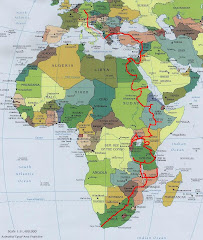


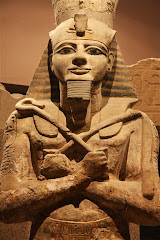

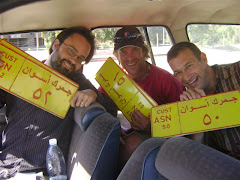


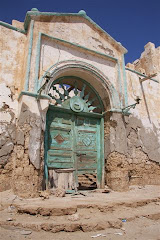





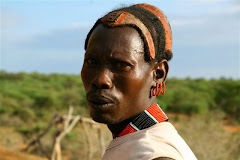

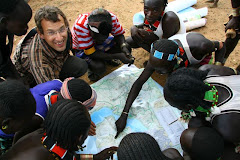
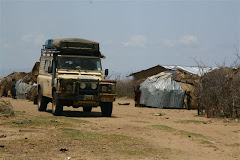
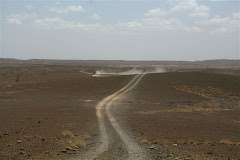


.JPG)


.JPG)